

| Home | Log In | Register | Our Services | My Account | Contact | Help |
You are NOT currently logged in
Register now or login to post to this thread.
THE TALK TO YOURSELF THREAD. (NOWT)
goldfinger

 - 09 Jun 2005 12:25


Thought Id start this one going because its rather dead on this board at the moment and I suppose all my usual muckers are either at the Stella tennis event watching Dim Tim (lose again) or at Henly Regatta eating cucumber sandwiches (they wish,...NOT).
Anyway please feel free to just talk to yourself blast away and let it go on any company or subject you wish. Just wish Id thought of this one before.
cheers GF.
Anyway please feel free to just talk to yourself blast away and let it go on any company or subject you wish. Just wish Id thought of this one before.
cheers GF.
Haystack
- 05 Nov 2013 11:43
- 32217 of 81564
The coalition is a problem for Cameron. He cannot implement policies that would be more Conservative in nature because he has to get them past the Libs.Clegg has a similar problem. It is all very well disenchanted Conservatives bleating that they don't like the policies, but they are a negotiated deal all the time. The best way to improve what Cameron can do is to vote Conservative and give him a good majority. Then you will get Conservative policies you like instead of watered down versions that have the Lib stamp of approval on them.
It is a problem with coalitions everywhere in the world. The policies get fudged to satisfy coalition partners and the more partners then the more fudging. In Italy there are 7 major parties and 42 minor parties plus 69 regional parties. There have been more than 150 parties since the war that have gained at least 2 MPs. The result is that Italy has had an average of one government a year since the war. Some have lasted as little as 11 days.
The only way to get thing done in this country is to give a decent majority to the government.
It is a problem with coalitions everywhere in the world. The policies get fudged to satisfy coalition partners and the more partners then the more fudging. In Italy there are 7 major parties and 42 minor parties plus 69 regional parties. There have been more than 150 parties since the war that have gained at least 2 MPs. The result is that Italy has had an average of one government a year since the war. Some have lasted as little as 11 days.
The only way to get thing done in this country is to give a decent majority to the government.
Fred1new
- 05 Nov 2013 11:52
- 32218 of 81564
Forgot this one.
I know understand the New tory party!
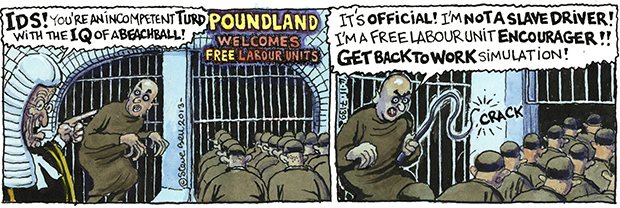
Compared with this lot Ed looks moderate and well place on the middle ground.
I know understand the New tory party!
Compared with this lot Ed looks moderate and well place on the middle ground.
cynic
- 05 Nov 2013 12:18
- 32219 of 81564
MK - you're sort of right, but i have yet to see proper policies from ukip other than "stop all immigration" and "walk away from eu" which inter alia (a) have been properly costed and (b) are not just populist and radical, and lacking realism and pragmatism
============
re EU
from the rumblings, i think i'm beginning to like the (very necessary) renegotiations that are taking place behind the scenes
slightly predictably, CBI is saying it would be disastrous to walk out.
my guess is that by the time a referendum SHOULD take place (labour won't have it), then whoever is in downing street will be able to present a pretty good case as to why we should remain within the EU
============
re EU
from the rumblings, i think i'm beginning to like the (very necessary) renegotiations that are taking place behind the scenes
slightly predictably, CBI is saying it would be disastrous to walk out.
my guess is that by the time a referendum SHOULD take place (labour won't have it), then whoever is in downing street will be able to present a pretty good case as to why we should remain within the EU
MaxK - 05 Nov 2013 12:18 - 32220 of 81564
Call me dave is a goner, and so is the tory party if they go into the next election with him at the head.
He couldn't even get a majority after the worst gov ever (broon)
Now he has been shown to be two faced liar with the backbone of a worm, and a man who's word isn't worth a toss.
Conservative majority?
lol
He couldn't even get a majority after the worst gov ever (broon)
Now he has been shown to be two faced liar with the backbone of a worm, and a man who's word isn't worth a toss.
Conservative majority?
lol
MaxK - 05 Nov 2013 12:19 - 32221 of 81564
I'll get back to you on that c.
cynic
- 05 Nov 2013 12:26
- 32222 of 81564
MK - i would certainly agree that though the current guys have done a very good job in turning round the uk economy (just ignore fred's rubbish!), they've made a total pig's ear of a number of other serious (or just headline- grabbing) issues
Stan
- 05 Nov 2013 12:29
- 32223 of 81564
I have returned -):
Now Alf, You require "me" to help "you" to form an Intelligent and highly enlightning view of who "you" should vote for in the next GE, Well I'm afraid that I will have to do quite a bit of work on that depending in which constituency you reside. So a "consultancy fee" will be due from "you", As a guide I usually charge a very reasonable £500 per hour... But in your case it will be £600+vat... All right then?
Now Alf, You require "me" to help "you" to form an Intelligent and highly enlightning view of who "you" should vote for in the next GE, Well I'm afraid that I will have to do quite a bit of work on that depending in which constituency you reside. So a "consultancy fee" will be due from "you", As a guide I usually charge a very reasonable £500 per hour... But in your case it will be £600+vat... All right then?
Haystack
- 05 Nov 2013 12:36
- 32224 of 81564
So what has Cameron lied about?
cynic
- 05 Nov 2013 13:00
- 32225 of 81564
Stan - i don't suppose your consultancy advice is worth any more than 6p an hour, and that's to anyone who would even employ you in any field ..... i certainly wouldn't
ExecLine
 - 05 Nov 2013 13:06
- 32226 of 81564
- 05 Nov 2013 13:06
- 32226 of 81564

From http://www.newsletter.co.uk/news/exchanges-between-cameron-and-miliband-getting-personal-1-5645703
Chris Moncrieff writes:
Exchanges between Cameron and Miliband getting personal
I suspect that when Ed Miliband was elected Labour leader, David Cameron assumed he would be a walkover. Admittedly, Miliband did have a shaky start, but he is now seriously beginning to rattle the Prime Minister.
For instance, whatever the merits or demerits are of Miliband’s pledge to freeze energy prices in the first 20 months of a Labour Government, it is certainly an attractive proposition to the average voter. Cameron is only too well aware of this, which is why, no doubt, he has denounced the proposal as a con and why he has twice described Miliband as ‘a conman’ – an insult he was lucky not to have been forced to withdraw.
The savage snarling that goes on between the two men at Prime Minister’s Questions demonstrates they are more than simply at political loggerheads, their contempt for one another has clearly assumed a personal aspect.
I suspect this will become more obvious as each day passes too.
It also goes some way to explaining why Cameron has agreed to pay the political strategist Lynton Crosby, the so-called Wizard of Oz, a stupendous £500,000 to help the Tories win the election.
I can envisage the Tory headlines already: “Would you trust a man who shopped his own brother?”
But Cameron – and Crosby too -–should beware. History has shown that a dirty campaign does not impress the voters – it tends to have a reverse effect.
l I trust that Britain will now cease lecturing other countries on the virtues of democracy in the wake of the royal charter which, shamefully, gives politicians control – if they choose to use it – over what until now was a free press.
It is unspeakable that our MPs, some of whom have scandalously shown they cannot conduct their own affairs with propriety, should be allowed responsibility for Britain’s newspapers.
It is the first dangerous step towards state control of the press – an outrage, whichever way you look at it.
Some would say, probably with justification, that this is politicians’ revenge for the disclosures about the expenses racket they’d been indulging in for years, at the expense of the poor British taxpayer. Only a handful of MPs paid the price for their dishonesty and were sent to prison. The vast majority claimed that they did not break the rules, and that was all right.
Some even had the temerity to wave cheques at television cameras proclaiming they had paid back what they had filched. But shoplifters, for instance, if caught, don’t get the opportunity to return the goods to make it all right. Nor did the politicians have a conscience about purchasing, for instance, plasma-screen televisions with money belonging to other people who could not dream of affording such a luxury.
But anyway, back to the issue at hand.
When, a few days ago, the press appealed against the proposition, the judges refused it. They returned to the court within just minutes of the case being made out with a 3,000-word statement saying why they’d rejected it. It is quite obvious, to the meanest intelligence, the statement had been prepared before the Fleet Street case had even been put forward. A scandal in itself.
And now we have a situation where if someone sues a newspaper for libel and loses the case, then the newspaper, outrageously, has to pay his costs. If that is Westminster’s idea of fairness and justice, it is a sad day for society.
The fact is, some newspapers are alleged to have broken the law and some journalists, too, are alleged to have broken the law. These cases should, therefore, be handled by the criminal law.
Instead, we have a situation where the whole industry is being punished for the alleged shortcomings of a few.
Chris Moncrieff writes:
Exchanges between Cameron and Miliband getting personal
I suspect that when Ed Miliband was elected Labour leader, David Cameron assumed he would be a walkover. Admittedly, Miliband did have a shaky start, but he is now seriously beginning to rattle the Prime Minister.
For instance, whatever the merits or demerits are of Miliband’s pledge to freeze energy prices in the first 20 months of a Labour Government, it is certainly an attractive proposition to the average voter. Cameron is only too well aware of this, which is why, no doubt, he has denounced the proposal as a con and why he has twice described Miliband as ‘a conman’ – an insult he was lucky not to have been forced to withdraw.
The savage snarling that goes on between the two men at Prime Minister’s Questions demonstrates they are more than simply at political loggerheads, their contempt for one another has clearly assumed a personal aspect.
I suspect this will become more obvious as each day passes too.
It also goes some way to explaining why Cameron has agreed to pay the political strategist Lynton Crosby, the so-called Wizard of Oz, a stupendous £500,000 to help the Tories win the election.
I can envisage the Tory headlines already: “Would you trust a man who shopped his own brother?”
But Cameron – and Crosby too -–should beware. History has shown that a dirty campaign does not impress the voters – it tends to have a reverse effect.
l I trust that Britain will now cease lecturing other countries on the virtues of democracy in the wake of the royal charter which, shamefully, gives politicians control – if they choose to use it – over what until now was a free press.
It is unspeakable that our MPs, some of whom have scandalously shown they cannot conduct their own affairs with propriety, should be allowed responsibility for Britain’s newspapers.
It is the first dangerous step towards state control of the press – an outrage, whichever way you look at it.
Some would say, probably with justification, that this is politicians’ revenge for the disclosures about the expenses racket they’d been indulging in for years, at the expense of the poor British taxpayer. Only a handful of MPs paid the price for their dishonesty and were sent to prison. The vast majority claimed that they did not break the rules, and that was all right.
Some even had the temerity to wave cheques at television cameras proclaiming they had paid back what they had filched. But shoplifters, for instance, if caught, don’t get the opportunity to return the goods to make it all right. Nor did the politicians have a conscience about purchasing, for instance, plasma-screen televisions with money belonging to other people who could not dream of affording such a luxury.
But anyway, back to the issue at hand.
When, a few days ago, the press appealed against the proposition, the judges refused it. They returned to the court within just minutes of the case being made out with a 3,000-word statement saying why they’d rejected it. It is quite obvious, to the meanest intelligence, the statement had been prepared before the Fleet Street case had even been put forward. A scandal in itself.
And now we have a situation where if someone sues a newspaper for libel and loses the case, then the newspaper, outrageously, has to pay his costs. If that is Westminster’s idea of fairness and justice, it is a sad day for society.
The fact is, some newspapers are alleged to have broken the law and some journalists, too, are alleged to have broken the law. These cases should, therefore, be handled by the criminal law.
Instead, we have a situation where the whole industry is being punished for the alleged shortcomings of a few.
aldwickk
- 05 Nov 2013 13:59
- 32227 of 81564
Paxman on not voting
"By the time the polls had closed and it was too late to take part, I was feeling really uncomfortable: the person who chooses not to vote - cannot even be bothered to write 'none of the above' on a ballot paper - disqualifies himself from passing any comment at all."
"By the time the polls had closed and it was too late to take part, I was feeling really uncomfortable: the person who chooses not to vote - cannot even be bothered to write 'none of the above' on a ballot paper - disqualifies himself from passing any comment at all."
Fred1new
- 05 Nov 2013 14:21
- 32228 of 81564
Exec,
"It also goes some way to explaining why Cameron has agreed to pay the political strategist Lynton Crosby, the so-called Wizard of Oz, a stupendous £500,000 to help the Tories win the election."
Not nice work if you can get it, or afford to pay for it.
But Ed Miliband has and is taking his time and thinking out his policies and the public are seemingly beginning to be swayed by him, while Cameron and cronies are seen to be behaving as out of touch "posh boys and girls", who are relying on smearing and maligning him.
Also, they are becoming amused by flustering and blustering Cameron finger jabbing at PMQs.
At the same time, they are issuing ill-thought out policies which they u-turn on them moments later, when the PR backfires on them and they aren’t swallowed by the public.
Coupled with future possible failures of the NHS during the coming winter, their actions will suggest that the NHS is now longer safe in tory hands and the reorganisations they have carried out to be a disaster. A bigger threat to the tories is that the failures may be seen by the public as attempts to produce a future dismantling of the NHS.
Another problems for their “lordships” is the effects of policies on the low paid employed and unemployed will be hitting home, it will be a stormy 15-18 months for the party of Con Party MPs.
As far as the Press is concerned they had their chance to control themselves and failed miserably.
They have had more than one chance.
Seemingly the revelations from Rebecca and Andy, don’t make the editorship, the moguls, or their friends smell any better.
But, I prefer self censorship, or at least an honest unbiased arbitrator.
How do you get the latter?
====
I know, have Manuel and Hays on the committee. 8-)
"It also goes some way to explaining why Cameron has agreed to pay the political strategist Lynton Crosby, the so-called Wizard of Oz, a stupendous £500,000 to help the Tories win the election."
Not nice work if you can get it, or afford to pay for it.
But Ed Miliband has and is taking his time and thinking out his policies and the public are seemingly beginning to be swayed by him, while Cameron and cronies are seen to be behaving as out of touch "posh boys and girls", who are relying on smearing and maligning him.
Also, they are becoming amused by flustering and blustering Cameron finger jabbing at PMQs.
At the same time, they are issuing ill-thought out policies which they u-turn on them moments later, when the PR backfires on them and they aren’t swallowed by the public.
Coupled with future possible failures of the NHS during the coming winter, their actions will suggest that the NHS is now longer safe in tory hands and the reorganisations they have carried out to be a disaster. A bigger threat to the tories is that the failures may be seen by the public as attempts to produce a future dismantling of the NHS.
Another problems for their “lordships” is the effects of policies on the low paid employed and unemployed will be hitting home, it will be a stormy 15-18 months for the party of Con Party MPs.
As far as the Press is concerned they had their chance to control themselves and failed miserably.
They have had more than one chance.
Seemingly the revelations from Rebecca and Andy, don’t make the editorship, the moguls, or their friends smell any better.
But, I prefer self censorship, or at least an honest unbiased arbitrator.
How do you get the latter?
====
I know, have Manuel and Hays on the committee. 8-)
goldfinger
- 05 Nov 2013 14:28
- 32229 of 81564
Exactly Fred, camoron as become more aggresive over the last few sessions as Crosby dictates his performance.
Now this may work in the land of OZ but it wont work here.
Already the British public have picked up on it.
I did remark last week on this thread I though fat Dave was going to blow up at one time in PMQs.
Milly just keeps calm and thats why is personal ratings are getting better.
Now this may work in the land of OZ but it wont work here.
Already the British public have picked up on it.
I did remark last week on this thread I though fat Dave was going to blow up at one time in PMQs.
Milly just keeps calm and thats why is personal ratings are getting better.
Haystack
- 05 Nov 2013 14:31
- 32230 of 81564
Once again, what had Cameron lied about?
Fred1new
- 05 Nov 2013 14:33
- 32231 of 81564
Possibly, getting up in the morning!
cynic
- 05 Nov 2013 14:34
- 32232 of 81564
all politicians, and seemingly a great many senior police officers, are habitual liars :-)
Fred1new
- 05 Nov 2013 16:42
- 32233 of 81564
If you are referring to Pleb gate, I think you have got it right.
Having agreed with you, I will now have a lie down.
Having agreed with you, I will now have a lie down.
goldfinger
- 05 Nov 2013 16:52
- 32234 of 81564
Hays said.......... Haystack - 05 Nov 2013 14:31 - 32232 of 32235
Once again, what had Cameron lied about?...................ends.
Well for a kick off and this is just the start the deficit where he kept on quite clearly on a PARTY POLITICAL broadcast saying that he was getting DEBT down. Its the deficit they have got down but even thats come to a halt.
NOT TRUE, debt has risen far quicker under this government than under labour.
He was forced to give an apology to the house.
3 other occasions aswel where he has had to do similar.
Camoron is a born liar.
Once again, what had Cameron lied about?...................ends.
Well for a kick off and this is just the start the deficit where he kept on quite clearly on a PARTY POLITICAL broadcast saying that he was getting DEBT down. Its the deficit they have got down but even thats come to a halt.
NOT TRUE, debt has risen far quicker under this government than under labour.
He was forced to give an apology to the house.
3 other occasions aswel where he has had to do similar.
Camoron is a born liar.
goldfinger
- 05 Nov 2013 16:53
- 32235 of 81564
Hays still short on BLNX.....hope not.
cynic
- 05 Nov 2013 17:02
- 32236 of 81564
would that plebgate were the oddity
| About MoneyAM | Ts and Cs | Privacy Policy | Investment Warning | Content Standards | Corporate Solutions | Advertise With Us | Site Map | © 2026 MoneyAM |
Register now for FREE
Share Prices,
Stock Quotes,
Charts, Bulletin Boards, Indices, Watchlists, Portfolio, Market News, Research
or see our Premium Services including Level 2, Terminal and much more.
 Follow us on Twitter