

| Home | Log In | Register | Our Services | My Account | Contact | Help |
You are NOT currently logged in
Register now or login to post to this thread.
THE TALK TO YOURSELF THREAD. (NOWT)
goldfinger

 - 09 Jun 2005 12:25


Thought Id start this one going because its rather dead on this board at the moment and I suppose all my usual muckers are either at the Stella tennis event watching Dim Tim (lose again) or at Henly Regatta eating cucumber sandwiches (they wish,...NOT).
Anyway please feel free to just talk to yourself blast away and let it go on any company or subject you wish. Just wish Id thought of this one before.
cheers GF.
Anyway please feel free to just talk to yourself blast away and let it go on any company or subject you wish. Just wish Id thought of this one before.
cheers GF.
required field - 18 Mar 2014 19:07 - 38425 of 81564
I see Noel Edmonds wants to buy the BBC.....heavens forbid...it's mostly crap already....except for a few exceptions...their news/weather/sport website is first class...
goldfinger
- 18 Mar 2014 19:42
- 38426 of 81564
Fred1 said......
I wondered why Hazy One had evaporated.
Manuel must have shown him the menu for the day!
===========
GF.
Results below not quite the same, but suspect yours to be true.
Update - Labour lead at 8
by YouGov in Politics
Tue March 18, 2014 6 a.m. GMT
17th YouGov / Con 32%, Lab 40%, LD 9%, UKIP 11%
Wonder what Labour will do with a majority of 100?..................ends
yes Fred a 100 seat lead would see all the points made yesterday voted through on acts of parliament.
I wondered why Hazy One had evaporated.
Manuel must have shown him the menu for the day!
===========
GF.
Results below not quite the same, but suspect yours to be true.
Update - Labour lead at 8
by YouGov in Politics
Tue March 18, 2014 6 a.m. GMT
17th YouGov / Con 32%, Lab 40%, LD 9%, UKIP 11%
Wonder what Labour will do with a majority of 100?..................ends
yes Fred a 100 seat lead would see all the points made yesterday voted through on acts of parliament.
MaxK - 18 Mar 2014 20:19 - 38427 of 81564
With a 100 seat majority?
Finish the job they started in 1997.
--------------------------------------- UK = Finis -----------------------------------
Finish the job they started in 1997.
--------------------------------------- UK = Finis -----------------------------------
goldfinger
- 18 Mar 2014 20:33
- 38428 of 81564
Max under labour never had it as good.
A loaf of bread then was 19p at Sainsburys now same loaf 129p.
T Shirts at Primark £1 to £3 now same ones about £15.
Them were the days.
A loaf of bread then was 19p at Sainsburys now same loaf 129p.
T Shirts at Primark £1 to £3 now same ones about £15.
Them were the days.
Chris Carson
- 18 Mar 2014 21:35
- 38429 of 81564
The £66 million man buying t shirts from Primark? Cllass gf Class! :O)
Fred1new
- 18 Mar 2014 21:39
- 38430 of 81564
I could hold my drink in one hand!
8-)
8-)
MaxK - 18 Mar 2014 21:40 - 38431 of 81564
I see what you mean gf.
http://www.sainsburys.co.uk/sol/global_search/home.jsp?bmForm=global_search&GLOBAL_DATA._search_term1=breads
No wonder the likes of Lidl and Aldi are doing so well, fractions of the price.
There again, almost any of the main supermarkets will beat those price to a fair thee well.
http://www.sainsburys.co.uk/sol/global_search/home.jsp?bmForm=global_search&GLOBAL_DATA._search_term1=breads
No wonder the likes of Lidl and Aldi are doing so well, fractions of the price.
There again, almost any of the main supermarkets will beat those price to a fair thee well.
MaxK - 18 Mar 2014 21:45 - 38432 of 81564
£2.50 to you gf.

£15 quid indeed, you could buy a whole outfit for that if you aint fussy.
£15 quid indeed, you could buy a whole outfit for that if you aint fussy.
Fred1new
- 18 Mar 2014 21:48
- 38433 of 81564
Didn't realise Manuel was playing golf to-day before going back to taxi driving in London as a second job.
About time he did something useful.
Missed his inane remarks, made me realise everybody has a chance to survive to 70.
=
Feeling sore, just lost at chess to somebody younger than myself.
8-)
About time he did something useful.
Missed his inane remarks, made me realise everybody has a chance to survive to 70.
=
Feeling sore, just lost at chess to somebody younger than myself.
8-)
goldfinger
- 18 Mar 2014 21:59
- 38434 of 81564
Strange isnt it how some people think you get rich by chucking money away.
Ohhh dear litttle wonder they never get anywhere and then hang out in the badlands of Scotland (Aberdeen) and support a Eton Boys government so it makes them look as though they are cool and in the 'with it crowd'. Working class stupidity at its worst.
O/Topic Max wheres the T Shirt from????. Have they got a crew neck????
Ohhh dear litttle wonder they never get anywhere and then hang out in the badlands of Scotland (Aberdeen) and support a Eton Boys government so it makes them look as though they are cool and in the 'with it crowd'. Working class stupidity at its worst.
O/Topic Max wheres the T Shirt from????. Have they got a crew neck????
Chris Carson
- 18 Mar 2014 22:35
- 38435 of 81564
Tight wad - Could be worse, grateful i don't live next door to you.
MaxK - 18 Mar 2014 22:50 - 38436 of 81564
Primark gf, I get most of my teeshirts and socks from them...via the wife.
The quality is ok, but not great. But I'm tight about stuff that aint gonna last anyway, so cheap and cheerfull does the job.
The quality is ok, but not great. But I'm tight about stuff that aint gonna last anyway, so cheap and cheerfull does the job.
goldfinger
- 18 Mar 2014 23:03
- 38437 of 81564
Same here Max not only that but I like casual all the time.
Why chuck money away at Teddy Boy when you can get if for a tenth of the price at Primark.
Why chuck money away at Teddy Boy when you can get if for a tenth of the price at Primark.
MaxK - 19 Mar 2014 09:06 - 38438 of 81564

ExecLine
 - 19 Mar 2014 10:06
- 38439 of 81564
- 19 Mar 2014 10:06
- 38439 of 81564

There are about 45 million fake £1 coins in circulation (approx. 3% of the total) and the Royal Mint has issued guidance on how to spot one of them:

1. The date and design on the reverse do not match (the reverse design is changed each year).
2. The lettering or inscription on the edge of the coin does not correspond to the right year.
3. The milled edge is poorly defined and the lettering is uneven in depth, spacing or is poorly formed. The obverse and reverse designs are not as sharp or well defined.
4. Where the coin should have been in circulation for some time, the colouring appears more shiny and golden and the coin shows no sign of age.
5. The colour of the coin does not match genuine coins.
6. The orientation of the obverse and reverse designs is not in line.
7. The best indication is that the Queen's head and the pattern on the reverse of the coin should both be upright when the coin is turned over. If not -it's a fake.
Best Tip: Fake £1 coins are obviously worthless so if you find one, then simply spend it, otherwise it will cost you £1 if you simply hand it in to the bank.
Also FYI: The new ones, see below and which get launched in 2017, won't fit shopping trolleys or coin slots and so at a cost of £10-£12 per coin slot, it will cost the economy around £20 million to cater for them.

1. The date and design on the reverse do not match (the reverse design is changed each year).
2. The lettering or inscription on the edge of the coin does not correspond to the right year.
3. The milled edge is poorly defined and the lettering is uneven in depth, spacing or is poorly formed. The obverse and reverse designs are not as sharp or well defined.
4. Where the coin should have been in circulation for some time, the colouring appears more shiny and golden and the coin shows no sign of age.
5. The colour of the coin does not match genuine coins.
6. The orientation of the obverse and reverse designs is not in line.
7. The best indication is that the Queen's head and the pattern on the reverse of the coin should both be upright when the coin is turned over. If not -it's a fake.
Best Tip: Fake £1 coins are obviously worthless so if you find one, then simply spend it, otherwise it will cost you £1 if you simply hand it in to the bank.
Also FYI: The new ones, see below and which get launched in 2017, won't fit shopping trolleys or coin slots and so at a cost of £10-£12 per coin slot, it will cost the economy around £20 million to cater for them.
Haystack
- 19 Mar 2014 10:55
- 38440 of 81564
Good news again!
The number of people out of work in the UK fell by 63,000 to 2.33 million in the three months to January 2014, according to official figures.
The unemployment rate now stands at 7.2% of the population, down from 7.4% in the previous three months, said the Office for National Statistics (ONS).
The number of people in employment rose to a record total of 30.19 million.
Average earnings also increased, with pay in the three months to January up 1.4% from a year earlier.
There was good news for young people, as the number of unemployed 16 to 24 year-olds stood at 912,000 in the three months to January, a drop of 29,000 and the lowest level since 2011.
In February, the number of people claiming Jobseeker's Allowance fell by 34,600 to 1.175 million. Over the course of a year, the number has dropped by 363,200.
The number of people out of work in the UK fell by 63,000 to 2.33 million in the three months to January 2014, according to official figures.
The unemployment rate now stands at 7.2% of the population, down from 7.4% in the previous three months, said the Office for National Statistics (ONS).
The number of people in employment rose to a record total of 30.19 million.
Average earnings also increased, with pay in the three months to January up 1.4% from a year earlier.
There was good news for young people, as the number of unemployed 16 to 24 year-olds stood at 912,000 in the three months to January, a drop of 29,000 and the lowest level since 2011.
In February, the number of people claiming Jobseeker's Allowance fell by 34,600 to 1.175 million. Over the course of a year, the number has dropped by 363,200.
MaxK - 19 Mar 2014 11:07 - 38441 of 81564

Fred1new
- 19 Mar 2014 11:13
- 38442 of 81564
EXec,
Are you saying the 2014 pound is only worth thruppence in old money?
===============
Things have got better!!
8-)
Are you saying the 2014 pound is only worth thruppence in old money?
===============
Things have got better!!
8-)
Fred1new
- 19 Mar 2014 11:15
- 38443 of 81564
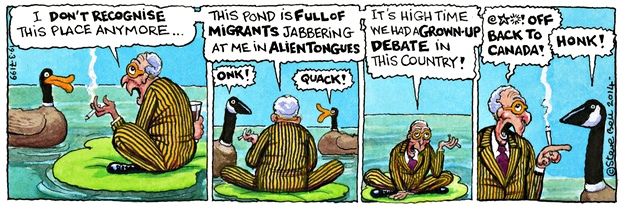
One for the Kippers!
Fred1new
- 19 Mar 2014 11:18
- 38444 of 81564
Hear is tory gift day where the Oik gives way the tax payers money to his mates!
A pound with 12 sides to it, which doesn't fit anything.
A key without a lock!
A pound with 12 sides to it, which doesn't fit anything.
A key without a lock!
| About MoneyAM | Ts and Cs | Privacy Policy | Investment Warning | Content Standards | Corporate Solutions | Advertise With Us | Site Map | © 2026 MoneyAM |
Register now for FREE
Share Prices,
Stock Quotes,
Charts, Bulletin Boards, Indices, Watchlists, Portfolio, Market News, Research
or see our Premium Services including Level 2, Terminal and much more.
 Follow us on Twitter