

| Home | Log In | Register | Our Services | My Account | Contact | Help |
You are NOT currently logged in
Register now or login to post to this thread.
THE TALK TO YOURSELF THREAD. (NOWT)
goldfinger

 - 09 Jun 2005 12:25


Thought Id start this one going because its rather dead on this board at the moment and I suppose all my usual muckers are either at the Stella tennis event watching Dim Tim (lose again) or at Henly Regatta eating cucumber sandwiches (they wish,...NOT).
Anyway please feel free to just talk to yourself blast away and let it go on any company or subject you wish. Just wish Id thought of this one before.
cheers GF.
Anyway please feel free to just talk to yourself blast away and let it go on any company or subject you wish. Just wish Id thought of this one before.
cheers GF.
Haystack
- 28 Jun 2014 12:38
- 42987 of 81564
There is a lot more support for Cameron's view on Europe. Several key leaders are privately on his side. Several leaders, yesterday said they supported Cameron in his reform views. They included Merkel, the Dutch and Swedish PMs and a few others.
Hunt was right today when he said that many of the EU leaders were cowards not to admit their true feelings over Juncker.
Hunt was right today when he said that many of the EU leaders were cowards not to admit their true feelings over Juncker.
Fred1new
- 28 Jun 2014 12:46
- 42988 of 81564
It is pity that Cameron can't spend his time formulating policies for the future rather poncing around political stunting for his own party purposes and hoping for the return somed other reactionaries voters, who have deserted to UKIP or BNP.
=====
Max,
What has surprised me when I have come across laws, rules, regulations, or similar and been irritated by them is often when I examined them I understood the reasons for the introduction of them and what they were attempting to safeguard against.
That doesn't mean the grownups shouldn't challenge and change outdated or badly drawn up rules, or that those rules should not sometimes be ignored.
Also, remember the fuss about speed limits on motor ways, wearing crash helmets etc. rules which are now accepted by those with normal intelligence.
=====
Max,
What has surprised me when I have come across laws, rules, regulations, or similar and been irritated by them is often when I examined them I understood the reasons for the introduction of them and what they were attempting to safeguard against.
That doesn't mean the grownups shouldn't challenge and change outdated or badly drawn up rules, or that those rules should not sometimes be ignored.
Also, remember the fuss about speed limits on motor ways, wearing crash helmets etc. rules which are now accepted by those with normal intelligence.
ExecLine
 - 28 Jun 2014 13:11
- 42989 of 81564
- 28 Jun 2014 13:11
- 42989 of 81564


Fred1new
- 28 Jun 2014 16:23
- 42990 of 81564
It is good to see Cameron stood up at the wrong time, but I wonder if he has enough back bone to stand up to Wee Alec or Nigel in a public or TV debate?
Some say he is running scared!
If Scotland vote for independence Cameron will be known as the PM who gave away Scotland and got himself kicked out of Europe!
Congratulations!
Some say he is running scared!
If Scotland vote for independence Cameron will be known as the PM who gave away Scotland and got himself kicked out of Europe!
Congratulations!
MaxK - 29 Jun 2014 08:17 - 42991 of 81564
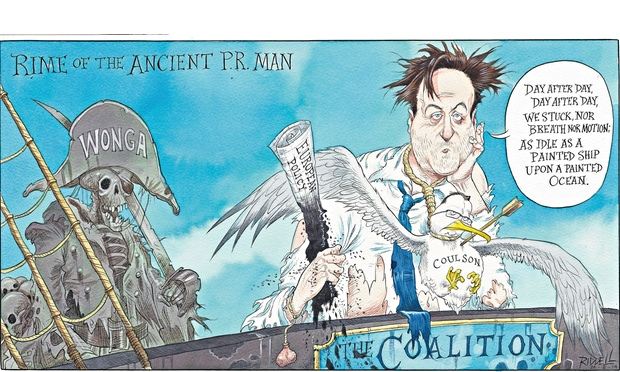
Fred1new
- 29 Jun 2014 09:07
- 42992 of 81564
Fitting role.

MaxK - 29 Jun 2014 09:29 - 42993 of 81564
Junker cant be all bad, he likes a fag and a pint.
Should get on alright with Nigel.
Should get on alright with Nigel.
MaxK - 29 Jun 2014 10:06 - 42994 of 81564

Fred1new
- 29 Jun 2014 11:37
- 42995 of 81564
29-06-2014
LAB 37%, CON 33%, LD 8%, UKIP 14%”
Labour Majority of 30 MPS.
Haze huff and puff like Cameron!
LAB 37%, CON 33%, LD 8%, UKIP 14%”
Labour Majority of 30 MPS.
Haze huff and puff like Cameron!
Fred1new
- 29 Jun 2014 11:42
- 42996 of 81564
There was also a Survation poll in the Mail on Sunday with fieldwork conducted on Friday (tabs here).
Topline figures there were CON 27%(nc), LAB 36%(+4), LDEM 7%(-2), UKIP 22%(-1).
The rest of the poll dealt mostly with Juncker, and again opinions are split largely along existing party lines – so 38% saw Cameron’s opposition to Juncker as a sign of strength, 36% as a sign of weakness… but 75% of Tories thought it was a sign of strength, 57% of Labour voters thought it was a sign of weakness.
Topline figures there were CON 27%(nc), LAB 36%(+4), LDEM 7%(-2), UKIP 22%(-1).
The rest of the poll dealt mostly with Juncker, and again opinions are split largely along existing party lines – so 38% saw Cameron’s opposition to Juncker as a sign of strength, 36% as a sign of weakness… but 75% of Tories thought it was a sign of strength, 57% of Labour voters thought it was a sign of weakness.
Fred1new
- 29 Jun 2014 11:42
- 42997 of 81564
There was also a Survation poll in the Mail on Sunday with fieldwork conducted on Friday (tabs here).
Topline figures there were CON 27%(nc), LAB 36%(+4), LDEM 7%(-2), UKIP 22%(-1).
The rest of the poll dealt mostly with Juncker, and again opinions are split largely along existing party lines – so 38% saw Cameron’s opposition to Juncker as a sign of strength, 36% as a sign of weakness… but 75% of Tories thought it was a sign of strength, 57% of Labour voters thought it was a sign of weakness.
Topline figures there were CON 27%(nc), LAB 36%(+4), LDEM 7%(-2), UKIP 22%(-1).
The rest of the poll dealt mostly with Juncker, and again opinions are split largely along existing party lines – so 38% saw Cameron’s opposition to Juncker as a sign of strength, 36% as a sign of weakness… but 75% of Tories thought it was a sign of strength, 57% of Labour voters thought it was a sign of weakness.
Fred1new
- 29 Jun 2014 11:42
- 42998 of 81564
There was also a Survation poll in the Mail on Sunday with fieldwork conducted on Friday (tabs here).
Topline figures there were CON 27%(nc), LAB 36%(+4), LDEM 7%(-2), UKIP 22%(-1).
The rest of the poll dealt mostly with Juncker, and again opinions are split largely along existing party lines – so 38% saw Cameron’s opposition to Juncker as a sign of strength, 36% as a sign of weakness… but 75% of Tories thought it was a sign of strength, 57% of Labour voters thought it was a sign of weakness.
========
Mind UKIP and tories have much in common with football hooligans.
Topline figures there were CON 27%(nc), LAB 36%(+4), LDEM 7%(-2), UKIP 22%(-1).
The rest of the poll dealt mostly with Juncker, and again opinions are split largely along existing party lines – so 38% saw Cameron’s opposition to Juncker as a sign of strength, 36% as a sign of weakness… but 75% of Tories thought it was a sign of strength, 57% of Labour voters thought it was a sign of weakness.
========
Mind UKIP and tories have much in common with football hooligans.
cynic
- 29 Jun 2014 11:55
- 42999 of 81564
Just as you with an apparatchik
MaxK - 29 Jun 2014 11:56 - 43000 of 81564
" Mind UKIP and tories have much in common with football hooligans. "
How do you come to that conclusion Fred?
Fred1new
- 29 Jun 2014 14:01
- 43001 of 81564
Observation of behaviour patterns!
MaxK - 29 Jun 2014 15:02 - 43002 of 81564
Divorce is now the only course left for Britain and the EU (but here is how we can make it amicable)
By Daniel Hannan, Conservative Mep For South East England
Published: 02:03, 29 June 2014 | Updated: 02:03, 29 June 2014
http://www.dailymail.co.uk/debate/article-2673698/DANIEL-HANNAN-Divorce-course-left-Britain-EU-make-amicable.html
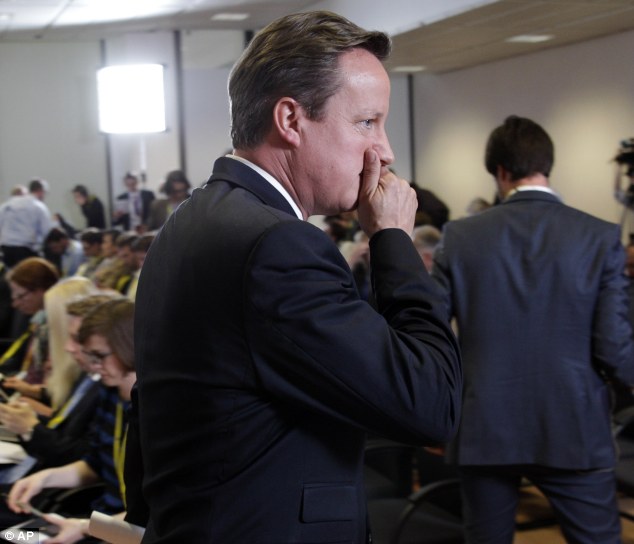
At teatime on Friday, it became clear that Britain could no longer remain a member of the EU. Any hope that we might change its nature – make it looser, more flexible, more attuned to its nation states – was coldly extinguished. Knocking British objections aside, EU leaders entrusted the top slot to a man who has never hidden his support for a United States of Europe.
Jean-Claude Juncker, the former Luxembourg leader who has just been chosen to run the world’s most powerful bureaucracy, wants a common EU citizenship, with reciprocal voting rights at national elections.
He wants to merge the various foreign offices into a European diplomatic corps. He wants a pan-European minimum wage, a federal police force and army, and harmonised taxes.
He has – to his credit, I suppose – been open about all these things. And he has just been appointed, by 26 votes to two (Britain’s and Hungary’s) to Europe’s most important job.
As president of the European Commission, Juncker won’t just run the EU’s executive – its cabinet, so to speak. He will also have the right to initiate new laws.
It’s an extraordinary concentration of power.
Not bad for a man who was thrown out by his own voters in December and whom Brussels insiders describe as imperious, idle and overfond of a drink.
No one can now credibly claim that Europe is turning away from integration. The middle way that many British people had hoped for – the idea we could remain involved but on better conditions – has been closed off.
The choice we face is between leaving the EU or becoming, over time, a province of a country called Europe.
Other prime ministers weren’t even pretending to respect our sensitivities. On his way into the summit, Finland’s new leader, a Euro-fanatical former MEP called Alexander Stubb, brusquely informed the British people that they had better ‘wake up and smell the coffee’ and realise how economically dependent they were on the EU.
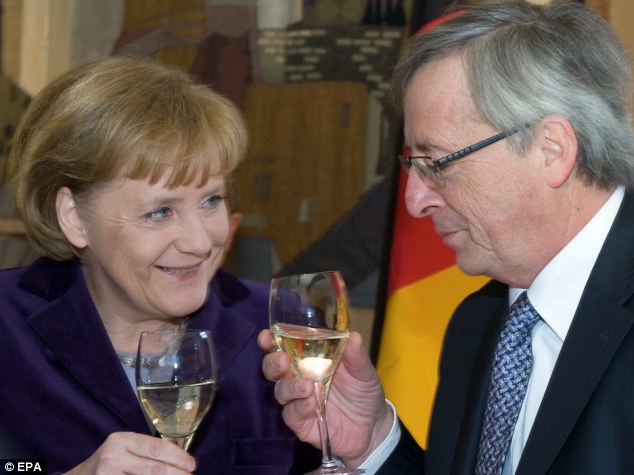
Afterwards, Angela Merkel, who had supposedly given David Cameron private assurances about blocking Juncker’s candidature, told the press that as far as she was concerned, ever-closer union was an obligation for all 28 members – albeit one they might fulfil at different speeds.
Viviane Reding, Luxembourg’s veteran Commissioner, was more succinct: ‘Game, set, match!’ she tweeted. So much for the ‘influence’ that our Sir Humphreys keep harping on about.
David Cameron had pleaded with his fellow heads of government to choose someone more palatable to public opinion. Juncker’s appointment, he told them, would push Britain towards leaving the EU.
Yet, in the event, his opposition served only to solidify support behind the abrasive Christian Democrat. A number of EU leaders who disliked Juncker felt obliged to back him rather than be seen to have given in to British pressure.
David Cameron ruefully told reporters afterwards that he wouldn’t publicly endorse any candidates for the other big jobs in case his support blighted their chances.
That’s the true measure of our ‘influence’ in Brussels: it’s not just empty, it’s negative.
Juncker’s appointment is especially bad news for our Foreign Office mandarins. Their strategy ever since Cameron announced the in/out referendum 18 months ago has been to make the minimum necessary changes to persuade the country to vote for continued membership.
These changes didn’t have to be substantive; they could be wholly presentational. After all, a similar tactic worked for Harold Wilson in our 1975 referendum which, though they were soon forgotten, had supposedly also been held on ‘improved terms’.
In March, the PM set out his goals in a newspaper article. None of them would have fundamentally altered the terms of our relationship and, indeed, none of them would have required a new treaty – the original justification for delaying the referendum to 2017.
The talk we used to hear from the PM about taking back social and employment policy, about unilateral repatriation of power, had been dropped. No wonder Nick Clegg and Ken Clarke cheerfully endorsed all the proposed ‘reforms’, pointing out that they didn’t change anything.
That strategy has now been blown to sparks and cinders. The country won’t fall for cosmetic changes being presented as a grand new deal – not now we have seen where the rest of the EU wants to go.
A British Prime Minister who came back trumpeting some memorandum about ever-closer union not applying to Britain, or some agreement to limit benefits claims for migrants, would be laughed at.
The electorate would see perfectly clearly that we were still full members of the EU, subject to the Common Agricultural Policy, Fisheries Policy, the Common External Tariff, the European Arrest Warrant and all the rest.
What, then, are Cameron’s options? One is to stick to Plan A: to get whatever concessions he can, oversell them and rely on our aversion to change to win the referendum. That strategy looks a lot less attractive now: he would risk defeat and, with defeat, resignation.
A second is to campaign for a No vote in the referendum – to announce that he had given reform his best shot, had got nowhere, and could not now in conscience recommend remaining part of what the EU was turning into. He would almost certainly win such a referendum comfortably – indeed, he’d break all records for popularity – but he won’t do it, because he fears that an acrimonious break with the EU would be harmful.
That leaves option three. An amicable separation that would leave us in the free market but outside the political institutions.
Britain could angle for the sort of deal Switzerland has: that is, free movement of goods, services, labour and capital, but not much else.
Switzerland pays only a token contribution to the EU budget, does not recognise the primacy of EU law on its own territory and – critically – is free to negotiate trade deals with non-EU states such as China.
And you can’t help noticing that it’s doing rather well.
If Britain secured such a deal – and Eurocrats keep indicating that it’s on offer – it might save face all round to dress it up as some form of associate status or semi-detached membership.
Other European states, both within the EU and outside, might want something similar.
After all, with the partnership pacts signed with Moldova, Ukraine and Georgia on Friday, the only European country that doesn’t enjoy free trade with the EU is Belarus.
We could create a pan-continental market, stretching from Iceland to Georgia, with 40 or 45 members – some 20 or 25 of which might also choose to have a single currency and shared political institutions.
If we can’t negotiate such a deal from within, we should do so from outside, replacing our current membership with a Swiss-type free-trade agreement. The Swiss, after all, manage to sell four-and-a-half times as much per head to the EU as we do.
More to the point, the EU is declining as an export market: every continent is now experiencing growth except Europe.
There is a teeming world across the oceans, a world where we still have friends. Why stay in a declining customs union when the rest of the planet is waiting?
By Daniel Hannan, Conservative Mep For South East England
Published: 02:03, 29 June 2014 | Updated: 02:03, 29 June 2014
http://www.dailymail.co.uk/debate/article-2673698/DANIEL-HANNAN-Divorce-course-left-Britain-EU-make-amicable.html
At teatime on Friday, it became clear that Britain could no longer remain a member of the EU. Any hope that we might change its nature – make it looser, more flexible, more attuned to its nation states – was coldly extinguished. Knocking British objections aside, EU leaders entrusted the top slot to a man who has never hidden his support for a United States of Europe.
Jean-Claude Juncker, the former Luxembourg leader who has just been chosen to run the world’s most powerful bureaucracy, wants a common EU citizenship, with reciprocal voting rights at national elections.
He wants to merge the various foreign offices into a European diplomatic corps. He wants a pan-European minimum wage, a federal police force and army, and harmonised taxes.
He has – to his credit, I suppose – been open about all these things. And he has just been appointed, by 26 votes to two (Britain’s and Hungary’s) to Europe’s most important job.
As president of the European Commission, Juncker won’t just run the EU’s executive – its cabinet, so to speak. He will also have the right to initiate new laws.
It’s an extraordinary concentration of power.
Not bad for a man who was thrown out by his own voters in December and whom Brussels insiders describe as imperious, idle and overfond of a drink.
No one can now credibly claim that Europe is turning away from integration. The middle way that many British people had hoped for – the idea we could remain involved but on better conditions – has been closed off.
The choice we face is between leaving the EU or becoming, over time, a province of a country called Europe.
Other prime ministers weren’t even pretending to respect our sensitivities. On his way into the summit, Finland’s new leader, a Euro-fanatical former MEP called Alexander Stubb, brusquely informed the British people that they had better ‘wake up and smell the coffee’ and realise how economically dependent they were on the EU.
Afterwards, Angela Merkel, who had supposedly given David Cameron private assurances about blocking Juncker’s candidature, told the press that as far as she was concerned, ever-closer union was an obligation for all 28 members – albeit one they might fulfil at different speeds.
Viviane Reding, Luxembourg’s veteran Commissioner, was more succinct: ‘Game, set, match!’ she tweeted. So much for the ‘influence’ that our Sir Humphreys keep harping on about.
David Cameron had pleaded with his fellow heads of government to choose someone more palatable to public opinion. Juncker’s appointment, he told them, would push Britain towards leaving the EU.
Yet, in the event, his opposition served only to solidify support behind the abrasive Christian Democrat. A number of EU leaders who disliked Juncker felt obliged to back him rather than be seen to have given in to British pressure.
David Cameron ruefully told reporters afterwards that he wouldn’t publicly endorse any candidates for the other big jobs in case his support blighted their chances.
That’s the true measure of our ‘influence’ in Brussels: it’s not just empty, it’s negative.
Juncker’s appointment is especially bad news for our Foreign Office mandarins. Their strategy ever since Cameron announced the in/out referendum 18 months ago has been to make the minimum necessary changes to persuade the country to vote for continued membership.
These changes didn’t have to be substantive; they could be wholly presentational. After all, a similar tactic worked for Harold Wilson in our 1975 referendum which, though they were soon forgotten, had supposedly also been held on ‘improved terms’.
In March, the PM set out his goals in a newspaper article. None of them would have fundamentally altered the terms of our relationship and, indeed, none of them would have required a new treaty – the original justification for delaying the referendum to 2017.
The talk we used to hear from the PM about taking back social and employment policy, about unilateral repatriation of power, had been dropped. No wonder Nick Clegg and Ken Clarke cheerfully endorsed all the proposed ‘reforms’, pointing out that they didn’t change anything.
That strategy has now been blown to sparks and cinders. The country won’t fall for cosmetic changes being presented as a grand new deal – not now we have seen where the rest of the EU wants to go.
A British Prime Minister who came back trumpeting some memorandum about ever-closer union not applying to Britain, or some agreement to limit benefits claims for migrants, would be laughed at.
The electorate would see perfectly clearly that we were still full members of the EU, subject to the Common Agricultural Policy, Fisheries Policy, the Common External Tariff, the European Arrest Warrant and all the rest.
What, then, are Cameron’s options? One is to stick to Plan A: to get whatever concessions he can, oversell them and rely on our aversion to change to win the referendum. That strategy looks a lot less attractive now: he would risk defeat and, with defeat, resignation.
A second is to campaign for a No vote in the referendum – to announce that he had given reform his best shot, had got nowhere, and could not now in conscience recommend remaining part of what the EU was turning into. He would almost certainly win such a referendum comfortably – indeed, he’d break all records for popularity – but he won’t do it, because he fears that an acrimonious break with the EU would be harmful.
That leaves option three. An amicable separation that would leave us in the free market but outside the political institutions.
Britain could angle for the sort of deal Switzerland has: that is, free movement of goods, services, labour and capital, but not much else.
Switzerland pays only a token contribution to the EU budget, does not recognise the primacy of EU law on its own territory and – critically – is free to negotiate trade deals with non-EU states such as China.
And you can’t help noticing that it’s doing rather well.
If Britain secured such a deal – and Eurocrats keep indicating that it’s on offer – it might save face all round to dress it up as some form of associate status or semi-detached membership.
Other European states, both within the EU and outside, might want something similar.
After all, with the partnership pacts signed with Moldova, Ukraine and Georgia on Friday, the only European country that doesn’t enjoy free trade with the EU is Belarus.
We could create a pan-continental market, stretching from Iceland to Georgia, with 40 or 45 members – some 20 or 25 of which might also choose to have a single currency and shared political institutions.
If we can’t negotiate such a deal from within, we should do so from outside, replacing our current membership with a Swiss-type free-trade agreement. The Swiss, after all, manage to sell four-and-a-half times as much per head to the EU as we do.
More to the point, the EU is declining as an export market: every continent is now experiencing growth except Europe.
There is a teeming world across the oceans, a world where we still have friends. Why stay in a declining customs union when the rest of the planet is waiting?
Fred1new
- 29 Jun 2014 15:09
- 43003 of 81564
Many pay the costs of a divorce for decades after the event!
The only ones to escapes scot free are the "lawyers".
The CBI and most of business wish to remain in the EU.
Who are the little englanders and what is in leaving EU for them.
It won't happen.
-------
Interesting article in Observer
"has torrid Brussels showdown pushed Britain nearer EU exit?! by Toby Helm.
The only ones to escapes scot free are the "lawyers".
The CBI and most of business wish to remain in the EU.
Who are the little englanders and what is in leaving EU for them.
It won't happen.
-------
Interesting article in Observer
"has torrid Brussels showdown pushed Britain nearer EU exit?! by Toby Helm.
Fred1new
- 29 Jun 2014 16:30
- 43004 of 81564
Max,
If you want to summing up of the Brussels fiasco and possible consequences:
A bad day for Britain, Mr Cameron
< "http://www.theguardian.com/commentisfree/2014/jun/29/after-juncker-blunder-where-now-david-cameron" alt="" />
Only thing missing is exiting to Where and What?
If you want to summing up of the Brussels fiasco and possible consequences:
A bad day for Britain, Mr Cameron
< "http://www.theguardian.com/commentisfree/2014/jun/29/after-juncker-blunder-where-now-david-cameron" alt="" />
Only thing missing is exiting to Where and What?
Fred1new
- 29 Jun 2014 16:30
- 43005 of 81564
.
Fred1new
- 29 Jun 2014 19:15
- 43006 of 81564
The Eton Mess is licking up to the Junket!
A bit late.
A bit late.
| About MoneyAM | Ts and Cs | Privacy Policy | Investment Warning | Content Standards | Corporate Solutions | Advertise With Us | Site Map | © 2026 MoneyAM |
Register now for FREE
Share Prices,
Stock Quotes,
Charts, Bulletin Boards, Indices, Watchlists, Portfolio, Market News, Research
or see our Premium Services including Level 2, Terminal and much more.
 Follow us on Twitter