

| Home | Log In | Register | Our Services | My Account | Contact | Help |
You are NOT currently logged in
Register now or login to post to this thread.
THE TALK TO YOURSELF THREAD. (NOWT)
goldfinger

 - 09 Jun 2005 12:25


Thought Id start this one going because its rather dead on this board at the moment and I suppose all my usual muckers are either at the Stella tennis event watching Dim Tim (lose again) or at Henly Regatta eating cucumber sandwiches (they wish,...NOT).
Anyway please feel free to just talk to yourself blast away and let it go on any company or subject you wish. Just wish Id thought of this one before.
cheers GF.
Anyway please feel free to just talk to yourself blast away and let it go on any company or subject you wish. Just wish Id thought of this one before.
cheers GF.
goldfinger
- 25 Jul 2014 21:18
- 44329 of 81564
Thats strange as we get more hits from you over a two week period than anybody else.!!!!!!!
Perhaphs its you, you know getting it wrong with the Tax Tribunal having to defend yourself all the time.
Never mind keep telling the porkies, you know you love to be verbaly thrashed.
Perhaphs its you, you know getting it wrong with the Tax Tribunal having to defend yourself all the time.
Never mind keep telling the porkies, you know you love to be verbaly thrashed.
MaxK - 25 Jul 2014 23:25 - 44330 of 81564
Poor doors: the segregation of London's inner-city flat dwellers
Poorer residents in capital's developments forced to use different entrances and facilities
Hilary Osborne
theguardian.com, Friday 25 July 2014 19.46 BST
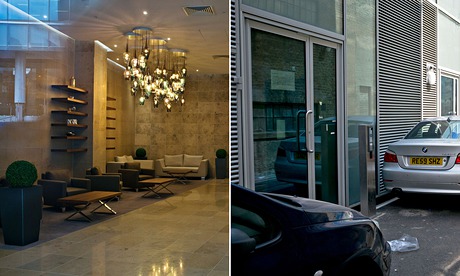
Left, the luxury lobby of One Commercial Street, marketed to wealthy City workers. Right, the side-alley entrance reserved for affordable housing tenants. Photographs: Sarah Lee for the Guardian
http://www.theguardian.com/society/2014/jul/25/poor-doors-segregation-london-flats
Multimillion pound housing developments in London are segregating less well-off tenants from wealthy homebuyers by forcing them to use separate entrances.
A Guardian investigation has discovered a growing trend in the capital's upmarket apartment blocks – which are required to include affordable homes in order to win planning permission – for the poorer residents to be forced to use alternative access, a phenomenon being dubbed "poor doors". Even bicycle storage spaces, rubbish disposal facilities and postal deliveries are being separated.
The Green party accused developers of showing "contempt for ordinary people" by enforcing such two-tier policies.
This week New York's mayor, Bill De Blasio, said he planned to take action to prevent new developments being built with separate entrances and facilities for low-income residents. His pledge followed a furore over a luxury block on the city's swanky Upper West Side which will have what US newspapers have dubbed a "poor door" for the social housing units on the site. But while the approval for segregated entrances in just one building in New York generated headlines, they are fast becoming standard practice in London.
"When Ken Livingstone left office he was keen that all developments should have their social housing 'pepperpotted' – mixed in with all the other more upmarket accommodation," said Ed Mead, a director at estate agent Douglas & Gordon which sells upmarket properties in central London. "This didn't go down well with developers with the result that most developments now have a separate entrance and a different look."
Tracey Kellett, a buying agent who trawls the capital looking for homes for wealthy clients, said a number of developments have separate entrances "so the two social strata don't have to meet". In one: "The affordable [housing] has vile coloured plastic panels on the outside rather than blingy glass."
At one building bordering the City financial district, the Guardian discovered wealthy owners accessed their homes via a hotel-style lobby area, while social housing tenants enter through a side door in an adjacent alley alongside trade entrances.
In marketing information for another development currently under construction, would-be residents have been promised that the affordable homes will have a separate entrance, no access to car or cycle parking and that post and bins will also be divided.
As the London housing market has boomed the expectations of some of the capital's wealthiest homebuyers have grown and many properties now have communal areas akin to those in some of the world's best hotels.
Service charges to maintain these are high, and a separate entrance means housing associations and their tenants do not face these extra costs. However, as in New York, there are concerns that it is leading to increasingly divided communities.
Green party London assembly member Darren Johnson said: "This trend shows contempt for ordinary people, and is about developers selling luxury flats to rich investors who don't want to mix with local people."
He added: "The mayor and councils have been turning a blind eye to this for too long, they should simply refuse applications that have separate facilities or that refuse any affordable housing on this basis."
A spokesman for de Blasio's office in New York said this week : "We fundamentally disagree with (separate doors), and we are in the process of changing it to reflect our values and priorities. We want to make sure future affordable housing projects treat all families equitably."
Developers said separate doors let housing associations keep costs down as they avoided premium service charges paid by private residents.
Peter Allen, sales and marketing director for Londonewcastle which is behind the Queens Park Place development in north London said housing associations were sometimes unable to pay for all of the facilities covered by service charges. "The simplest way from a design perspective is to have things separate."
Side-entrance shame
The brochure for the upmarket apartments of One Commercial Street, on the edge of the City, boasts of a "bespoke entrance lobby ... With the ambience of a stylish hotel reception area, it creates a stylish yet secure transition space between your home and the City streets".
In common with many of London's new concrete and glass residential blocks there's a concierge, on hand 24/7 to service the every need of residents paying a minimum of £500,000 – which only buys a studio flat – to live in this booming part of the city.
But the lobby is out of bounds to some of those who live in the building. What the brochure doesn't mention is a second door, with a considerably less glamorous lobby, tucked away in an alley to the side of the building, alongside the trade entrance for Pret a Manger. This is the entrance for One Commercial Street's affordable housing tenants.
In a bid to ease the housing crisis, developers are obliged to provide a set proportion of affordable homes when they draw up a new project, but they are often able to negotiate this figure down with local planners. Some provide the cheaper homes in separate blocks, but in a single structure development the affordable homes are often on separate floors – with separate entrances, lifts, car parks and even rubbish bins, so that upmarket apartment buyers have no contact with those occupying the social housing in their buildings.
In some cases, developers have even used the fact they need to provide separate doors and lifts to argue against putting affordable homes on the same site as their premium apartments. Planning documents for the 56 Curzon Street development in Soho show that the developers told the local council "that on-site provision of affordable housing would result in significant design inefficiencies due to the need for separate entrances and building cores".
Some are coy about the subject. Native Land, which is currently building Cheyne Terrace just off Kings Road in Chelsea, complete with a swimming pool and gym, refused to comment when asked if its 13 affordable housing units would be accessed via a separate door. However, the website of John Robertson Architects, which has designed the building, makes it clear this is the case.
In north-west London the developers behind Queen's Park Place are more upfront about how its 28 affordable and 116 market-rate homes will co-exist – its marketing website says the external appearance will be uniform across all properties – or "tenure blind". But inside the building the two types of resident will be treated very differently: "Affordable tenants will not have use of the main private residential entrance, private courtyard gardens or basement car and cycle parking. Services including postal delivery and refuse storage are also divided."
This does not just happen where there are large numbers of affordable homes on a site. In Chiswick, The Corner Haus development which is to be completed this summer, has just two affordable units, but these are also expected to have a separate entrance.
Of course, the separate doors to these developments mean that the housing associations who run the affordable properties and their tenants do not face the service charges attached with the luxurious surroundings that wealthy buyers have now come to expect and accept. However, the stark difference between the entrances, and, in some cases their positioning, rankles with some of those who live there.
Through the main door of One Commercial Street the lights shine brightly in the hotel-style lobby. There is luxury marble tiling and plush sofas, and a sign on the door alerts residents to the fact that the concierge is available. Round the back, the entrance to the affordable homes is a cream corridor, decorated only with grey mail boxes and a poster warning tenants that they are on CCTV and will be prosecuted if they cause any damage.
Brooke Terrelonga lives here with her nine-month-old son – they moved into a social rented flat four months ago and she was surprised to find that she wasn't allowed to use the front entrance. Her mother, who doesn't want to be named, said she felt unhappy about her daughter returning home at night to the poorly-lit alleyway. She motioned towards two lights on the wall, either side of the door, which were the only lightling in sight. She said: "It's like the cream is at the front and they've sent the rubbish to the back."
Another tenant, Judy Brown, had also expected to be able to get to her flat through the main entrance. "I call it the posh door. I feel a little bit insulted. It's segregation." Brown said that the lifts kept breaking down and she often had to take the stairs to her ninth-floor flat. "When both the lifts weren't working they did say that if you were pregnant, had a health problem or a baby in a buggy you could use the main entrance," she said. Otherwise, the tenants said, they were "locked out" of the main lobby.
James Moody, managing director of Redrow London, which built One Commercial Street said in a statement that his firm was committed to providing homes "at all financial levels" and that 34% of the total accommodation in the building was affordable.
"As One Commercial Street is located on the edge of the City, we have built a product that appeals to this market of young professionals and families who want to live close to their place of work and enjoy the benefits of a full concierge service and hotel style lobby, which they pay a premium for through their service charge.
"Affordable accommodation is managed separately by Network Housing who have full control of the services and facilities provided to its tenants and have a set cap for service charges.
"In addition, we have taken every step necessary to ensure that our development meets the needs of all of its residents and we go through a lengthy consultation process with housing associations to establish both a design that meets their requirements whilst making it as affordable as possible for their residents."
goldfinger
- 26 Jul 2014 11:27
- 44331 of 81564
Whos nabbed all the bread???????????????????????????????????????????
Welfare News Service @WNSNews ·
‘Big Society’ in tatters as charity watchdog launches investigation into claims of Government funding misuse http://ino.to/1kfM2rl
Welfare News Service @WNSNews ·
‘Big Society’ in tatters as charity watchdog launches investigation into claims of Government funding misuse http://ino.to/1kfM2rl
goldfinger
- 26 Jul 2014 11:33
- 44332 of 81564
Exclusive: Cameron’s Big Society in tatters as charity watchdog launches investigation into claims of Government funding misuse26/july/2014
The organisation was given at least £2.5 million of National Lottery funding and public-sector grants despite having no record of charitable activity
OLIVER WRIGHT Author Biography POLITICAL EDITOR Saturday 26 July 2014
David Cameron’s flagship Big Society Network is being investigated by the Charity Commission over allegations that it misused government funding and made inappropriate payments to its directors – including a Tory donor.
clinlife.co.uk/High_Cholesterol
The organisation, which was launched by the Prime Minister in 2010, was given at least £2.5 million of National Lottery funding and public-sector grants despite having no record of charitable activity.
The Independent has learnt that it has now been wound up, having used much of the money on projects that came nowhere near delivering on their promised objectives.
Two senior figures on government grant awarding bodies have also made allegations that they were pressured into handing over money to the Big Society Network despite severe reservations about the viability of the projects they were being asked to support.
Liam Black, a former trustee of Nesta, which was then a public body sponsored by the Department for Business, said Nesta had been “forced” to give grants that totalled £480,000 to the Big Society Network in 2010 without a competitive pitch. He described it as a “scandalous waste of money”.
Another senior figure involved in the decision to award £299,800 from the Cabinet Office to the organisation said the funding request had initially been turned down.
“When we did the analysis we turned them down because the bid did not stack up,” they said. “But we were told to go back and change the criteria to make it work.”
Tonight Labour said it was writing to the Cabinet Secretary, Sir Jeremy Heywood, asking him to investigate whether political pressure had been applied to give an organisation with close ties to ministers “special treatment”.
The Independent understands that the Charity Commission is also looking into allegations that some of the “restricted funds” given by the Cabinet Office for a childhood obesity project were transferred to pay down the deficit of a linked company.
It is also investigating payments made by the charity “for consultancy services” to two directors of the charity and its chair, Martyn Rose.
Mr Rose, who helped set up the Big Society Network, also contributed more than £54,000 to the 2010 Conservative election campaign.
Tonight he said he had no memory of the payment but added that it was possible “one of my companies did work on its behalf”.
He said he had personally put £200,000 into the Big Society Network which he had not got back. “With hindsight, of course, if we had all known that the projects were not going to work we would have been idiots to do them,” he said.
“[The truth] is that in the early stages of social investment some will work and some won’t.”
Giles Gibbons, a trustee of the charity and a former business partner of Steve Hilton, David Cameron’s “blue skies thinker”, added that he did not believe any of the payments made by the charity had been in any way inappropriate.
A marked difference was found between what Big Society Network projects claimed they would achieve and what they did (Getty Images) A marked difference was found between what Big Society Network projects claimed they would achieve and what they did (Getty Images)
An examination of the Big Society Network projects, funded by the Government and the lottery, reveal a marked discrepancy between what they claimed they would achieve and what they did.
They included:
A project called “Your Square Mile” whose purpose was to encourage and enable local people to improve their community. It was awarded £830,000 by the Big Lottery Fund – despite officials assessing the application as “weak” in three out of the six criteria. In February 2012 the project had attracted just 64 signed-up groups compared with the one million predicted in the funding application.
A project called Get In – to tackle childhood obesity through sport. In April 2012 it was awarded a grant of £299,800 from the Cabinet Office despite officials concluding it was unlikely to meet its stated objectives. They were told to change their selection criteria and approve the grant. The project was never even launched.
Britain’s Personal Best, which aimed to build on the Olympic Games by encouraging people to excel in athletic, educational or creative challenges. Given £997,960 in April 2013 by the Big Lottery Fund, it claimed it would sign up 120,000 people to take on challenges in their community – but was wound up within months after failing to meet all the milestones the Big Lottery Fund had set.
A long-running investigation by Civil Society News into Big Society Network funding has also discovered that the organisation was given statutory grants totalling £480,000 in 2010 by Nesta – which was then an arms-length body of the Department of Business – without a competitive pitch being held.
Steve Hilton was instrumental in getting Government backing for the Big Society Steve Hilton was instrumental in getting Government backing for the Big Society (PA)
About £150,000 was to part-finance the core costs of running the organisation in its early stages and £330,000 was to support four projects – called Nexters, Spring, Your Local Budget and It’s Our Community.
Nesta is now an independent charity but said: “While the vast majority of Nesta’s grants are made following open calls for proposals, we do have the ability to provide grants to projects that fit with our vision and advance our objects outside of open calls for proposals. That is what happened with the grants to the Big Society Network.”
Labour is now demanding an inquiry into links between the Big Society Network and senior Conservatives. Several members of the network’s staff had worked with and for ministers including Michael Gove and Theresa May, and two had stood as Tory candidates.
Giles Gibbons had been a partner in the same firm as Steve Hilton and co-wrote a book with him.
He said tonight: “Am I disappointed that the network didn’t have a more positive impact? The answer is 100 per cent yes. Do I think we could have done more about that? Yes I think we could have.
"There was powerful core at the heart of what we were trying to do but was our delivery was not good enough. Is there anything untoward in the way in which we have worked? I genuinely don’t think there is.”
Several members of the network’s staff had worked with and for ministers including Michael Gove Several members of the network’s staff had worked with and for ministers including Michael Gove (Getty Images)
But Lisa Nandy, the shadow minister for civil society said: “It’s bad enough that millions of pounds of public money were squandered, but the connections between these organisations and the Conservative party are deeply concerning.”
A spokeswoman for the Charity Commission said: “Our case into the Society Network Foundation remains open and ongoing. We have received a response to questions we had relating to connected-party transactions and the use of a grant.
“However this does not fully address our concerns and we are in the process of engaging further with the trustees. We are also awaiting copies of documents that explain the grounds on which a grant was given.”
The big chumocracy: Key players
Steve Hilton
A former advertising executive who became David Cameron’s ‘blue skies thinker’. He championed the idea of the Big Society, and was instrumental in getting Government backing for it when the Tories came to power.
Martyn Rose
A businessman who gave £60,000 to the Tories in the run-up to the last election and became chairman of the Big Society Network. Has worked with both Theresa May and Michael Gove
Giles Gibbons
Co-wrote a book with Steve Hilton called Good Business. He became a trustee of the Society Network Foundation – the charitable arm of the Big Society Network. It is now being investigated by the Charity Commission.
Steve Moore
Worked for the Tories in the late 1980s and became chief executive of the Big Society Network. Was ultimately responsible for delivering the projects that failed. Had close links with Mr Hilton and the Nick Hurd, the minister responsible for the Big Society.
The organisation was given at least £2.5 million of National Lottery funding and public-sector grants despite having no record of charitable activity
OLIVER WRIGHT Author Biography POLITICAL EDITOR Saturday 26 July 2014
David Cameron’s flagship Big Society Network is being investigated by the Charity Commission over allegations that it misused government funding and made inappropriate payments to its directors – including a Tory donor.
clinlife.co.uk/High_Cholesterol
The organisation, which was launched by the Prime Minister in 2010, was given at least £2.5 million of National Lottery funding and public-sector grants despite having no record of charitable activity.
The Independent has learnt that it has now been wound up, having used much of the money on projects that came nowhere near delivering on their promised objectives.
Two senior figures on government grant awarding bodies have also made allegations that they were pressured into handing over money to the Big Society Network despite severe reservations about the viability of the projects they were being asked to support.
Liam Black, a former trustee of Nesta, which was then a public body sponsored by the Department for Business, said Nesta had been “forced” to give grants that totalled £480,000 to the Big Society Network in 2010 without a competitive pitch. He described it as a “scandalous waste of money”.
Another senior figure involved in the decision to award £299,800 from the Cabinet Office to the organisation said the funding request had initially been turned down.
“When we did the analysis we turned them down because the bid did not stack up,” they said. “But we were told to go back and change the criteria to make it work.”
Tonight Labour said it was writing to the Cabinet Secretary, Sir Jeremy Heywood, asking him to investigate whether political pressure had been applied to give an organisation with close ties to ministers “special treatment”.
The Independent understands that the Charity Commission is also looking into allegations that some of the “restricted funds” given by the Cabinet Office for a childhood obesity project were transferred to pay down the deficit of a linked company.
It is also investigating payments made by the charity “for consultancy services” to two directors of the charity and its chair, Martyn Rose.
Mr Rose, who helped set up the Big Society Network, also contributed more than £54,000 to the 2010 Conservative election campaign.
Tonight he said he had no memory of the payment but added that it was possible “one of my companies did work on its behalf”.
He said he had personally put £200,000 into the Big Society Network which he had not got back. “With hindsight, of course, if we had all known that the projects were not going to work we would have been idiots to do them,” he said.
“[The truth] is that in the early stages of social investment some will work and some won’t.”
Giles Gibbons, a trustee of the charity and a former business partner of Steve Hilton, David Cameron’s “blue skies thinker”, added that he did not believe any of the payments made by the charity had been in any way inappropriate.
A marked difference was found between what Big Society Network projects claimed they would achieve and what they did (Getty Images) A marked difference was found between what Big Society Network projects claimed they would achieve and what they did (Getty Images)
An examination of the Big Society Network projects, funded by the Government and the lottery, reveal a marked discrepancy between what they claimed they would achieve and what they did.
They included:
A project called “Your Square Mile” whose purpose was to encourage and enable local people to improve their community. It was awarded £830,000 by the Big Lottery Fund – despite officials assessing the application as “weak” in three out of the six criteria. In February 2012 the project had attracted just 64 signed-up groups compared with the one million predicted in the funding application.
A project called Get In – to tackle childhood obesity through sport. In April 2012 it was awarded a grant of £299,800 from the Cabinet Office despite officials concluding it was unlikely to meet its stated objectives. They were told to change their selection criteria and approve the grant. The project was never even launched.
Britain’s Personal Best, which aimed to build on the Olympic Games by encouraging people to excel in athletic, educational or creative challenges. Given £997,960 in April 2013 by the Big Lottery Fund, it claimed it would sign up 120,000 people to take on challenges in their community – but was wound up within months after failing to meet all the milestones the Big Lottery Fund had set.
A long-running investigation by Civil Society News into Big Society Network funding has also discovered that the organisation was given statutory grants totalling £480,000 in 2010 by Nesta – which was then an arms-length body of the Department of Business – without a competitive pitch being held.
Steve Hilton was instrumental in getting Government backing for the Big Society Steve Hilton was instrumental in getting Government backing for the Big Society (PA)
About £150,000 was to part-finance the core costs of running the organisation in its early stages and £330,000 was to support four projects – called Nexters, Spring, Your Local Budget and It’s Our Community.
Nesta is now an independent charity but said: “While the vast majority of Nesta’s grants are made following open calls for proposals, we do have the ability to provide grants to projects that fit with our vision and advance our objects outside of open calls for proposals. That is what happened with the grants to the Big Society Network.”
Labour is now demanding an inquiry into links between the Big Society Network and senior Conservatives. Several members of the network’s staff had worked with and for ministers including Michael Gove and Theresa May, and two had stood as Tory candidates.
Giles Gibbons had been a partner in the same firm as Steve Hilton and co-wrote a book with him.
He said tonight: “Am I disappointed that the network didn’t have a more positive impact? The answer is 100 per cent yes. Do I think we could have done more about that? Yes I think we could have.
"There was powerful core at the heart of what we were trying to do but was our delivery was not good enough. Is there anything untoward in the way in which we have worked? I genuinely don’t think there is.”
Several members of the network’s staff had worked with and for ministers including Michael Gove Several members of the network’s staff had worked with and for ministers including Michael Gove (Getty Images)
But Lisa Nandy, the shadow minister for civil society said: “It’s bad enough that millions of pounds of public money were squandered, but the connections between these organisations and the Conservative party are deeply concerning.”
A spokeswoman for the Charity Commission said: “Our case into the Society Network Foundation remains open and ongoing. We have received a response to questions we had relating to connected-party transactions and the use of a grant.
“However this does not fully address our concerns and we are in the process of engaging further with the trustees. We are also awaiting copies of documents that explain the grounds on which a grant was given.”
The big chumocracy: Key players
Steve Hilton
A former advertising executive who became David Cameron’s ‘blue skies thinker’. He championed the idea of the Big Society, and was instrumental in getting Government backing for it when the Tories came to power.
Martyn Rose
A businessman who gave £60,000 to the Tories in the run-up to the last election and became chairman of the Big Society Network. Has worked with both Theresa May and Michael Gove
Giles Gibbons
Co-wrote a book with Steve Hilton called Good Business. He became a trustee of the Society Network Foundation – the charitable arm of the Big Society Network. It is now being investigated by the Charity Commission.
Steve Moore
Worked for the Tories in the late 1980s and became chief executive of the Big Society Network. Was ultimately responsible for delivering the projects that failed. Had close links with Mr Hilton and the Nick Hurd, the minister responsible for the Big Society.
goldfinger
- 26 Jul 2014 11:36
- 44333 of 81564
Thier should be a Police Enquiry. Which Tories have this public money sitting in thier bank Accounts. ?????????????????????????????????????????????????
BLOODY THIEVES.
BLOODY THIEVES.
MaxK - 26 Jul 2014 11:44 - 44334 of 81564
Nice puff piece about your girlfriend gf....mind, she's only a temporary minister unless they find her a safe seat, she's out on her arse at the next election.
Esther McVey: 'Benefits? I have always said, there but for the grace of God go I’
Esther McVey is not your usual Conservative employment minister – she even has sympathy for welfare claimants

By James Kirkup
7:40AM BST 26 Jul 2014
Since this is an interview with Esther McVey, let’s do the important things first. I can confirm that the Minister of State for Employment in the Department of Work and Pensions is wearing a dress. And shoes. She also has hair.
And now that’s out of the way, let’s get on to the tedious frippery about 30 million jobs, the Conservative Party’s attitude to welfare claimants, and the ideal level of immigration for the UK labour market.
Miss McVey, 46, was one of the stars of David Cameron’s ministerial reshuffle last week, where she was granted the right to attend Cabinet meetings, while keeping the same job she’s had since last year.
It wasn’t her career trajectory that turned heads, though. An awful lot of comment concerned her appearance, much as it did for the other women promoted in the reshuffle, who were dubbed the “catwalk Cabinet” when they marched into Downing Street last week.
Unsurprisingly for a former television presenter, McVey has done her best to keep smiling, trying to turn the attention into a positive: prominent images of “powerful women” are a good thing, she says, because they provide girls with role models. But scratch a little at that cheery veneer and you find irritation beneath. “Every woman who is there at the Cabinet table has a successful career behind them and in front of them,” she says with a faint frown. “There was a trivialisation of that.”

Esther McFester and goofy dave
More tripe here: http://www.telegraph.co.uk/women/womens-politics/10991122/Esther-McVey-Benefits-I-have-always-said-there-but-for-thegrace-of-Godgo-I.html
Read the comments:
Esther McVey: 'Benefits? I have always said, there but for the grace of God go I’
Esther McVey is not your usual Conservative employment minister – she even has sympathy for welfare claimants
By James Kirkup
7:40AM BST 26 Jul 2014
Since this is an interview with Esther McVey, let’s do the important things first. I can confirm that the Minister of State for Employment in the Department of Work and Pensions is wearing a dress. And shoes. She also has hair.
And now that’s out of the way, let’s get on to the tedious frippery about 30 million jobs, the Conservative Party’s attitude to welfare claimants, and the ideal level of immigration for the UK labour market.
Miss McVey, 46, was one of the stars of David Cameron’s ministerial reshuffle last week, where she was granted the right to attend Cabinet meetings, while keeping the same job she’s had since last year.
It wasn’t her career trajectory that turned heads, though. An awful lot of comment concerned her appearance, much as it did for the other women promoted in the reshuffle, who were dubbed the “catwalk Cabinet” when they marched into Downing Street last week.
Unsurprisingly for a former television presenter, McVey has done her best to keep smiling, trying to turn the attention into a positive: prominent images of “powerful women” are a good thing, she says, because they provide girls with role models. But scratch a little at that cheery veneer and you find irritation beneath. “Every woman who is there at the Cabinet table has a successful career behind them and in front of them,” she says with a faint frown. “There was a trivialisation of that.”
Esther McFester and goofy dave
More tripe here: http://www.telegraph.co.uk/women/womens-politics/10991122/Esther-McVey-Benefits-I-have-always-said-there-but-for-thegrace-of-Godgo-I.html
Read the comments:
ExecLine
 - 26 Jul 2014 12:43
- 44335 of 81564
- 26 Jul 2014 12:43
- 44335 of 81564

From: http://www.dailymail.co.uk/news/article-2706366/From-symbol-hope-incarnation-sleaze-lies-greed-This-week-marks-20-years-Tony-Blair-Labour-leader-Now-Dominic-Sandbrook-asks-former-PM-sunk-low.html
From symbol of hope to incarnation of sleaze, lies and greed: This week marks 20 years since Tony Blair became Labour leader. Now Dominic Sandbrook asks - has any former PM sunk so low?
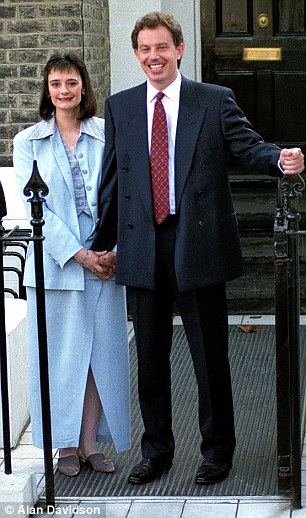
Tony Blair with wife Cherie on the day he became Labour leader on July 21, 1994
Exactly 20 years ago, a new star burst into the British political firmament.
When Tony Blair became Labour leader on July 21, 1994, his advent was widely seen as the beginning of a bright new era in British politics.
Here was a young, fresh moderniser, untainted by association with the past, who would surely drag his party — and his country — into the 21st century.
Today, we all know what happened to those optimistic expectations.
Two decades on, Mr Blair’s star could hardly have plunged to lower depths. His story has become perhaps the ultimate political morality tale, and far from being remembered as a symbol of youthful innocence, he now seems the incarnation of spin, sleaze and naked self-interest.
Of course, the journey from saviour to scapegoat is one of the most familiar political trajectories of all. However, the extraordinary thing about Tony Blair’s 20-year odyssey is that it has been so drastic and so complete.
Thanks to the endless corruption scandals, the cash for peerages row, the wars in Iraq and Afghanistan and the shameless pursuit of post-premiership wealth, his image is now so tarnished that it takes real effort to recall the atmosphere in July 1994, when he was elected to succeed the late John Smith as leader of the Labour Party.
After 15 years in power, the Tories were reeling from crisis to crisis. Thanks to the debacle of Black Wednesday in 1992, when Britain had been forced into a humiliating withdrawal from Europe’s Exchange Rate Mechanism, John Major’s government was sinking fast.
And so, even though there were three years to go until the General Election, Mr Blair’s ascent to the premiership seemed inevitable from the moment his party anointed him.
Never in living memory had any Opposition leader enjoyed such a honeymoon.
Polls gave Labour an unassailable lead, and Mr Blair’s personality cult — which, in retrospect, seems not just absurd but positively creepy — reached unprecedented heights.
Re-reading his first speech as leader on that July day two decades ago, it’s easy to see why so many people were taken in.
Right from the start, Mr Blair was a brilliant communicator, who said precisely what he knew people wanted to hear.
He promised to ‘lift the spirit of the nation’. He said it was wrong that we were spending ‘billions of pounds keeping able-bodied people idle’, and wrong that we were ‘wasting hundreds of millions of pounds on bureaucrats and accountants in the NHS’.
He promised to crack down on drugs and crime, to give all children the educational chances they deserved, and to get rid of the ‘quango state’.
Of course, talk is cheap. But when he became Prime Minister three years later, Tony Blair had probably the best inheritance of any new government in the 20th century.
Not only was the economy buoyant, but the Thatcher governments of the Eighties had taken most of the difficult decisions for him. There was no need to confront the unions, the IRA or the Soviet Union — all had effectively been beaten.
What an opportunity! What an historic chance to prepare Britain for the competitive global marketplace of the 21st century: to reform our welfare and education systems, to revive our manufacturing base, to rebuild our infrastructure, to reinvigorate our democracy!
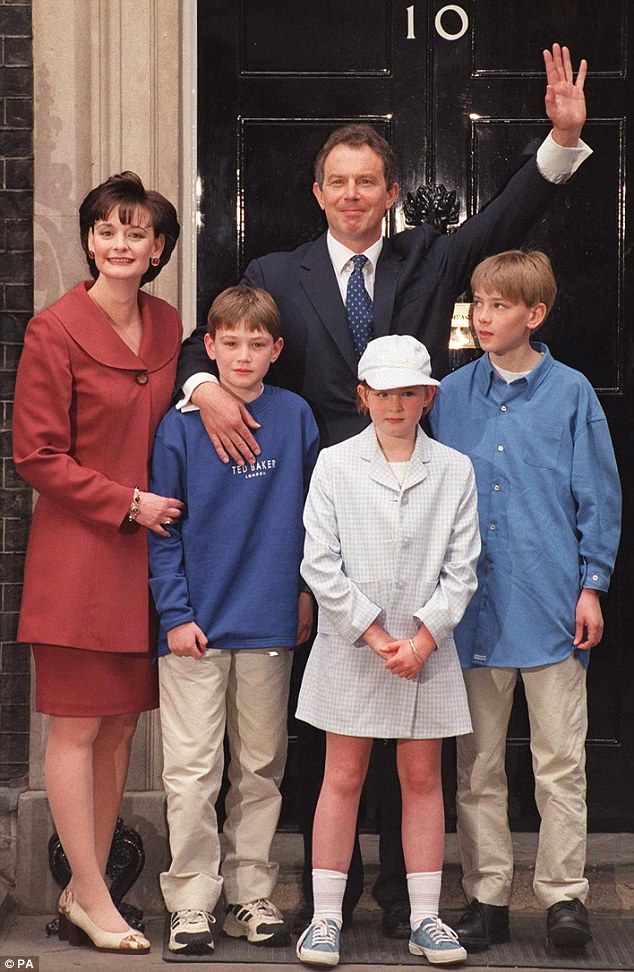
Tony Blair poses with wife Cherie and children (left to right) Nicky, Kathryn and Euan outside 10 Downing Street after Labour's landslide victory in the 1997 General Election. When he became Prime Minister, Blair had probably the best inheritance of any new government in the 20th century
Tony Blair poses with wife Cherie and children (left to right) Nicky, Kathryn and Euan outside 10 Downing Street after Labour's landslide victory in the 1997 General Election. When he became Prime Minister, Blair had probably the best inheritance of any new government in the 20th century
The new administration could, for instance, have invested heavily in apprenticeships, which would have slashed welfare bills and reinvigorated manufacturing industry in declining areas such as the West Midlands and the North-East. Instead, Mr Blair merely shifted hundreds of thousands of people on to disability benefit, costing the taxpayer a staggering £7 billion a year by the time he left office in 2007.
And instead of rebalancing our economy away from the South-East, Mr Blair bet the house on the City of London, leaving us with a wretchedly lopsided economy that was all too vulnerable to the global financial crisis that struck a few months after his retirement.
Looking back, in fact, the real story of the Blair years was one of shattering disappointment.
Mr Blair’s first term, as even he admitted in his execrable memoir A Journey, was sacrificed to the pursuit of short-term headlines. His second was consumed in the disastrous blunder of invading Iraq; his third was cut short by the endless feuding with his former comrade Gordon Brown.
One by one, the promises made in that first speech in 1994 were systematically broken. Far from being cut, for example, NHS bureaucracy ballooned as Whitehall imposed a new regime of rigid targets. Between 1999 and 2009, the number of NHS managers increased by an amazing 82 per cent.
As for scrapping the quango state, forget it. In ten years under Tony Blair, there was a 41 per cent increase in the number of quangos, which by then cost the taxpayer £124 billion a year.
Mr Blair’s first term, as even he admitted in his execrable memoir A Journey, was sacrificed to the pursuit of short-term headlines. His second was consumed in the disastrous blunder of invading Iraq; his third was cut short by the endless feuding with his former comrade Gordon Brown
But the deeper roots of this failure went back to the New Labour culture that Mr Blair established immediately upon becoming leader in 1994.
Right from the start, he and his henchmen, notably the bullying Alastair Campbell, encouraged a culture of shameless mendacity and obsessive control-freakery.
In power, these tendencies became exaggerated. Cabinet government gave way to sofa government and television showmanship took precedence over parliamentary democracy.
The economy, buoyed by the unsustainable expansion of personal credit, was still booming, while the Tories were having something of a mid-life crisis, so Mr Blair coasted to victory in election after election. All the time, however, spin and sleaze were eating away at the pillars of British public life.
The fact that Mr Blair himself was largely responsible is surely not in doubt. Today, some of his former admirers believe that he literally went mad. The former Labour Foreign Secretary, Lord Owen (an ex-doctor), has diagnosed narcissistic personality disorder, while the novelist Robert Harris, who used to play tennis with Blair, believes that he suffers from a ‘messiah complex’.
My own view is rather different. I don’t think Mr Blair went mad. I think he remains what he always was: a narcissistic, preening showman, the lead singer of a college rock band who modelled himself on Mick Jagger, craved the approval of the crowd and came to believe his own publicity.
He belongs, I think, to a long and dishonourable political tradition: the posturing populist who puts his own interests before those of the nation, like those great mountebanks Benjamin Disraeli and David Lloyd George — both of whom, like Mr Blair, built well-deserved reputations for egotism and avarice.
The tragedy, though, is that Tony Blair did much more damage. Many of the ills of contemporary Britain, not least the parlous state of British manufacturing and our over-dependence on the casino capitalism of the City of London, can be laid directly at his door.
And that is before you even begin to contemplate the festering sores of Iraq and Afghanistan, which did terrible damage to our reputation abroad.

Mr Blair shakes hands with former U.S. President George W. Bush in the Rose Garden of the White House in April 2004 after meeting in the Oval Office to discuss the war in Iraq
Of course you cannot blame Mr Blair alone for the current state of Iraq, divided, bomb-scarred and, thanks to the advance of Islamic militancy, lurching towards cataclysmic partition.
But because of his reckless folly in invading without bothering to lay the foundations for the future, he bears a considerable share of the responsibility, and any decent man would surely hang his head in sorrow and repentance.
Perhaps above all, though, Mr Blair dealt a terrible blow to the reputation of politics itself.
Of course, there had been plenty of dissembling, evasive, even mendacious politicians before, but never had there been one so determined to bend the truth to his own ends.
Even during the late Nineties, when Mr Blair was accused of twisting his policies after getting a big donation from the Formula One tycoon Bernie Ecclestone, there was a sense of growing public disquiet about his honesty — or lack of it.
But the war in Iraq was a disaster for the image of public life in this country.
Millions of people, horrified by the allegations that the government had ‘sexed up’ an intelligence dossier on the case for war, concluded that government ministers — indeed, all politicians — were inherently untrustworthy.
Of course you cannot blame Mr Blair alone for the current state of Iraq, divided, bomb-scarred and, thanks to the advance of Islamic militancy, lurching towards cataclysmic partition. But because of his reckless folly in invading without bothering to lay the foundations for the future, he bears a considerable share of the responsibility, and any decent man would surely hang his head in sorrow and repentance.
If our politicians could lie to get us into a war, the thinking went, then why should we believe them about anything else?
As a result, I think Mr Blair did more than anybody else in modern British history to destroy the relationship between the governors and the governed. By his final term, even his own closest colleague, who had long since become his most bitter rival, simply no longer trusted a word he said.
‘There is nothing that you could say to me now,’ Gordon Brown, frustrated at his old friend’s refusal to step aside, told Blair after the 2005 election, ‘that I would ever believe.’
Little wonder, then, that Mr Blair’s reputation inside his own party remains at rock bottom, or that he is rarely invited back to address Labour conferences.
In fairness, with his orange tan and mid-Atlantic accent, he would surely strike a weirdly exotic note at the gathering of the comrades.
Many Labour members now argue that, far from realising the ideals of socialism, championing the underdog and sticking up for ordinary working-class Britons, Mr Blair simply used their party to propel himself into power and line his own pockets.
I can’t say I blame them. Indeed, I wonder what ordinary Labour activists in Sedgefield, Mr Blair’s old working-class constituency in County Durham, now make of his globe-trotting, money- grubbing antics.
The astonishing thing, though, is that far from slinking into obscurity, Mr Blair continues to court the limelight.
Only last month, after Ukip’s sensational showing in the European and local elections, he took it upon himself to lecture the British people about the joys of the European Union.
He is evidently oblivious to the fact that whenever he speaks out in support of something (such as, say, plunging into a new Middle Eastern adventure in Syria, as he urged last year), he makes it far more likely that voters will recoil in horror.
Given that most senior figures in the Labour Party seem to be trying to forget that he ever existed, you might have expected him to retreat into the shadows, following the example of his predecessor, Sir Anthony Eden, after the debacle of the Suez Crisis in 1956.
Instead, in an apparent bid to prove that he lacks an iota of shame, irony or self-knowledge, Mr Blair decided that it was his mission to bring peace to the Middle East. Well, given that Israel and the Palestinians have spent the past week firing rockets at each other, we all know how that worked out.
On top of that, Mr Blair has spent the past seven years whoring himself around the world. He is now worth an estimated £30 million — although he insisted this week the figure was nearer £20 million — having been said to have taken £125,000 from the Chinese for a single speech on philanthropy, as well as a reported $13 million from Kazakhstan’s autocratic president Nursultan Nazarbayev in return for unspecified ‘advice’. Blair denied making any personal profit.

Demonstrators protest outside the Queen Elizabeth Conference Centre in London where former prime minister Tony Blair give evidence to the Iraq Chilcott Inquiry
His other clients, by the way, include the repressive, super-rich regimes in Kuwait and Qatar, and the vastly wealthy China Investment Corporation. I can barely bring myself to imagine what the high-minded men and women who founded the Labour Party would make of it.
Of course, other former prime ministers have worked the lecture circuit, but none has ever done so with such single-minded determination to line his pockets, and none has ever prostituted the dignity of the British premiership with such reckless, self-interested amorality.
Even many of Mr Blair’s closest political colleagues have been shocked by his naked greed for money.
‘There is no question,’ admitted his former Home Secretary, Charles Clarke, this month, ‘that he has damaged his reputation. The money . . .some of his contacts . . . some aspects of the way he’s spent his life have damaged his reputation.’
For my part, I often think of our former Prime Minister as a cross between Mr Toad and Arthur Daley: shameless, unrepentant endlessly touting his shop-soiled wares, impervious to criticism.
The veteran Tory MP Sir Peter Tapsell recently suggested that, in the light of the bloody chaos in Iraq, Mr Blair ought to be impeached and put on trial before the House of Lords.
Entertaining as the prospect sounds, it strikes me as a little unlikely. Where Mr Blair’s story will end, though, is anybody’s guess.
His little band of partisans dwindles by the year; if he carries on at the current rate, he will be friendless by the end of the decade.
It is true that political reputations tend to wax and wane. But never, I think, has any former prime minister’s star sunk quite so low — especially when you consider the gushing, almost adolescent adulation that greeted Mr Blair’s elevation as Labour leader.
Perhaps the supreme irony is that, right from the start, Tony Blair governed with a keen eye on the history books. ‘A day like today is not a day for soundbites,’ he famously said on the signing of the Good Friday Agreement, ‘but I feel the hand of history upon our shoulders.’
But now, 20 years after he first seized the attention of the British public, it seems certain that history’s verdict will be withering. Indeed, perhaps never in our modern history has so much potential been so tragically wasted.
In the past two decades, Mr Blair has done dreadful damage not just to public life in this country, but to his own reputation.
The only thing that has not suffered, of course, is his bank balance. And that, I think, says it all.
From symbol of hope to incarnation of sleaze, lies and greed: This week marks 20 years since Tony Blair became Labour leader. Now Dominic Sandbrook asks - has any former PM sunk so low?
Tony Blair with wife Cherie on the day he became Labour leader on July 21, 1994
Exactly 20 years ago, a new star burst into the British political firmament.
When Tony Blair became Labour leader on July 21, 1994, his advent was widely seen as the beginning of a bright new era in British politics.
Here was a young, fresh moderniser, untainted by association with the past, who would surely drag his party — and his country — into the 21st century.
Today, we all know what happened to those optimistic expectations.
Two decades on, Mr Blair’s star could hardly have plunged to lower depths. His story has become perhaps the ultimate political morality tale, and far from being remembered as a symbol of youthful innocence, he now seems the incarnation of spin, sleaze and naked self-interest.
Of course, the journey from saviour to scapegoat is one of the most familiar political trajectories of all. However, the extraordinary thing about Tony Blair’s 20-year odyssey is that it has been so drastic and so complete.
Thanks to the endless corruption scandals, the cash for peerages row, the wars in Iraq and Afghanistan and the shameless pursuit of post-premiership wealth, his image is now so tarnished that it takes real effort to recall the atmosphere in July 1994, when he was elected to succeed the late John Smith as leader of the Labour Party.
After 15 years in power, the Tories were reeling from crisis to crisis. Thanks to the debacle of Black Wednesday in 1992, when Britain had been forced into a humiliating withdrawal from Europe’s Exchange Rate Mechanism, John Major’s government was sinking fast.
And so, even though there were three years to go until the General Election, Mr Blair’s ascent to the premiership seemed inevitable from the moment his party anointed him.
Never in living memory had any Opposition leader enjoyed such a honeymoon.
Polls gave Labour an unassailable lead, and Mr Blair’s personality cult — which, in retrospect, seems not just absurd but positively creepy — reached unprecedented heights.
Re-reading his first speech as leader on that July day two decades ago, it’s easy to see why so many people were taken in.
Right from the start, Mr Blair was a brilliant communicator, who said precisely what he knew people wanted to hear.
He promised to ‘lift the spirit of the nation’. He said it was wrong that we were spending ‘billions of pounds keeping able-bodied people idle’, and wrong that we were ‘wasting hundreds of millions of pounds on bureaucrats and accountants in the NHS’.
He promised to crack down on drugs and crime, to give all children the educational chances they deserved, and to get rid of the ‘quango state’.
Of course, talk is cheap. But when he became Prime Minister three years later, Tony Blair had probably the best inheritance of any new government in the 20th century.
Not only was the economy buoyant, but the Thatcher governments of the Eighties had taken most of the difficult decisions for him. There was no need to confront the unions, the IRA or the Soviet Union — all had effectively been beaten.
What an opportunity! What an historic chance to prepare Britain for the competitive global marketplace of the 21st century: to reform our welfare and education systems, to revive our manufacturing base, to rebuild our infrastructure, to reinvigorate our democracy!
Tony Blair poses with wife Cherie and children (left to right) Nicky, Kathryn and Euan outside 10 Downing Street after Labour's landslide victory in the 1997 General Election. When he became Prime Minister, Blair had probably the best inheritance of any new government in the 20th century
Tony Blair poses with wife Cherie and children (left to right) Nicky, Kathryn and Euan outside 10 Downing Street after Labour's landslide victory in the 1997 General Election. When he became Prime Minister, Blair had probably the best inheritance of any new government in the 20th century
The new administration could, for instance, have invested heavily in apprenticeships, which would have slashed welfare bills and reinvigorated manufacturing industry in declining areas such as the West Midlands and the North-East. Instead, Mr Blair merely shifted hundreds of thousands of people on to disability benefit, costing the taxpayer a staggering £7 billion a year by the time he left office in 2007.
And instead of rebalancing our economy away from the South-East, Mr Blair bet the house on the City of London, leaving us with a wretchedly lopsided economy that was all too vulnerable to the global financial crisis that struck a few months after his retirement.
Looking back, in fact, the real story of the Blair years was one of shattering disappointment.
Mr Blair’s first term, as even he admitted in his execrable memoir A Journey, was sacrificed to the pursuit of short-term headlines. His second was consumed in the disastrous blunder of invading Iraq; his third was cut short by the endless feuding with his former comrade Gordon Brown.
One by one, the promises made in that first speech in 1994 were systematically broken. Far from being cut, for example, NHS bureaucracy ballooned as Whitehall imposed a new regime of rigid targets. Between 1999 and 2009, the number of NHS managers increased by an amazing 82 per cent.
As for scrapping the quango state, forget it. In ten years under Tony Blair, there was a 41 per cent increase in the number of quangos, which by then cost the taxpayer £124 billion a year.
Mr Blair’s first term, as even he admitted in his execrable memoir A Journey, was sacrificed to the pursuit of short-term headlines. His second was consumed in the disastrous blunder of invading Iraq; his third was cut short by the endless feuding with his former comrade Gordon Brown
But the deeper roots of this failure went back to the New Labour culture that Mr Blair established immediately upon becoming leader in 1994.
Right from the start, he and his henchmen, notably the bullying Alastair Campbell, encouraged a culture of shameless mendacity and obsessive control-freakery.
In power, these tendencies became exaggerated. Cabinet government gave way to sofa government and television showmanship took precedence over parliamentary democracy.
The economy, buoyed by the unsustainable expansion of personal credit, was still booming, while the Tories were having something of a mid-life crisis, so Mr Blair coasted to victory in election after election. All the time, however, spin and sleaze were eating away at the pillars of British public life.
The fact that Mr Blair himself was largely responsible is surely not in doubt. Today, some of his former admirers believe that he literally went mad. The former Labour Foreign Secretary, Lord Owen (an ex-doctor), has diagnosed narcissistic personality disorder, while the novelist Robert Harris, who used to play tennis with Blair, believes that he suffers from a ‘messiah complex’.
My own view is rather different. I don’t think Mr Blair went mad. I think he remains what he always was: a narcissistic, preening showman, the lead singer of a college rock band who modelled himself on Mick Jagger, craved the approval of the crowd and came to believe his own publicity.
He belongs, I think, to a long and dishonourable political tradition: the posturing populist who puts his own interests before those of the nation, like those great mountebanks Benjamin Disraeli and David Lloyd George — both of whom, like Mr Blair, built well-deserved reputations for egotism and avarice.
The tragedy, though, is that Tony Blair did much more damage. Many of the ills of contemporary Britain, not least the parlous state of British manufacturing and our over-dependence on the casino capitalism of the City of London, can be laid directly at his door.
And that is before you even begin to contemplate the festering sores of Iraq and Afghanistan, which did terrible damage to our reputation abroad.
Mr Blair shakes hands with former U.S. President George W. Bush in the Rose Garden of the White House in April 2004 after meeting in the Oval Office to discuss the war in Iraq
Of course you cannot blame Mr Blair alone for the current state of Iraq, divided, bomb-scarred and, thanks to the advance of Islamic militancy, lurching towards cataclysmic partition.
But because of his reckless folly in invading without bothering to lay the foundations for the future, he bears a considerable share of the responsibility, and any decent man would surely hang his head in sorrow and repentance.
Perhaps above all, though, Mr Blair dealt a terrible blow to the reputation of politics itself.
Of course, there had been plenty of dissembling, evasive, even mendacious politicians before, but never had there been one so determined to bend the truth to his own ends.
Even during the late Nineties, when Mr Blair was accused of twisting his policies after getting a big donation from the Formula One tycoon Bernie Ecclestone, there was a sense of growing public disquiet about his honesty — or lack of it.
But the war in Iraq was a disaster for the image of public life in this country.
Millions of people, horrified by the allegations that the government had ‘sexed up’ an intelligence dossier on the case for war, concluded that government ministers — indeed, all politicians — were inherently untrustworthy.
Of course you cannot blame Mr Blair alone for the current state of Iraq, divided, bomb-scarred and, thanks to the advance of Islamic militancy, lurching towards cataclysmic partition. But because of his reckless folly in invading without bothering to lay the foundations for the future, he bears a considerable share of the responsibility, and any decent man would surely hang his head in sorrow and repentance.
If our politicians could lie to get us into a war, the thinking went, then why should we believe them about anything else?
As a result, I think Mr Blair did more than anybody else in modern British history to destroy the relationship between the governors and the governed. By his final term, even his own closest colleague, who had long since become his most bitter rival, simply no longer trusted a word he said.
‘There is nothing that you could say to me now,’ Gordon Brown, frustrated at his old friend’s refusal to step aside, told Blair after the 2005 election, ‘that I would ever believe.’
Little wonder, then, that Mr Blair’s reputation inside his own party remains at rock bottom, or that he is rarely invited back to address Labour conferences.
In fairness, with his orange tan and mid-Atlantic accent, he would surely strike a weirdly exotic note at the gathering of the comrades.
Many Labour members now argue that, far from realising the ideals of socialism, championing the underdog and sticking up for ordinary working-class Britons, Mr Blair simply used their party to propel himself into power and line his own pockets.
I can’t say I blame them. Indeed, I wonder what ordinary Labour activists in Sedgefield, Mr Blair’s old working-class constituency in County Durham, now make of his globe-trotting, money- grubbing antics.
The astonishing thing, though, is that far from slinking into obscurity, Mr Blair continues to court the limelight.
Only last month, after Ukip’s sensational showing in the European and local elections, he took it upon himself to lecture the British people about the joys of the European Union.
He is evidently oblivious to the fact that whenever he speaks out in support of something (such as, say, plunging into a new Middle Eastern adventure in Syria, as he urged last year), he makes it far more likely that voters will recoil in horror.
Given that most senior figures in the Labour Party seem to be trying to forget that he ever existed, you might have expected him to retreat into the shadows, following the example of his predecessor, Sir Anthony Eden, after the debacle of the Suez Crisis in 1956.
Instead, in an apparent bid to prove that he lacks an iota of shame, irony or self-knowledge, Mr Blair decided that it was his mission to bring peace to the Middle East. Well, given that Israel and the Palestinians have spent the past week firing rockets at each other, we all know how that worked out.
On top of that, Mr Blair has spent the past seven years whoring himself around the world. He is now worth an estimated £30 million — although he insisted this week the figure was nearer £20 million — having been said to have taken £125,000 from the Chinese for a single speech on philanthropy, as well as a reported $13 million from Kazakhstan’s autocratic president Nursultan Nazarbayev in return for unspecified ‘advice’. Blair denied making any personal profit.
Demonstrators protest outside the Queen Elizabeth Conference Centre in London where former prime minister Tony Blair give evidence to the Iraq Chilcott Inquiry
His other clients, by the way, include the repressive, super-rich regimes in Kuwait and Qatar, and the vastly wealthy China Investment Corporation. I can barely bring myself to imagine what the high-minded men and women who founded the Labour Party would make of it.
Of course, other former prime ministers have worked the lecture circuit, but none has ever done so with such single-minded determination to line his pockets, and none has ever prostituted the dignity of the British premiership with such reckless, self-interested amorality.
Even many of Mr Blair’s closest political colleagues have been shocked by his naked greed for money.
‘There is no question,’ admitted his former Home Secretary, Charles Clarke, this month, ‘that he has damaged his reputation. The money . . .some of his contacts . . . some aspects of the way he’s spent his life have damaged his reputation.’
For my part, I often think of our former Prime Minister as a cross between Mr Toad and Arthur Daley: shameless, unrepentant endlessly touting his shop-soiled wares, impervious to criticism.
The veteran Tory MP Sir Peter Tapsell recently suggested that, in the light of the bloody chaos in Iraq, Mr Blair ought to be impeached and put on trial before the House of Lords.
Entertaining as the prospect sounds, it strikes me as a little unlikely. Where Mr Blair’s story will end, though, is anybody’s guess.
His little band of partisans dwindles by the year; if he carries on at the current rate, he will be friendless by the end of the decade.
It is true that political reputations tend to wax and wane. But never, I think, has any former prime minister’s star sunk quite so low — especially when you consider the gushing, almost adolescent adulation that greeted Mr Blair’s elevation as Labour leader.
Perhaps the supreme irony is that, right from the start, Tony Blair governed with a keen eye on the history books. ‘A day like today is not a day for soundbites,’ he famously said on the signing of the Good Friday Agreement, ‘but I feel the hand of history upon our shoulders.’
But now, 20 years after he first seized the attention of the British public, it seems certain that history’s verdict will be withering. Indeed, perhaps never in our modern history has so much potential been so tragically wasted.
In the past two decades, Mr Blair has done dreadful damage not just to public life in this country, but to his own reputation.
The only thing that has not suffered, of course, is his bank balance. And that, I think, says it all.
ExecLine
- 26 Jul 2014 12:53
- 44336 of 81564
And that is why we won't vote New Labour in again.
At least Cameron, Osborne & Co are on track for putting things pretty much back on the right track.
And 'God help us!' if we were to ever get a New Labour/Liberal Democrat coalition government.
At least Cameron, Osborne & Co are on track for putting things pretty much back on the right track.
And 'God help us!' if we were to ever get a New Labour/Liberal Democrat coalition government.
goldfinger
- 26 Jul 2014 13:09
- 44337 of 81564
LATEST POLL PROJECTION 26/07/2014
44 Labour Seat Majority.
UKPR POLLING AVERAGE
32 36 8
LAB 36%
CON 32%
LIB/DEM 8
44 Labour Seat Majority.
UKPR POLLING AVERAGE
32 36 8
LAB 36%
CON 32%
LIB/DEM 8
goldfinger
- 26 Jul 2014 13:12
- 44338 of 81564
Exclusive: Cameron’s Big Society in tatters as charity watchdog launches investigation into claims of Government funding misuse26/july/2014
The organisation was given at least £2.5 million of National Lottery funding and public-sector grants despite having no record of charitable activity
OLIVER WRIGHT Author Biography POLITICAL EDITOR Saturday 26 July 2014
David Cameron’s flagship Big Society Network is being investigated by the Charity Commission over allegations that it misused government funding and made inappropriate payments to its directors – including a Tory donor.
Which Tories have this Public money in their bank accounts?????????????
The organisation was given at least £2.5 million of National Lottery funding and public-sector grants despite having no record of charitable activity
OLIVER WRIGHT Author Biography POLITICAL EDITOR Saturday 26 July 2014
David Cameron’s flagship Big Society Network is being investigated by the Charity Commission over allegations that it misused government funding and made inappropriate payments to its directors – including a Tory donor.
Which Tories have this Public money in their bank accounts?????????????
goldfinger
- 26 Jul 2014 14:50
- 44339 of 81564
Read @lisanandy 's letter asking for an investigation into links between the Big Society Network & the Tories here http://press.labour.org.uk/post/92918224654/lisa-nandy-mps-letter-asking-for-an-investigation-into …
goldfinger
- 26 Jul 2014 14:52
- 44340 of 81564
Lisa Nandy MP’s letter asking for an investigation into links between the Big Society Network and the Conservatives
Lisa Nandy MP, Labour’s Shadow Minister for Civil Society, has written to Sir Jeremy Heywood asking for an urgent investigation into the links between the Big Society Network, Mr Rose, and the Conservative party.
Below is the text of the letter sent to Sir Jeremy Heywood yesterday, and also the text of the letter that Lisa Nandy MP sent to David Cameron earlier this week in which she expresses concern over the discovery that the Cabinet Office has wasted large sums of Government funding questionable ‘Big Society Network’ projects which ended in failure.
Letter to Sir Jeremy Heywood:
25th July 2014
Dear Sir Jeremy,
I am writing following my letter to the Prime Minister regarding the damning National Audit Office’s report on grants made to the Big Society Network and the Society Network Foundation. I asked how it was possible for the Cabinet Office to break its own rules on the allocation of grants when funding the Society Network Foundation’s programmes and called for a full investigation into allegations that undue pressure was placed on the Big Lottery Fund and others to provide funding for the Big Society Network’s projects.
However since writing to the Prime Minister, it has come to light that the Co-founder and Chairman of the Big Society Network, Mr Martyn Rose, is also a Conservative party donor. According to the Electoral Commission’s records, Mr Rose donated in excess of £50,000 through his company Martyn Rose Limited during the six month period between December 2009 and June 2010.
When Mr Rose’s relationship with the Conservative party is taken into consideration with the serious allegations that the Government was pressuring organisations to fund the Big Society Network’s programmes, it is clear that there are questions to answer. It is a deeply concerning state of affairs.
I would therefore ask if you could urgently investigate the links between the Big Society Network, Mr Rose, and the Conservative party.
I have attached a copy of my letter to the Prime Minister for your information.
Yours sincerely,
Lisa Nandy MP
Shadow Minister for Civil Society
Letter to Prime Minister:
23rd July 2014
Dear Prime Minister,
By now you will have seen the damning National Audit Office report regarding grants made to the Big Society Network and Society Network Foundation.
I hope you were as concerned as I was to discover that the Cabinet Office has wasted large sums of government funding on questionable projects which ended in such failure. It is extraordinary that millions of pounds have been squandered, especially in this current climate where funding is scarce and many charitable organisations are fighting for survival.
I would urge you to set up an immediate investigation into how the Cabinet Office so clearly broke its own rules, and whether undue pressure was put on the Big Lottery to award funding to the Big Society Network and Society Network Foundation. I’m sure you will be keen to ascertain how these two key aspects of your flagship ‘Big Society’ policy could have fallen into such disrepute particularly considering you personally launched the Big Society Network in No. 10 just four years ago. Since NAO’s investigation was published other worrying allegations have come to light that undue pressure was also put on the organisation, NESTA, to provide money to the Big Society Network. Again I urge you to set up an investigation into whether such practices took place at the heart of your Government.
This episode has caused a great deal of concern among the public and the charity sector. I am certain this will damage public confidence in the Government. I would therefore ask for your personal assurances that you will fully commit to finding out how such practices were allowed to take place and I would be grateful for an urgent response to the following questions:
Will there be an investigation into the Cabinet Office’s behaviour that addresses why the Cabinet Office broke its own rules and whether Ministers put undue pressure on the Big Lottery Fund?
Did Ministers put pressure on any other organisations, including NESTA, to fund the Big Society Network or the Society Network Foundation?
Why was the criteria changed to allow organisations that had existed for less than two years to receive funding from the Cabinet Office and will this now be reversed?
Why was a second payment of £98,700 made to the Society Network Foundation in October 2012, despite the fact that the Cabinet Office was aware the project was failing?
Did a Minister authorise the second payment for the Get In project, and on what basis was that decision taken?
Why didn’t the Cabinet Office investigate how its initial payment to the Society Network Foundation for the Get In project had been spent, and why was no account taken of the fact that – at the time the second payment was made – the project was in surplus of £60,800?
What steps is the Government taking to recover the £119,900 of taxpayers’ money it has wasted through the Get In project?
Yours sincerely,
Lisa Nandy MP
Shadow Minister for Civil Society
Lisa Nandy MP, Labour’s Shadow Minister for Civil Society, has written to Sir Jeremy Heywood asking for an urgent investigation into the links between the Big Society Network, Mr Rose, and the Conservative party.
Below is the text of the letter sent to Sir Jeremy Heywood yesterday, and also the text of the letter that Lisa Nandy MP sent to David Cameron earlier this week in which she expresses concern over the discovery that the Cabinet Office has wasted large sums of Government funding questionable ‘Big Society Network’ projects which ended in failure.
Letter to Sir Jeremy Heywood:
25th July 2014
Dear Sir Jeremy,
I am writing following my letter to the Prime Minister regarding the damning National Audit Office’s report on grants made to the Big Society Network and the Society Network Foundation. I asked how it was possible for the Cabinet Office to break its own rules on the allocation of grants when funding the Society Network Foundation’s programmes and called for a full investigation into allegations that undue pressure was placed on the Big Lottery Fund and others to provide funding for the Big Society Network’s projects.
However since writing to the Prime Minister, it has come to light that the Co-founder and Chairman of the Big Society Network, Mr Martyn Rose, is also a Conservative party donor. According to the Electoral Commission’s records, Mr Rose donated in excess of £50,000 through his company Martyn Rose Limited during the six month period between December 2009 and June 2010.
When Mr Rose’s relationship with the Conservative party is taken into consideration with the serious allegations that the Government was pressuring organisations to fund the Big Society Network’s programmes, it is clear that there are questions to answer. It is a deeply concerning state of affairs.
I would therefore ask if you could urgently investigate the links between the Big Society Network, Mr Rose, and the Conservative party.
I have attached a copy of my letter to the Prime Minister for your information.
Yours sincerely,
Lisa Nandy MP
Shadow Minister for Civil Society
Letter to Prime Minister:
23rd July 2014
Dear Prime Minister,
By now you will have seen the damning National Audit Office report regarding grants made to the Big Society Network and Society Network Foundation.
I hope you were as concerned as I was to discover that the Cabinet Office has wasted large sums of government funding on questionable projects which ended in such failure. It is extraordinary that millions of pounds have been squandered, especially in this current climate where funding is scarce and many charitable organisations are fighting for survival.
I would urge you to set up an immediate investigation into how the Cabinet Office so clearly broke its own rules, and whether undue pressure was put on the Big Lottery to award funding to the Big Society Network and Society Network Foundation. I’m sure you will be keen to ascertain how these two key aspects of your flagship ‘Big Society’ policy could have fallen into such disrepute particularly considering you personally launched the Big Society Network in No. 10 just four years ago. Since NAO’s investigation was published other worrying allegations have come to light that undue pressure was also put on the organisation, NESTA, to provide money to the Big Society Network. Again I urge you to set up an investigation into whether such practices took place at the heart of your Government.
This episode has caused a great deal of concern among the public and the charity sector. I am certain this will damage public confidence in the Government. I would therefore ask for your personal assurances that you will fully commit to finding out how such practices were allowed to take place and I would be grateful for an urgent response to the following questions:
Will there be an investigation into the Cabinet Office’s behaviour that addresses why the Cabinet Office broke its own rules and whether Ministers put undue pressure on the Big Lottery Fund?
Did Ministers put pressure on any other organisations, including NESTA, to fund the Big Society Network or the Society Network Foundation?
Why was the criteria changed to allow organisations that had existed for less than two years to receive funding from the Cabinet Office and will this now be reversed?
Why was a second payment of £98,700 made to the Society Network Foundation in October 2012, despite the fact that the Cabinet Office was aware the project was failing?
Did a Minister authorise the second payment for the Get In project, and on what basis was that decision taken?
Why didn’t the Cabinet Office investigate how its initial payment to the Society Network Foundation for the Get In project had been spent, and why was no account taken of the fact that – at the time the second payment was made – the project was in surplus of £60,800?
What steps is the Government taking to recover the £119,900 of taxpayers’ money it has wasted through the Get In project?
Yours sincerely,
Lisa Nandy MP
Shadow Minister for Civil Society
MaxK - 26 Jul 2014 19:28 - 44341 of 81564
Where do they think the money will ultimately come from?
Local councils propose 'Tesco tax' on large supermarkets to raise revenue
Derby city council leads calls for levy of up to 8.5% on large retail outlets, with money to be reinvested in local community
Shane Hickey
theguardian.com, Saturday 26 July 2014 11.26 BST
Local councils have asked the government to give them new powers to tax large supermarkets under a system similar to that already in place in Scotland and Northern Ireland.
A group of 20 local councils have backed what has been dubbed a "Tesco tax" in order to increase revenues which they say would be invested in the local community.
Derby city council has called for the right to impose a levy on large supermarkets, which it says could earn the local authority an estimated £2m a year.
The BBC reports that anorther 19 local authorities are in favour of the tax.
More: http://www.theguardian.com/society/2014/jul/26/local-councils-tesco-tax-large-supermarkets-increase-revenues
Local councils propose 'Tesco tax' on large supermarkets to raise revenue
Derby city council leads calls for levy of up to 8.5% on large retail outlets, with money to be reinvested in local community
Shane Hickey
theguardian.com, Saturday 26 July 2014 11.26 BST
Local councils have asked the government to give them new powers to tax large supermarkets under a system similar to that already in place in Scotland and Northern Ireland.
A group of 20 local councils have backed what has been dubbed a "Tesco tax" in order to increase revenues which they say would be invested in the local community.
Derby city council has called for the right to impose a levy on large supermarkets, which it says could earn the local authority an estimated £2m a year.
The BBC reports that anorther 19 local authorities are in favour of the tax.
More: http://www.theguardian.com/society/2014/jul/26/local-councils-tesco-tax-large-supermarkets-increase-revenues
goldfinger
- 26 Jul 2014 21:53
- 44342 of 81564
Ober Ik heb Eels in mijn soep.
goldfinger
- 27 Jul 2014 03:07
- 44343 of 81564
Wheres MAX with is thought for the night??????
Look forward to it.
Look forward to it.
MaxK - 27 Jul 2014 08:06 - 44344 of 81564
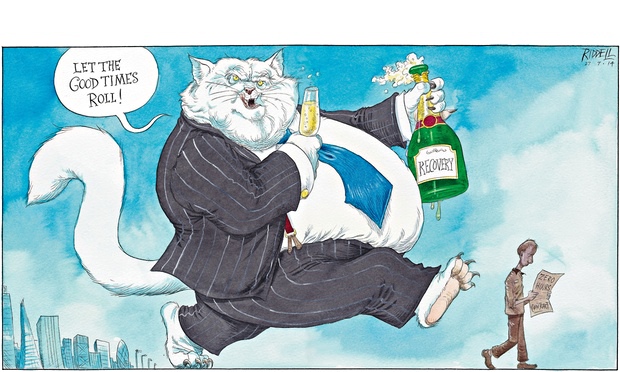
Haystack
- 27 Jul 2014 11:09
- 44345 of 81564
Update - Labour lead at 1
by YouGov in Political Trackers and Politics
Sun July 27, 2014 6 a.m. BST
Latest YouGov / Sunday Times results 25th July - Con 35%, Lab 36%, LD 8%, UKIP 13%;
by YouGov in Political Trackers and Politics
Sun July 27, 2014 6 a.m. BST
Latest YouGov / Sunday Times results 25th July - Con 35%, Lab 36%, LD 8%, UKIP 13%;
MaxK - 27 Jul 2014 11:41 - 44346 of 81564
What does that poll translate into probable seat numbers?
Haystack
- 27 Jul 2014 11:48
- 44347 of 81564
One ahead is probably a small majority for Labour or a hung parliament. The interesting part of the polls is that UKIP are stuck at a level that gives them no seats. If UKIP stays at this level then it will become clear to the public that no MPs is a wasted vote. Many commentators have said that they expect their vote to collapse in the GE. The factor that may decide the election is where will those votes go when they abandon UKIP.
MaxK - 27 Jul 2014 12:14 - 44348 of 81564
Fair enough.
Any idea what 8% will do the limp/dims?
Any idea what 8% will do the limp/dims?
| About MoneyAM | Ts and Cs | Privacy Policy | Investment Warning | Content Standards | Corporate Solutions | Advertise With Us | Site Map | © 2026 MoneyAM |
Register now for FREE
Share Prices,
Stock Quotes,
Charts, Bulletin Boards, Indices, Watchlists, Portfolio, Market News, Research
or see our Premium Services including Level 2, Terminal and much more.
 Follow us on Twitter