

| Home | Log In | Register | Our Services | My Account | Contact | Help |
You are NOT currently logged in
Register now or login to post to this thread.
THE TALK TO YOURSELF THREAD. (NOWT)
goldfinger

 - 09 Jun 2005 12:25


Thought Id start this one going because its rather dead on this board at the moment and I suppose all my usual muckers are either at the Stella tennis event watching Dim Tim (lose again) or at Henly Regatta eating cucumber sandwiches (they wish,...NOT).
Anyway please feel free to just talk to yourself blast away and let it go on any company or subject you wish. Just wish Id thought of this one before.
cheers GF.
Anyway please feel free to just talk to yourself blast away and let it go on any company or subject you wish. Just wish Id thought of this one before.
cheers GF.
Chris Carson
- 18 Oct 2014 01:36
- 47988 of 81564
Euro's long shadow
Last year, when Jose Manuel Barroso declared ‘the threat against the euro has essentially been overcome’, the Mail warned that the European Commission President was terrifyingly deluded.
Now the eurocrats are counting the cost as the fundamentally-flawed currency lurches back towards full-blown crisis.
Prices are rising at the slowest pace since the depths of the global downturn in 2009, fuelling fears that the eurozone is heading for a disastrous bout of deflation – which would make it harder for member states to service their crippling debts.
Unemployment remains unsustainably high with 18.3million out of work – including almost a quarter of under-25s.
Even Germany – badly hit by the ban on exports to Russia – is expected to slip back into recession shortly.
Most alarmingly, Berlin, Paris and Brussels are falling out among themselves, as Greece and France indicate they are no longer prepared to tolerate the austerity demanded by the euro’s German paymasters.
It’s tempting once again to thank our lucky stars that Britain is not part of this disastrous political project.
But, as George Osborne warns, the turmoil in mainland Europe will inevitably cast a pall over the UK economy, hurting our manufacturers and exports.
The Chancellor has done an excellent job in steering Britain towards recovery. But make no mistake: thanks to the continued folly of the euro, the stormiest of seas lie ahead.
Read more: http://www.dailymail.co.uk/debate/article-2797942/daily-mail-comment-cynical-stunt-backfired-labour.html#ixzz3GS7Gp6n3
Follow us: @MailOnline on Twitter | DailyMail on Facebook
Last year, when Jose Manuel Barroso declared ‘the threat against the euro has essentially been overcome’, the Mail warned that the European Commission President was terrifyingly deluded.
Now the eurocrats are counting the cost as the fundamentally-flawed currency lurches back towards full-blown crisis.
Prices are rising at the slowest pace since the depths of the global downturn in 2009, fuelling fears that the eurozone is heading for a disastrous bout of deflation – which would make it harder for member states to service their crippling debts.
Unemployment remains unsustainably high with 18.3million out of work – including almost a quarter of under-25s.
Even Germany – badly hit by the ban on exports to Russia – is expected to slip back into recession shortly.
Most alarmingly, Berlin, Paris and Brussels are falling out among themselves, as Greece and France indicate they are no longer prepared to tolerate the austerity demanded by the euro’s German paymasters.
It’s tempting once again to thank our lucky stars that Britain is not part of this disastrous political project.
But, as George Osborne warns, the turmoil in mainland Europe will inevitably cast a pall over the UK economy, hurting our manufacturers and exports.
The Chancellor has done an excellent job in steering Britain towards recovery. But make no mistake: thanks to the continued folly of the euro, the stormiest of seas lie ahead.
Read more: http://www.dailymail.co.uk/debate/article-2797942/daily-mail-comment-cynical-stunt-backfired-labour.html#ixzz3GS7Gp6n3
Follow us: @MailOnline on Twitter | DailyMail on Facebook
Haystack
- 18 Oct 2014 09:37
- 47989 of 81564
UKIP still at the no MPs won in the GE level.
Update - Labour lead at 1
by YouGov in Politics
Fri October 17, 2014 6 a.m. BST
Latest YouGov / The Sun results 16th Oct - Con 31%, Lab 32%, LD 8%, UKIP 18%;
Update - Labour lead at 1
by YouGov in Politics
Fri October 17, 2014 6 a.m. BST
Latest YouGov / The Sun results 16th Oct - Con 31%, Lab 32%, LD 8%, UKIP 18%;
Fred1new
- 18 Oct 2014 09:56
- 47990 of 81564
MaxK - 17 Oct 2014 21:41 - 47968 of 47990
gf, I hate to tell you, but db is correct about ebola.
You need to stop interaction between infected people...then it will die out.
Sorry Max.
Not quite so simple and the Fruit Bat and its ability to spread the virus, may be one of the ongoing problems of Ebola.
The Fruit bat apparently is main indirect vector.
Able to carry the virus, "not effected by it". spread by faeces, urine and saliva to other products ingested by other animals (Monkeys etc..) (Meat and food.)
Through that chain to humans and thence on!
---------------
I think that vaccine is the future solution, but "hygiene" is the route at the moment with restriction of movement.
Give a thought to what would be the effect of this disease deliberately being loosed into a war zone the problem would be catastrophic.
=
That is why it is a INTERNATIONAL PROBLEM and one reason why Europe and USA Etc have to take the responsibility as they do have sophisticated Departments of Health, Hygiene Epidemiology and Tropical Diseases
---------
Another problem is that although it doesn't seem spread through air and inhalation, there are question marks over whether this has occurred in Rhesus monkeys.
gf, I hate to tell you, but db is correct about ebola.
You need to stop interaction between infected people...then it will die out.
Sorry Max.
Not quite so simple and the Fruit Bat and its ability to spread the virus, may be one of the ongoing problems of Ebola.
The Fruit bat apparently is main indirect vector.
Able to carry the virus, "not effected by it". spread by faeces, urine and saliva to other products ingested by other animals (Monkeys etc..) (Meat and food.)
Through that chain to humans and thence on!
---------------
I think that vaccine is the future solution, but "hygiene" is the route at the moment with restriction of movement.
Give a thought to what would be the effect of this disease deliberately being loosed into a war zone the problem would be catastrophic.
=
That is why it is a INTERNATIONAL PROBLEM and one reason why Europe and USA Etc have to take the responsibility as they do have sophisticated Departments of Health, Hygiene Epidemiology and Tropical Diseases
---------
Another problem is that although it doesn't seem spread through air and inhalation, there are question marks over whether this has occurred in Rhesus monkeys.
MaxK - 18 Oct 2014 09:58 - 47991 of 81564

goldfinger
- 18 Oct 2014 11:15
- 47992 of 81564
Fred to add to your post above........
Transmission
It is thought that fruit bats of the Pteropodidae family are natural Ebola virus hosts. Ebola is introduced into the human population through close contact with the blood, secretions, organs or other bodily fluids of infected animals such as chimpanzees, gorillas, fruit bats, monkeys, forest antelope and porcupines found ill or dead or in the rainforest.
Ebola then spreads through human-to-human transmission via direct contact (through broken skin or mucous membranes) with the blood, secretions, organs or other bodily fluids of infected people, and with surfaces and materials (e.g. bedding, clothing) contaminated with these fluids.
Transmission
It is thought that fruit bats of the Pteropodidae family are natural Ebola virus hosts. Ebola is introduced into the human population through close contact with the blood, secretions, organs or other bodily fluids of infected animals such as chimpanzees, gorillas, fruit bats, monkeys, forest antelope and porcupines found ill or dead or in the rainforest.
Ebola then spreads through human-to-human transmission via direct contact (through broken skin or mucous membranes) with the blood, secretions, organs or other bodily fluids of infected people, and with surfaces and materials (e.g. bedding, clothing) contaminated with these fluids.
MaxK - 18 Oct 2014 11:33 - 47993 of 81564
gf.
It's like a plot out of a book, in fact it's already been done some years ago.
Read it, the solution is quite simple and obvious.
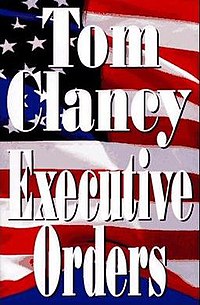 http://upload.wikimedia.org/wikipedia/en/thumb/f/f2/Executiveorders.jpg/200px-Executiveorders.jpg
It's like a plot out of a book, in fact it's already been done some years ago.
Read it, the solution is quite simple and obvious.
http://upload.wikimedia.org/wikipedia/en/thumb/f/f2/Executiveorders.jpg/200px-Executiveorders.jpg
doodlebug4 - 18 Oct 2014 12:13 - 47994 of 81564
This could be expensive, not many dogs don't chase cats!
http://www.telegraph.co.uk/lifestyle/pets/11170604/Fines-of-20000-for-dogs-that-chase-the-postman.html
http://www.telegraph.co.uk/lifestyle/pets/11170604/Fines-of-20000-for-dogs-that-chase-the-postman.html
Haystack
- 18 Oct 2014 18:05
- 47995 of 81564
http://www.telegraph.co.uk/news/politics/ed-miliband/11169809/Ed-Milibands-at-ome-in-EastEnders-Albert-Square.html
EastEnders producers were impressed – so much so that I can exclusively report they’ve commissioned the Labour leader to guest-write an episode. Insiders say Mr Miliband has effortlessly captured the flavour of the soap’s dialogue.
An extract from his script is published below.
LINDA CARTER is behind the bar. Enter PHIL MITCHELL.
LINDA: All right, Phil, what can I get you?
PHIL: Now, look. What I would say to you is this. There isn’t a simple answer to that issue. But I do want to make this point, because it’s an incredibly important point for the everyday working people of Albert Square. And the point is this. I would like a pint of lager, please.
LINDA: You all right, Phil?
PHIL: Let’s be very clear about this, Linda, because I know the everyday working people of Albert Square will want an answer to that question. The reality is this. I caught some geezer in bed with the missus.
LINDA: You what? Some geezer in bed with Sharon? What did you do to ’im?
PHIL: Linda, I want to be honest with you, because when I talk to ordinary families up and down Walford I get a very deep sense that they’ve had enough of this Tory-led Government’s lies about geezers in bed with the missus. So what I said to the geezer was this. I said: “Now, look, geezer. Let’s be very clear about this. I’ve got to say to you: 'Sling your hook.’ And I make no apology for that. Because I think that’s the right thing to do.”
LINDA: What did Sharon say?
PHIL: Linda, if what you’re asking me is, “What did Sharon say?”, then I can answer that very directly. She said to me, “Phil!” But I’m afraid I had to stop her there, because I wanted to make an incredibly important point.
LINDA: What?
PHIL: Linda, the point I made to her was this. It was: “Look, Sharon. I’ll come to the detail of this in a minute. But first of all I want to respectfully ask you to shut it, you slag.” And I think she understood the point I was making, because in Albert Square today there is a huge issue around slags needing to shut it. Under this Tory-led Government, the number of slags needing to shut it has risen by over 63 per cent. And I think David Cameron has to start listening to what ordinary families are telling us. Because what ordinary families are telling us is that they want you to shut it, you slag.
Enter MICK CARTER.
MICK: ’Ere! Phil! Did you just call me a slag and tell me to shut it?
PHIL: Look, Mick, the way I see it is this. I don’t think we should shy away from saying that you are a slag and telling you to shut it. But what I would also say to you is this. Leave it, you tart.
MICK: Right. Outside. Now.
PHIL: Mick, I think the very real challenge for this country over the course of the next five minutes is to punch your lights out. And that challenge is profoundly oriented towards need. You slag.
EastEnders producers were impressed – so much so that I can exclusively report they’ve commissioned the Labour leader to guest-write an episode. Insiders say Mr Miliband has effortlessly captured the flavour of the soap’s dialogue.
An extract from his script is published below.
LINDA CARTER is behind the bar. Enter PHIL MITCHELL.
LINDA: All right, Phil, what can I get you?
PHIL: Now, look. What I would say to you is this. There isn’t a simple answer to that issue. But I do want to make this point, because it’s an incredibly important point for the everyday working people of Albert Square. And the point is this. I would like a pint of lager, please.
LINDA: You all right, Phil?
PHIL: Let’s be very clear about this, Linda, because I know the everyday working people of Albert Square will want an answer to that question. The reality is this. I caught some geezer in bed with the missus.
LINDA: You what? Some geezer in bed with Sharon? What did you do to ’im?
PHIL: Linda, I want to be honest with you, because when I talk to ordinary families up and down Walford I get a very deep sense that they’ve had enough of this Tory-led Government’s lies about geezers in bed with the missus. So what I said to the geezer was this. I said: “Now, look, geezer. Let’s be very clear about this. I’ve got to say to you: 'Sling your hook.’ And I make no apology for that. Because I think that’s the right thing to do.”
LINDA: What did Sharon say?
PHIL: Linda, if what you’re asking me is, “What did Sharon say?”, then I can answer that very directly. She said to me, “Phil!” But I’m afraid I had to stop her there, because I wanted to make an incredibly important point.
LINDA: What?
PHIL: Linda, the point I made to her was this. It was: “Look, Sharon. I’ll come to the detail of this in a minute. But first of all I want to respectfully ask you to shut it, you slag.” And I think she understood the point I was making, because in Albert Square today there is a huge issue around slags needing to shut it. Under this Tory-led Government, the number of slags needing to shut it has risen by over 63 per cent. And I think David Cameron has to start listening to what ordinary families are telling us. Because what ordinary families are telling us is that they want you to shut it, you slag.
Enter MICK CARTER.
MICK: ’Ere! Phil! Did you just call me a slag and tell me to shut it?
PHIL: Look, Mick, the way I see it is this. I don’t think we should shy away from saying that you are a slag and telling you to shut it. But what I would also say to you is this. Leave it, you tart.
MICK: Right. Outside. Now.
PHIL: Mick, I think the very real challenge for this country over the course of the next five minutes is to punch your lights out. And that challenge is profoundly oriented towards need. You slag.
Fred1new
- 18 Oct 2014 18:09
- 47996 of 81564
Was he scripting thinking of how Haze spend his time at home?
doodlebug4 - 18 Oct 2014 18:11 - 47997 of 81564
Lol Haystack !
Haystack
- 18 Oct 2014 18:13
- 47998 of 81564
http://www.theguardian.com/commentisfree/2014/oct/14/ed-miliband-party-alan-johnson-leadership-labour-mps
Labour has given up expecting to be inspired by Miliband
Alan Johnson has ruled himself out of a leadership challenge, so Labour MPs are reconciled to making the best of what they’ve got.
There is a new division in the Labour party. It is between those who want Ed Miliband to change the way he leads, and those who accept that he won’t. The old feuds, between defenders of Tony Blair, ex-acolytes of Gordon Brown and a nostalgic left that sees New Labour as a virus in the body of true socialism, are in temporary abeyance before the more pressing task of beating the Tories.
Even supporters of Miliband’s approach – those who welcomed his ambition to “turn the page” on the past and who engaged constructively with his “one nation” project – roam parliament with looks of glassy-eyed dismay. The party’s lacklustre conference, culminating in a bungled leader’s speech, ended any remaining hope that Miliband might illuminate his vision of a Labour-run Britain for a wider audience. “We languished in the comfort zone,” says one shadow minister. “It hardly felt like a party. It felt like a cult.”
Then came the Heywood and Middleton byelection. Coming within a few hundred votes of losing a safe seat to Ukip turned anxiety to terror. Shadow ministers who could once be relied on to defend Miliband now talk about what might be salvaged from this parliament and used to rebuild in the next one. Their fear is that sound strategic choices and shrewd economic analysis – the emphasis on a cost-of-living crisis and its explanation in terms of systemic flaws in the way Britain’s economy distributes reward – will be discredited because the man who formulated the ideas can’t express them as a battle cry.
Labour has given up expecting to be inspired by Miliband
Alan Johnson has ruled himself out of a leadership challenge, so Labour MPs are reconciled to making the best of what they’ve got.
There is a new division in the Labour party. It is between those who want Ed Miliband to change the way he leads, and those who accept that he won’t. The old feuds, between defenders of Tony Blair, ex-acolytes of Gordon Brown and a nostalgic left that sees New Labour as a virus in the body of true socialism, are in temporary abeyance before the more pressing task of beating the Tories.
Even supporters of Miliband’s approach – those who welcomed his ambition to “turn the page” on the past and who engaged constructively with his “one nation” project – roam parliament with looks of glassy-eyed dismay. The party’s lacklustre conference, culminating in a bungled leader’s speech, ended any remaining hope that Miliband might illuminate his vision of a Labour-run Britain for a wider audience. “We languished in the comfort zone,” says one shadow minister. “It hardly felt like a party. It felt like a cult.”
Then came the Heywood and Middleton byelection. Coming within a few hundred votes of losing a safe seat to Ukip turned anxiety to terror. Shadow ministers who could once be relied on to defend Miliband now talk about what might be salvaged from this parliament and used to rebuild in the next one. Their fear is that sound strategic choices and shrewd economic analysis – the emphasis on a cost-of-living crisis and its explanation in terms of systemic flaws in the way Britain’s economy distributes reward – will be discredited because the man who formulated the ideas can’t express them as a battle cry.
Fred1new
- 18 Oct 2014 18:34
- 47999 of 81564
Haze, has received the latest spiel from cons central office and like a good lackey is trying to spread it!
I wonder if Reckless wins his seat will he run for leader with Boris as side kick.
Did Boris learn his style in East Enders?
I wonder if Reckless wins his seat will he run for leader with Boris as side kick.
Did Boris learn his style in East Enders?
Chris Carson
- 18 Oct 2014 18:41
- 48000 of 81564
LABOUR needs to rediscover its sense of purpose and represent “a better Scotland”, the party’s last first minister has argued.
Lord McConnell, who was first minister for more than five years until the SNP won power at Holyrood in 2007, said the party had become “a political machine that is angry about what has happened in Scotland in the recent past”.
Instead of just attacking the SNP - which will be led by Nicola Sturgeon when Alex Salmond steps down next month - he called on Labour to focus more on setting out its own policies and priorities.
He also warned the forthcoming appointment of Ms Sturgeon - who he regards as more left wing than Mr Salmond - could make the challenge that the party is facing more difficult.
He told The Times newspaper: “I joined the Labour Party because it was a movement. My loyalty over years has not been to a party structure, it has been to a cause.
“In all the ups and downs I have had, the thing that has kept me going is a belief in a better society. The Scottish Labour Party needs to be a cause. It needs to represent the future and a better Scotland.”
He spoke out as a new group of Labour activists, who want the party north of the border to make radical changes, prepared to hold their first meeting.
The Labour for Scotland group wants the party to consider changing its name to the Independent Labour Party, and also supports Holyrood being given full control over income tax, as well as complete responsibility for welfare - a position which goes further than Labour’s existing plans for further devolution.
It states the party should pledge not to work with the Conservatives in any future Scottish independence referendums or “any other party whose policies are fundamentally at odds with the views of people in Scotland”.
Scottish Labour must be “fully autonomous from its London leadership”, it argues, suggesting the party north of the border should have the right to appoint its own full-time officials and write its own constitution.
Meanwhile Lord McConnell described the state of the party in Scotland as “very sad for Labour but more importantly it’s very sad for those we represent”.
He claimed senior figures in the party “have found it far too difficult to get over their anger at losing, their anger at Alex Salmond being first minister, their anger at the media for not holding the SNP to account enough, their general anger at the state of the world”.
He added: “What we haven’t had is an expression of what Scottish Labour stands for as we move through the 21st century. What is our purpose? Why should people support us? Why should we want to be the Scottish Government?
“We must rediscover our sense of purpose, our vision for Scotland, our ability to stand up and articulate the concerns of the people we most represent. We need policies and ideas that reflect that - and we’re running out of time.”
He said while Mr Salmond was “essentially a right-wing populist posing as a social democrat” Ms Sturgeon “is a social democrat”.
Lord McConnell added: “So if we’ve had a challenge of the last few years (her) election changes that dynamic even more. She is a post-devolution politician who is positive about the parliament, and Scottish Labour needs to be very aware of the scale of the challenge it now faces.”
SEE ALSO
• George Kerevan: Scottish Labour are biggest losers
Lord McConnell, who was first minister for more than five years until the SNP won power at Holyrood in 2007, said the party had become “a political machine that is angry about what has happened in Scotland in the recent past”.
Instead of just attacking the SNP - which will be led by Nicola Sturgeon when Alex Salmond steps down next month - he called on Labour to focus more on setting out its own policies and priorities.
He also warned the forthcoming appointment of Ms Sturgeon - who he regards as more left wing than Mr Salmond - could make the challenge that the party is facing more difficult.
He told The Times newspaper: “I joined the Labour Party because it was a movement. My loyalty over years has not been to a party structure, it has been to a cause.
“In all the ups and downs I have had, the thing that has kept me going is a belief in a better society. The Scottish Labour Party needs to be a cause. It needs to represent the future and a better Scotland.”
He spoke out as a new group of Labour activists, who want the party north of the border to make radical changes, prepared to hold their first meeting.
The Labour for Scotland group wants the party to consider changing its name to the Independent Labour Party, and also supports Holyrood being given full control over income tax, as well as complete responsibility for welfare - a position which goes further than Labour’s existing plans for further devolution.
It states the party should pledge not to work with the Conservatives in any future Scottish independence referendums or “any other party whose policies are fundamentally at odds with the views of people in Scotland”.
Scottish Labour must be “fully autonomous from its London leadership”, it argues, suggesting the party north of the border should have the right to appoint its own full-time officials and write its own constitution.
Meanwhile Lord McConnell described the state of the party in Scotland as “very sad for Labour but more importantly it’s very sad for those we represent”.
He claimed senior figures in the party “have found it far too difficult to get over their anger at losing, their anger at Alex Salmond being first minister, their anger at the media for not holding the SNP to account enough, their general anger at the state of the world”.
He added: “What we haven’t had is an expression of what Scottish Labour stands for as we move through the 21st century. What is our purpose? Why should people support us? Why should we want to be the Scottish Government?
“We must rediscover our sense of purpose, our vision for Scotland, our ability to stand up and articulate the concerns of the people we most represent. We need policies and ideas that reflect that - and we’re running out of time.”
He said while Mr Salmond was “essentially a right-wing populist posing as a social democrat” Ms Sturgeon “is a social democrat”.
Lord McConnell added: “So if we’ve had a challenge of the last few years (her) election changes that dynamic even more. She is a post-devolution politician who is positive about the parliament, and Scottish Labour needs to be very aware of the scale of the challenge it now faces.”
SEE ALSO
• George Kerevan: Scottish Labour are biggest losers
Chris Carson
- 18 Oct 2014 18:46
- 48001 of 81564
by GEORGE KEREVAN
Published on the
19 September
2014
22:35
Tweet
Print this
comments
Have your say!
SCOTTISH INDEPENDENCE: Its core support alienated, its top echelons thirled to the metropolitan media, it’s on the road to nowhere, writes George Kerevan.
Of all the outcomes stemming from the referendum No vote on 18 September, the least noticed (because most counter-intuitive) is the disaster it is for the Labour Party in Scotland.
The extra 15 or 20 points the Yes camp won on top of the traditional bedrock support for independence came largely from Labour’s core electoral base. Labour’s pro-Union message was spurned not just by Glasgow’s white working class but by an Asian community totally alienated by the Cameron government’s position over Gaza. Even in its Pollokshields political bastion, the Sarwar political dynasty was unable to hold the Muslim vote for Labour’s pro-Union position.
True, Labour was able to mobilise support from trade unionists in the defence industries, who felt (rightly or wrongly) that their livelihoods were threatened by separation from the UK. But the Yes camp was always going to lose that particular constituency. On the other hand, the alienated poor in the housing schemes that ring the affluent city centre of Glasgow instinctively responded to the message being preached on the doorsteps by the young activists of the Radical Independence Campaign that a Yes vote would see off the chances of another Tory government “forever”.
The Scottish Labour leadership, abetted by the metropolitan media, wrongly tarred proponents of independence as tartan romantics – or even anti-English bigots. The reality is that, by the end, the Yes campaign had morphed into the beginnings of a genuine populist, anti-austerity movement like the “Indignant Citizens” in Greece or the May 15 Movement in Spain. Put another way, it was class politics – not old-style nationalism – that fired the Yes campaign.
The emergence of broad-based, anti-austerity movements across southern Europe has proved electorally lethal to existing mainstream social democratic parties. The once-powerful Spanish Labour Party is haemorrhaging support to Podemos, a loose coalition of anti-austerity activists groups founded only this year. Yet Scottish Labour wilfully discounts the fact that 45 per cent of voters felt so alienated from the capitalist system that they persisted in voting Yes despite dire warnings of economic catastrophe if they did not toe the Unionist line. Labour may not feel so smug after Chancellor Ed Balls introduces emergency cuts to keep the financial markets happy – and a Scottish equivalent of Podemos takes 15 per cent of the vote at the 2016 Holyrood election.
Perversely, had there been a Yes victory, Scottish Labour would now face a bright future. It would certainly dump its present lacklustre Holyrood leadership, which hardly shone during the referendum. But within a short period, the rejuvenated Scottish Labour Party might form the government of an independent Scotland.
Instead, Labour now faces Tory demands that Scotland’s representation at Westminster be slashed as a quid pro quo for giving Holyrood more powers. That will diminish Labour’s chances of forming a UK government. Never mind the fact that David Cameron is planning to create an English legislature that will be dominated by Ukip and Tory right-wingers. Will England then demand its own independence referendum?
doodlebug4 - 18 Oct 2014 20:33 - 48002 of 81564
By Kyle Caldwell
7:03AM BST 18 Oct 2014
History offers a clue as to how British shares will perform heading into next year’s general election
There are two things financial markets hate more than anything: uncertainty and political meddling. So with next year’s general election approaching, private investors are keeping a close eye on events that could offer clues about the eventual winner, such as by elections and the party conferences.
However, many stock-pickers would counter that when it comes to investing, it is much more useful to look at individual companies’ key results, such as profit margins and cash flow, rather than trying to second guess the moves of politicians.,
But over the years certain share prices have been severely hit by the actions of our elected leaders, some even by the mere mention of a new policy. The uncertainty that this creates unnerves investors, particularly in an election year.
They may take comfort from a look at what happened before and after previous general elections.
Telegraph Money has compiled data from the 11 elections that have taken place since 1966 to find out how British shares have fared – both in the run-up and in the aftermath.
ADVERTISEMENT
In the chart there are two bars for each election year, one showing the performance of the FTSE All Share index 12 months before the election took place and the other the performance over the following 12 months.
Here we examine what this chart can tell us, while in Action Points, right, we explain which shares are under threat from political meddling as we approach the election in May next year.
British shares perform best when an election is easy to call . . .
In the elections that have taken place since 1966 there have been plenty of changes of power, with a total of nine different British prime ministers since Harold Wilson won his second general election in March 1966.
Mr Wilson, who was first elected in 1964, called an early election in an attempt to give Labour a working majority in the House of Commons. This he achieved, increasing his majority from four to 96.
The election win was widely expected and, as a result, the financial markets behaved calmly in the year beforehand, with the FTSE All Share index rising by 10pc. British shares performed well in other elections when opinion polls pointed to a heavy win for a particular party.
This occurred in the run-up to Margaret Thatcher’s three victories in 1979, 1983 and 1987, and in 1997, when Tony Blair put Labour back in power.
Russ Mould of AJ Bell YouInvest, the investment shop, said: “History shows that the FTSE All Share’s performance in the 12 months before a general election tends to be best when the market senses a Conservative victory.
“This is evidenced by the strong performance before Margaret Thatcher’s victories, with the index rising by more than 30pc in the year before each election win.”
. . . but fall when the result is in the balance
In stark contrast, British shares do not react well when an election is difficult to call and the result goes right to the wire.
In both 1970 and 1992, when the Conservatives won small majorities under the respective leaderships of Edward Heath and John Major, the FTSE All Share index posted losses of 11pc and 5pc the year before both elections. The outcome of each case was not a foregone conclusion and this may have unnerved investors.
But the biggest pre-election fall took place in November 1974, when the Labour Party and Harold Wilson won one of the smallest majorities in history. Mr Wilson achieved a majority of just three seats.
This was the second election that Mr Wilson won that year. The first, in February, resulted in a hung parliament, which is why a second was needed.
As the race was close, investors fretted over the outcome, with the FTSE All Share index falling by 21pc in the year before voters went to the polls for the second time.
Tom Stevenson of Fidelity, the fund shop, said that investors hated uncertainty and as a result it was unsurprising that the index usually had a poor run before elections that could go either way.
“The correlation certainly conforms to common sense as markets hate uncertainty, particularly when an election is too close to call,” he said.
“This also occurs internationally. For instance, the Indian market soared earlier this year as it was widely predicted that Narendra Modi would win the election in May, while in recent weeks Brazil shares have had a tough time as the outcome of the election later this month is expected to go right to the wire.”
- Peter Hargreaves: Stock markets are still benefiting from Margaret Thatcher
What happens when leaders change
Since 1966 the party in power has changed four times, with the latest being in 2010 when David Cameron led the Conservative Party to victory, albeit in coalition with the Liberal Democrats.
On two of the four occasions the FTSE All-Share has soared in the year following the election, with investors seemingly welcoming the change in administration.
This is what happened in 1970, when Edward Heath replaced Harold Wilson and the index rose by 37pc over the next 12 months. Similarly, in 1997, shares soared after Tony Blair ended Labour’s 18 years in opposition. On this occasion the FTSE All Share index rose by 32pc.
But on the other two occasions – in 1974, after Mr Wilson secured a small majority, and in 1979, when Margaret Thatcher defeated James Callaghan – the market did not react well, falling by 15pc and 7pc, respectively, over the following year.
What about next year’s election?
The election due in May next year is expected to be close and the stock market’s performance recently has reflected the uncertainty. Since May 7 the index has fallen by about 9pc.
Guy Ellison, who researches shares for Investec Wealth & Investment, said that other factors, such as investors fretting over the state of Europe’s fragile economy, were partly to blame for the fall, but he added that the uncertainty over who will win next year’s general election had also played a part.
“Investors hate uncertainty and would prefer it if there was a heavy favourite rather than a close race, which will potentially hold British shares back until the electorate goes to the polls next May,” he said.
The Telegraph
7:03AM BST 18 Oct 2014
History offers a clue as to how British shares will perform heading into next year’s general election
There are two things financial markets hate more than anything: uncertainty and political meddling. So with next year’s general election approaching, private investors are keeping a close eye on events that could offer clues about the eventual winner, such as by elections and the party conferences.
However, many stock-pickers would counter that when it comes to investing, it is much more useful to look at individual companies’ key results, such as profit margins and cash flow, rather than trying to second guess the moves of politicians.,
But over the years certain share prices have been severely hit by the actions of our elected leaders, some even by the mere mention of a new policy. The uncertainty that this creates unnerves investors, particularly in an election year.
They may take comfort from a look at what happened before and after previous general elections.
Telegraph Money has compiled data from the 11 elections that have taken place since 1966 to find out how British shares have fared – both in the run-up and in the aftermath.
ADVERTISEMENT
In the chart there are two bars for each election year, one showing the performance of the FTSE All Share index 12 months before the election took place and the other the performance over the following 12 months.
Here we examine what this chart can tell us, while in Action Points, right, we explain which shares are under threat from political meddling as we approach the election in May next year.
British shares perform best when an election is easy to call . . .
In the elections that have taken place since 1966 there have been plenty of changes of power, with a total of nine different British prime ministers since Harold Wilson won his second general election in March 1966.
Mr Wilson, who was first elected in 1964, called an early election in an attempt to give Labour a working majority in the House of Commons. This he achieved, increasing his majority from four to 96.
The election win was widely expected and, as a result, the financial markets behaved calmly in the year beforehand, with the FTSE All Share index rising by 10pc. British shares performed well in other elections when opinion polls pointed to a heavy win for a particular party.
This occurred in the run-up to Margaret Thatcher’s three victories in 1979, 1983 and 1987, and in 1997, when Tony Blair put Labour back in power.
Russ Mould of AJ Bell YouInvest, the investment shop, said: “History shows that the FTSE All Share’s performance in the 12 months before a general election tends to be best when the market senses a Conservative victory.
“This is evidenced by the strong performance before Margaret Thatcher’s victories, with the index rising by more than 30pc in the year before each election win.”
. . . but fall when the result is in the balance
In stark contrast, British shares do not react well when an election is difficult to call and the result goes right to the wire.
In both 1970 and 1992, when the Conservatives won small majorities under the respective leaderships of Edward Heath and John Major, the FTSE All Share index posted losses of 11pc and 5pc the year before both elections. The outcome of each case was not a foregone conclusion and this may have unnerved investors.
But the biggest pre-election fall took place in November 1974, when the Labour Party and Harold Wilson won one of the smallest majorities in history. Mr Wilson achieved a majority of just three seats.
This was the second election that Mr Wilson won that year. The first, in February, resulted in a hung parliament, which is why a second was needed.
As the race was close, investors fretted over the outcome, with the FTSE All Share index falling by 21pc in the year before voters went to the polls for the second time.
Tom Stevenson of Fidelity, the fund shop, said that investors hated uncertainty and as a result it was unsurprising that the index usually had a poor run before elections that could go either way.
“The correlation certainly conforms to common sense as markets hate uncertainty, particularly when an election is too close to call,” he said.
“This also occurs internationally. For instance, the Indian market soared earlier this year as it was widely predicted that Narendra Modi would win the election in May, while in recent weeks Brazil shares have had a tough time as the outcome of the election later this month is expected to go right to the wire.”
- Peter Hargreaves: Stock markets are still benefiting from Margaret Thatcher
What happens when leaders change
Since 1966 the party in power has changed four times, with the latest being in 2010 when David Cameron led the Conservative Party to victory, albeit in coalition with the Liberal Democrats.
On two of the four occasions the FTSE All-Share has soared in the year following the election, with investors seemingly welcoming the change in administration.
This is what happened in 1970, when Edward Heath replaced Harold Wilson and the index rose by 37pc over the next 12 months. Similarly, in 1997, shares soared after Tony Blair ended Labour’s 18 years in opposition. On this occasion the FTSE All Share index rose by 32pc.
But on the other two occasions – in 1974, after Mr Wilson secured a small majority, and in 1979, when Margaret Thatcher defeated James Callaghan – the market did not react well, falling by 15pc and 7pc, respectively, over the following year.
What about next year’s election?
The election due in May next year is expected to be close and the stock market’s performance recently has reflected the uncertainty. Since May 7 the index has fallen by about 9pc.
Guy Ellison, who researches shares for Investec Wealth & Investment, said that other factors, such as investors fretting over the state of Europe’s fragile economy, were partly to blame for the fall, but he added that the uncertainty over who will win next year’s general election had also played a part.
“Investors hate uncertainty and would prefer it if there was a heavy favourite rather than a close race, which will potentially hold British shares back until the electorate goes to the polls next May,” he said.
The Telegraph
cynic
- 19 Oct 2014 06:24
- 48003 of 81564
fred (and others)
a very good morning to you from balmier (or barmier in this case) climes
if reckless loses his seat, then i'll eat my hat
labour will just shrug and say they never had any chance - true
tories will say it was unfortunate and rather as expected, but glossed over considerably
ukip will be buying rounds for all claiming a stunning victory - which of course is not really true either either even though it will enhance their standing in the country
a very good morning to you from balmier (or barmier in this case) climes
if reckless loses his seat, then i'll eat my hat
labour will just shrug and say they never had any chance - true
tories will say it was unfortunate and rather as expected, but glossed over considerably
ukip will be buying rounds for all claiming a stunning victory - which of course is not really true either either even though it will enhance their standing in the country
Fred1new
- 19 Oct 2014 09:15
- 48004 of 81564
Manuel,
You must miss the Thames Embankment.
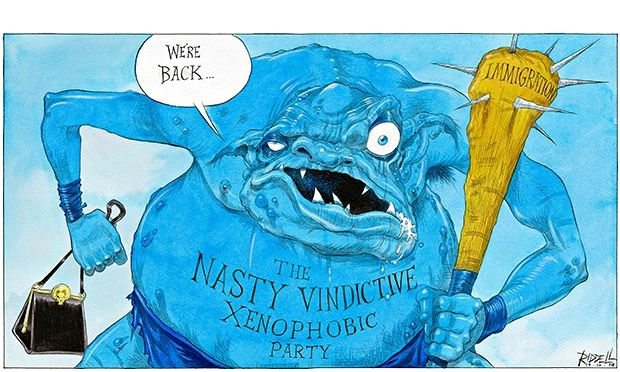
You must miss the Thames Embankment.
Fred1new
- 19 Oct 2014 09:52
- 48005 of 81564
Manuel,
Haze seems to have missed the polls to-day, so out of my benevolence to you
ComRes/
Sunday Indy – LAB 35, CON 32, LD 7, UKIP 16…
Forecasted Labour overall majority of 26. (But of course that could be improved upwards)
But UKIP % may be improved by Reckless!
PS,
Be careful which row you stand in when you come back through migration controls. You never know what might happen.
Haze seems to have missed the polls to-day, so out of my benevolence to you
ComRes/
Sunday Indy – LAB 35, CON 32, LD 7, UKIP 16…
Forecasted Labour overall majority of 26. (But of course that could be improved upwards)
But UKIP % may be improved by Reckless!
PS,
Be careful which row you stand in when you come back through migration controls. You never know what might happen.
Fred1new
- 19 Oct 2014 10:09
- 48006 of 81564
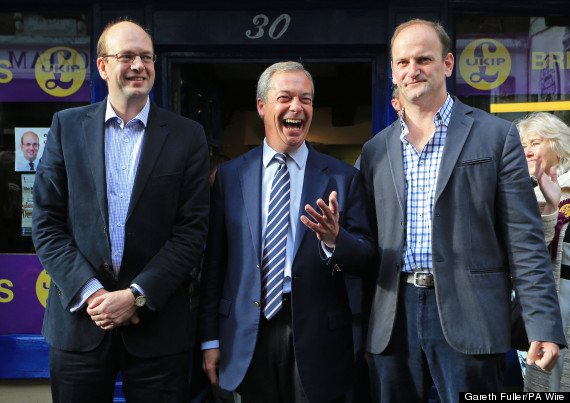
But remember if you do get back that perhaps this will be the new leadership of the Con party after Wavy Dave does another deal. Sorry U-turn!
Haystack
- 19 Oct 2014 11:31
- 48007 of 81564
Even if Reckless wins a seat for UKIP, he will have to win the seat again at the GE along with Clacton. If there is a resurgence of the Conservatives at the GE, UKIP could still end up with no seats. When there was an MP, Bob Spink, who changed parties to UKIP in 2008, he then lost his seat at the GE despite polls showing huge support for him. His constituency in Essex was very similar to Clacton. At the GE in 2010 he only managed 27% against the Conservatives on 44%.
| About MoneyAM | Ts and Cs | Privacy Policy | Investment Warning | Content Standards | Corporate Solutions | Advertise With Us | Site Map | © 2026 MoneyAM |
Register now for FREE
Share Prices,
Stock Quotes,
Charts, Bulletin Boards, Indices, Watchlists, Portfolio, Market News, Research
or see our Premium Services including Level 2, Terminal and much more.
 Follow us on Twitter