

| Home | Log In | Register | Our Services | My Account | Contact | Help |
You are NOT currently logged in
Register now or login to post to this thread.
THE TALK TO YOURSELF THREAD. (NOWT)
goldfinger

 - 09 Jun 2005 12:25


Thought Id start this one going because its rather dead on this board at the moment and I suppose all my usual muckers are either at the Stella tennis event watching Dim Tim (lose again) or at Henly Regatta eating cucumber sandwiches (they wish,...NOT).
Anyway please feel free to just talk to yourself blast away and let it go on any company or subject you wish. Just wish Id thought of this one before.
cheers GF.
Anyway please feel free to just talk to yourself blast away and let it go on any company or subject you wish. Just wish Id thought of this one before.
cheers GF.
aldwickk
- 20 Oct 2014 20:15
- 48119 of 81564
RF
His a what , sorry i miss read that thought it was spelt with a U N
His a what , sorry i miss read that thought it was spelt with a U N
Haystack
- 20 Oct 2014 20:23
- 48120 of 81564

aldwickk
- 20 Oct 2014 20:33
- 48121 of 81564
LOL ,LOL,LOL , You should post that every time Fred post's one of his long winded replys
cynic
- 20 Oct 2014 20:36
- 48122 of 81564
it's good to see that the plot here doesn't change from one day to the next ..... must be scripted by the same guys who write the soaps :-)
Fred1new
- 20 Oct 2014 20:37
- 48123 of 81564
Haze1,
I least I haven't licked it or swallowed it like you and some of your mates.
Been told some of them have very supple backs.
Somebody c+p it for him!
=====
Interesting to see a Dutch lady telling Jenkins he is daft!
I least I haven't licked it or swallowed it like you and some of your mates.
Been told some of them have very supple backs.
Somebody c+p it for him!
=====
Interesting to see a Dutch lady telling Jenkins he is daft!
MaxK - 20 Oct 2014 21:12 - 48124 of 81564
lol @ #48122
:-)
:-)
MaxK - 21 Oct 2014 08:40 - 48125 of 81564

Fred1new
- 21 Oct 2014 08:47
- 48126 of 81564
The intelligentsia at it again!

Fred1new
- 21 Oct 2014 08:49
- 48127 of 81564
The hopes of :
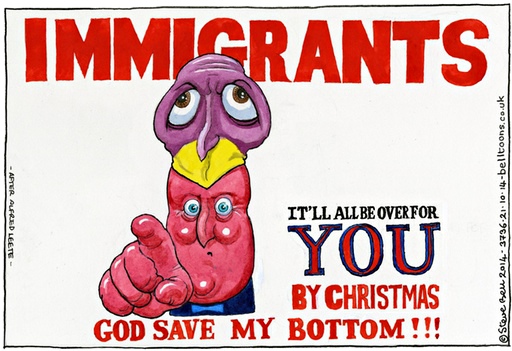
Fred1new
- 21 Oct 2014 08:49
- 48128 of 81564
.
doodlebug4 - 21 Oct 2014 09:12 - 48129 of 81564
By Philip Johnston
6:00AM BST 21 Oct 2014
Europe has changed beyond recognition from the organisation that Britain signed up to
There is a Yes Minister episode called The Writing on the Wall that brilliantly encapsulates Britain’s ambivalence towards Continental Europe. With barely suppressed exasperation, Sir Humphrey Appleby explains to Jim Hacker the purpose of the UK’s policy. “Minister, Britain has had the same foreign policy objective for at least the last 500 years: to create a disunited Europe. In that cause we have fought with the Dutch against the Spanish, with the Germans against the French, with the French and Italians against the Germans, and with the French against the Germans and Italians. Divide and rule, you see. We tried to break the EEC up from the outside, but that wouldn’t work. Now that we’re inside we can make a complete pig’s breakfast of the whole thing.”
But surely we are now committed to the European ideal, Hacker avers. After all, Britain was particularly keen to bring lots of new countries into the “club”. Why did we do that? “For the same reason,” says Sir Humphrey. “It’s just like the United Nations – the more members it has, the more arguments it can stir up, the more futile and impotent it becomes. We call it diplomacy, Minister.”
With this exchange, Antony Jay and Jonathan Lynn captured Britain’s historic dilemma – how to be in Europe but not run by Europe. We continue to exhibit a lukewarm, half-hearted commitment that not only irritates our EU partners but perplexes them, too. The self-regarding farewell tour of José Manuel Barroso, the outgoing president of the European Commission, exemplifies this perfectly. He is astonished that 40 years after joining, the British still decline to embrace Europe’s Grand Design; and yet despite being an unelected official, Mr Barroso feels no compunction in lecturing the UK and its leaders about what is best for their country. It never seems to occur to him, or the others in the Brussels secretariat, that the two are connected. Moreover, because they enthusiastically subscribe to the concept of “ever closer union” as set out in the Treaty of Rome, they cannot understand why we get so worked up when the ratchet effect of membership leads us into areas we never wanted to go.
Let’s take the two issues that are giving David Cameron if not exactly sleepless nights, then serious pause for thought: EU immigration and Britain’s judicial independence. Many in Brussels do not regard the free movement of people around Europe as “immigration” in its usual sense since they are all considered citizens of the EU under the provisions of the Maastricht Treaty.
But back when the UK joined the Common Market, it was far smaller and people did find it harder to get about. Millions in eastern Europe couldn’t travel at all, except within the old Soviet bloc. After the collapse of communism dismantled those barriers, the rules on free movement remained, albeit with temporary restrictions imposed on new members (which Labour declined to use in 2004 when Poland and other ex-Warsaw Pact countries joined). We keep being told this is a “fundamental principle” of the EU and yet the circumstances in which it was enshrined have changed beyond all recognition. Why, then, should it be so outrageous to propose revisiting it as Mr Cameron has done. “Illegal, irresponsible, impossible”, blusters Mr Barroso. Actually, most people would consider it to be perfectly reasonable to look at this again.
Furthermore, it was envisaged that free movement should benefit the nationals of EU member states. Yet there are hundreds of thousands of people from outside Europe who have used its flexible migration controls and generous citizenship rules to settle in Britain. For instance, many of the Somalis who live here came from Holland and Denmark where they were first granted EU status on compassionate grounds. Nigerians have arrived through Germany, Russians through the Baltic states, South Americans through Spain and Portugal. A few years ago, Oxford University’s Migration Observatory found that 141,000 people who came to the UK under EU rules were born outside the continent. Between a third and a half of the entire Dutch Somali community has moved to the UK. There are an estimated 600,000 Russian speakers in Britain, many of whom will be from the Baltic states but also from Russia, which the last time I looked was not in the EU.
Some may argue that the overall numbers are small, but that is not the point. If this is a “fundamental principle” of EU membership, it is one that has been seriously eroded.
The same is true of our control over the justice system, which in many ways is the essence of nationhood. When we joined it was accepted that the administration of the criminal law was outside the competence of the EU. The Maastricht Treaty in 1992 specifically put such matters into what was known in the jargon as the Third Pillar – so beyond the Commission’s ability to interfere and outside the jurisdiction of the European Court of Justice. However, the Lisbon Treaty changed this and justice and home affairs matters are now to be brought within the ambit of the EU’s institutions for the first time by the end of this year.
Britain negotiated an opt-out from 135 measures that had previously been agreed by mutual consent and the Government is now proposing to opt back into 35 of them. They include the European Arrest Warrant (EAW) and other protocols considered important for fighting crime. Britain has until the end of next month to decide whether to keep these, and the Government has promised a vote, hence Mr Cameron’s current quandary. Ministers, especially Theresa May, the Home Secretary, are adamant that we must sign up to the EAW. Not to do so would give succour to criminals, they say.
But again this misses the central point. Once we have opted back in, the European Court of Justice will have full powers of jurisdiction over these areas of law for the first time. A more stark transfer of sovereignty can hardly be imagined – something Mr Cameron and the other party leaders insisted would not happen. Indeed, such a head of steam is building on the Tory back benches against this that it is impossible to see how the Prime Minister can proceed with his planned vote. Not only will he face a significant rebellion – some say up to 100 Conservatives will oppose the move – but Labour may take the chance to defeat the Government. For this to happen just before an election and with Ukip rampant would be a fiasco.
A way out is currently being canvassed on the back benches. Instead of opting in, the UK would negotiate a bilateral agreement with the EU to continue co-operating with measures such as the EAW without ceding sovereignty over our judicial system. That would meet the concerns of the police that we risk watering down extradition arrangements while retaining what we always thought we would keep: power over our own criminal law. This is not just a bee in the bonnet of a few superannuated Eurosceptics. It goes to the heart of the age-old conundrum set out by Sir Humphrey Appleby – how to be part of Europe while remaining at one remove from it. Mr Barroso might find such an attitude hard to understand, but it is bred in the bone. Unless he and his colleagues make an effort to see that, then a parting of the ways is inevitable.
6:00AM BST 21 Oct 2014
Europe has changed beyond recognition from the organisation that Britain signed up to
There is a Yes Minister episode called The Writing on the Wall that brilliantly encapsulates Britain’s ambivalence towards Continental Europe. With barely suppressed exasperation, Sir Humphrey Appleby explains to Jim Hacker the purpose of the UK’s policy. “Minister, Britain has had the same foreign policy objective for at least the last 500 years: to create a disunited Europe. In that cause we have fought with the Dutch against the Spanish, with the Germans against the French, with the French and Italians against the Germans, and with the French against the Germans and Italians. Divide and rule, you see. We tried to break the EEC up from the outside, but that wouldn’t work. Now that we’re inside we can make a complete pig’s breakfast of the whole thing.”
But surely we are now committed to the European ideal, Hacker avers. After all, Britain was particularly keen to bring lots of new countries into the “club”. Why did we do that? “For the same reason,” says Sir Humphrey. “It’s just like the United Nations – the more members it has, the more arguments it can stir up, the more futile and impotent it becomes. We call it diplomacy, Minister.”
With this exchange, Antony Jay and Jonathan Lynn captured Britain’s historic dilemma – how to be in Europe but not run by Europe. We continue to exhibit a lukewarm, half-hearted commitment that not only irritates our EU partners but perplexes them, too. The self-regarding farewell tour of José Manuel Barroso, the outgoing president of the European Commission, exemplifies this perfectly. He is astonished that 40 years after joining, the British still decline to embrace Europe’s Grand Design; and yet despite being an unelected official, Mr Barroso feels no compunction in lecturing the UK and its leaders about what is best for their country. It never seems to occur to him, or the others in the Brussels secretariat, that the two are connected. Moreover, because they enthusiastically subscribe to the concept of “ever closer union” as set out in the Treaty of Rome, they cannot understand why we get so worked up when the ratchet effect of membership leads us into areas we never wanted to go.
Let’s take the two issues that are giving David Cameron if not exactly sleepless nights, then serious pause for thought: EU immigration and Britain’s judicial independence. Many in Brussels do not regard the free movement of people around Europe as “immigration” in its usual sense since they are all considered citizens of the EU under the provisions of the Maastricht Treaty.
But back when the UK joined the Common Market, it was far smaller and people did find it harder to get about. Millions in eastern Europe couldn’t travel at all, except within the old Soviet bloc. After the collapse of communism dismantled those barriers, the rules on free movement remained, albeit with temporary restrictions imposed on new members (which Labour declined to use in 2004 when Poland and other ex-Warsaw Pact countries joined). We keep being told this is a “fundamental principle” of the EU and yet the circumstances in which it was enshrined have changed beyond all recognition. Why, then, should it be so outrageous to propose revisiting it as Mr Cameron has done. “Illegal, irresponsible, impossible”, blusters Mr Barroso. Actually, most people would consider it to be perfectly reasonable to look at this again.
Furthermore, it was envisaged that free movement should benefit the nationals of EU member states. Yet there are hundreds of thousands of people from outside Europe who have used its flexible migration controls and generous citizenship rules to settle in Britain. For instance, many of the Somalis who live here came from Holland and Denmark where they were first granted EU status on compassionate grounds. Nigerians have arrived through Germany, Russians through the Baltic states, South Americans through Spain and Portugal. A few years ago, Oxford University’s Migration Observatory found that 141,000 people who came to the UK under EU rules were born outside the continent. Between a third and a half of the entire Dutch Somali community has moved to the UK. There are an estimated 600,000 Russian speakers in Britain, many of whom will be from the Baltic states but also from Russia, which the last time I looked was not in the EU.
Some may argue that the overall numbers are small, but that is not the point. If this is a “fundamental principle” of EU membership, it is one that has been seriously eroded.
The same is true of our control over the justice system, which in many ways is the essence of nationhood. When we joined it was accepted that the administration of the criminal law was outside the competence of the EU. The Maastricht Treaty in 1992 specifically put such matters into what was known in the jargon as the Third Pillar – so beyond the Commission’s ability to interfere and outside the jurisdiction of the European Court of Justice. However, the Lisbon Treaty changed this and justice and home affairs matters are now to be brought within the ambit of the EU’s institutions for the first time by the end of this year.
Britain negotiated an opt-out from 135 measures that had previously been agreed by mutual consent and the Government is now proposing to opt back into 35 of them. They include the European Arrest Warrant (EAW) and other protocols considered important for fighting crime. Britain has until the end of next month to decide whether to keep these, and the Government has promised a vote, hence Mr Cameron’s current quandary. Ministers, especially Theresa May, the Home Secretary, are adamant that we must sign up to the EAW. Not to do so would give succour to criminals, they say.
But again this misses the central point. Once we have opted back in, the European Court of Justice will have full powers of jurisdiction over these areas of law for the first time. A more stark transfer of sovereignty can hardly be imagined – something Mr Cameron and the other party leaders insisted would not happen. Indeed, such a head of steam is building on the Tory back benches against this that it is impossible to see how the Prime Minister can proceed with his planned vote. Not only will he face a significant rebellion – some say up to 100 Conservatives will oppose the move – but Labour may take the chance to defeat the Government. For this to happen just before an election and with Ukip rampant would be a fiasco.
A way out is currently being canvassed on the back benches. Instead of opting in, the UK would negotiate a bilateral agreement with the EU to continue co-operating with measures such as the EAW without ceding sovereignty over our judicial system. That would meet the concerns of the police that we risk watering down extradition arrangements while retaining what we always thought we would keep: power over our own criminal law. This is not just a bee in the bonnet of a few superannuated Eurosceptics. It goes to the heart of the age-old conundrum set out by Sir Humphrey Appleby – how to be part of Europe while remaining at one remove from it. Mr Barroso might find such an attitude hard to understand, but it is bred in the bone. Unless he and his colleagues make an effort to see that, then a parting of the ways is inevitable.
ExecLine
 - 21 Oct 2014 09:37
- 48130 of 81564
- 21 Oct 2014 09:37
- 48130 of 81564

This is what happens when word gets around that the borders into the UK are 'Open'.
(In this case 'word got around' in North Africa)
(In this case 'word got around' in North Africa)
MaxK - 21 Oct 2014 10:05 - 48131 of 81564
Pistorious gets 5 years, but could be out in 10 months
http://www.theguardian.com/world/live/2014/oct/21/oscar-pistorius-sentencing-prison-live
Or, how to get away with murder
Disgrace imo.
http://www.theguardian.com/world/live/2014/oct/21/oscar-pistorius-sentencing-prison-live
Or, how to get away with murder
Disgrace imo.
Shortie - 21 Oct 2014 11:23 - 48132 of 81564
The biggest problem with these immigrants is there under false pretence about getting into England... They think they will be given a home and money for food and a job... Part of the problem comes from immigrants seeking asylum where by the government has paid immigrants not to seek asylum and return to their home countries. The immigrants come back after telling their friends looking for another pay off.
Yet another reason why we need as a country to be out of Europe, so we can set our own immigration policy and that of human rights... Lets not forget, part of the appeal for anyone in Africa to come to Europe is the automatic gain of rights. In Africa a citizen often has no rights where as in Europe they do...
It is because an immigrant has the right to be listened to and processed within an immigration system that will look after them whilst they are being processed that's appealing. The current system of process creates an unfair bill to the taxpayer, because its cheaper to pay and immigrant £1500 than to put them through the immigration system set by the EU... Now surely to a African or other this represents a way for them to support themselves and their families back home.
Yet another reason why we need as a country to be out of Europe, so we can set our own immigration policy and that of human rights... Lets not forget, part of the appeal for anyone in Africa to come to Europe is the automatic gain of rights. In Africa a citizen often has no rights where as in Europe they do...
It is because an immigrant has the right to be listened to and processed within an immigration system that will look after them whilst they are being processed that's appealing. The current system of process creates an unfair bill to the taxpayer, because its cheaper to pay and immigrant £1500 than to put them through the immigration system set by the EU... Now surely to a African or other this represents a way for them to support themselves and their families back home.
doodlebug4 - 21 Oct 2014 11:48 - 48133 of 81564
Agreed Shortie and it's the system which is at fault. As a British citizen I find it intolerable that our Government is unable to control our immigration laws and our human rights laws and cannot deport terrorists and thugs back to their own countries.
Shortie - 21 Oct 2014 11:51 - 48134 of 81564
Free movement of persons is one of the fundamental freedoms guaranteed by Community law. It is perhaps the most important right under Community law for individuals, and an essential element of European citizenship.
For workers, this freedom has existed since the foundation of the European Community in 1957. It is laid down in Article 45 TFEU and it entails:
the right to look for a job in another Member State;
the right to work in another Member State;
the right to reside there for that purpose;
the right to remain there;
the right to equal treatment in respect of access to employment, working conditions and all other advantages which could help to facilitate the worker's integration in the host Member State.
The concept and implications of this freedom have been interpreted and developed by the case law of the European Court of Justice, including the concept of worker itself.
Equal Treatment in the Host Member State, is why being in the EU is a disadvantage... How many member states in the EU offer their citizens free heath care, unemployment benefit, housing benefit etc..??? Being in the EU and offering these benefits to citizens is a clear disadvantage as it makes our country more in demand for EU citizens to flock too... If we scrap our benefits system you'd soon see demand to be hear fall away, or we could well keep our benefits and public health care and simply leave the EU ending this ridiculous right of non UK citizens...
For workers, this freedom has existed since the foundation of the European Community in 1957. It is laid down in Article 45 TFEU and it entails:
the right to look for a job in another Member State;
the right to work in another Member State;
the right to reside there for that purpose;
the right to remain there;
the right to equal treatment in respect of access to employment, working conditions and all other advantages which could help to facilitate the worker's integration in the host Member State.
The concept and implications of this freedom have been interpreted and developed by the case law of the European Court of Justice, including the concept of worker itself.
Equal Treatment in the Host Member State, is why being in the EU is a disadvantage... How many member states in the EU offer their citizens free heath care, unemployment benefit, housing benefit etc..??? Being in the EU and offering these benefits to citizens is a clear disadvantage as it makes our country more in demand for EU citizens to flock too... If we scrap our benefits system you'd soon see demand to be hear fall away, or we could well keep our benefits and public health care and simply leave the EU ending this ridiculous right of non UK citizens...
goldfinger
- 21 Oct 2014 12:19
- 48135 of 81564
HAYS AROUND????????????
UK public finances worsen in first half of tax year
LONDON Tue Oct 21, 2014 9:38am BST
(Reuters) - British government borrowing over the last six months was over 10 percent higher than in 2013, official data showed on Tuesday, giving Chancellor George Osborne a tough task to meet his full-year borrowing goals.
Osborne aimed in March to reduce Britain's budget deficit by more than 10 percent over the following 12 months, and Tuesday's figures suggest he has little scope to offer sweeteners to voters before national elections due in May.
Borrowing for September alone was 15.3 percent higher than a year earlier at 11.8 billion pounds, the Office for National Statistics said. That compared to economists forecasts for it to hold roughly steady at 10.5 billion pounds.
For the first six months of the financial year, public sector net borrowing, excluding state-controlled banks, was 58.0 billion pounds, 10.3 percent higher than in 2013.
Last month's data showed that borrowing between April and August was 6 percent higher than a year earlier.
Exact comparisons between the government's budget plans and actual borrowing are difficult. Since last month, the ONS has been using a new method for calculating the headline measure of British public borrowing.
Under the old measure, public sector net borrowing excluding financial sector interventions, stood at 12.6 billion pounds in the month of September, up 14.5 percent from a year earlier.
Borrowing on this basis was forecast in March to fall to 5.5 percent of gross domestic product in the 2014/15 tax year from 6.6 percent in 2013/14. Revisions to GDP and other changes mean that on the new measure, 2013/14 borrowing is now estimated to have been 5.7 percent of GDP.
Deficit reduction has been the central economic policy of the Conservative/Liberal Democrat coalition government since it took power in 2010. Weak growth in 2011 and 2012 has meant that it will not achieve its original plan to largely eliminate the deficit by 2015.
The government has said that the extra borrowing so far this year is due to an uneven pattern of tax receipts in 2013, and that the differences would even out before the end of the financial year.
However, last week the head of the government's budget watchdog said that there appeared to be a bigger problem as greater numbers of people in work were not bringing the expected increase in income tax revenues.
Tuesday's data showed that revenue from income tax and employment insurance contributions in September was 2.3 percent higher than a year ago, while for the year to date it was up by just 0.5 percent.
The government's budget watchdog forecast in March that income tax revenue would rise by 7 percent this year.
Total government revenue was down by 0.4 percent in the first half of the tax year, and the only bright spot was receipts from property and share transaction taxes, which were up by more than a third on the year.
While Britain's economy has grown faster than average so far this year, and unemployment is falling rapidly, wages are growing more slowly than inflation and the government has raised how much people can earn before they start to pay tax.
Public sector net debt excluding state-controlled banks totalled 1.451 trillion in September, matching June's record high of 79.9 percent of GDP.
(Reporting by David Milliken and Li-mei Hoang
UK public finances worsen in first half of tax year
LONDON Tue Oct 21, 2014 9:38am BST
(Reuters) - British government borrowing over the last six months was over 10 percent higher than in 2013, official data showed on Tuesday, giving Chancellor George Osborne a tough task to meet his full-year borrowing goals.
Osborne aimed in March to reduce Britain's budget deficit by more than 10 percent over the following 12 months, and Tuesday's figures suggest he has little scope to offer sweeteners to voters before national elections due in May.
Borrowing for September alone was 15.3 percent higher than a year earlier at 11.8 billion pounds, the Office for National Statistics said. That compared to economists forecasts for it to hold roughly steady at 10.5 billion pounds.
For the first six months of the financial year, public sector net borrowing, excluding state-controlled banks, was 58.0 billion pounds, 10.3 percent higher than in 2013.
Last month's data showed that borrowing between April and August was 6 percent higher than a year earlier.
Exact comparisons between the government's budget plans and actual borrowing are difficult. Since last month, the ONS has been using a new method for calculating the headline measure of British public borrowing.
Under the old measure, public sector net borrowing excluding financial sector interventions, stood at 12.6 billion pounds in the month of September, up 14.5 percent from a year earlier.
Borrowing on this basis was forecast in March to fall to 5.5 percent of gross domestic product in the 2014/15 tax year from 6.6 percent in 2013/14. Revisions to GDP and other changes mean that on the new measure, 2013/14 borrowing is now estimated to have been 5.7 percent of GDP.
Deficit reduction has been the central economic policy of the Conservative/Liberal Democrat coalition government since it took power in 2010. Weak growth in 2011 and 2012 has meant that it will not achieve its original plan to largely eliminate the deficit by 2015.
The government has said that the extra borrowing so far this year is due to an uneven pattern of tax receipts in 2013, and that the differences would even out before the end of the financial year.
However, last week the head of the government's budget watchdog said that there appeared to be a bigger problem as greater numbers of people in work were not bringing the expected increase in income tax revenues.
Tuesday's data showed that revenue from income tax and employment insurance contributions in September was 2.3 percent higher than a year ago, while for the year to date it was up by just 0.5 percent.
The government's budget watchdog forecast in March that income tax revenue would rise by 7 percent this year.
Total government revenue was down by 0.4 percent in the first half of the tax year, and the only bright spot was receipts from property and share transaction taxes, which were up by more than a third on the year.
While Britain's economy has grown faster than average so far this year, and unemployment is falling rapidly, wages are growing more slowly than inflation and the government has raised how much people can earn before they start to pay tax.
Public sector net debt excluding state-controlled banks totalled 1.451 trillion in September, matching June's record high of 79.9 percent of GDP.
(Reporting by David Milliken and Li-mei Hoang
Fred1new
- 21 Oct 2014 13:55
- 48136 of 81564
GF,
Strange how Haze1 disappears.
Must be a party Central Office getting the latest distortion to spread.
Same as above but need repeating for Napoleon and DB4:
=============
Government borrowing rose to £11.8bn in September, an increase of £1.6bn compared with a year earlier, according to the Office for National Statistics.
Economists were forecasting that borrowing would hold steady.
The latest figures are a set back for Chancellor George Osborne, who in March pledged to cut the budget deficit by more than 10% over the next 12 months.
Between April and September borrowing was £58bn, a rise of £5.4bn compared with the same period last year.
That is an increase of 10.3%. Last month's figures showed borrowing between April and August was 6% higher than a year earlier.
line
Analysis: Simon Jack, Business correspondent, BBC News
Plans to reduce the deficit are getting further off track. The government has so far borrowed 9% more this year than it did at the same time last year. It means the chancellor has no room for manoeuvre as he prepares his pre-election tax and spending plans, due to be announced in early December.
================
Do you think Haze1 is holding George's hand or ?
Promises, promises, promises.
Mind we are OK the EU will kick us out and then we can pirate the World!
Strange how Haze1 disappears.
Must be a party Central Office getting the latest distortion to spread.
Same as above but need repeating for Napoleon and DB4:
=============
Government borrowing rose to £11.8bn in September, an increase of £1.6bn compared with a year earlier, according to the Office for National Statistics.
Economists were forecasting that borrowing would hold steady.
The latest figures are a set back for Chancellor George Osborne, who in March pledged to cut the budget deficit by more than 10% over the next 12 months.
Between April and September borrowing was £58bn, a rise of £5.4bn compared with the same period last year.
That is an increase of 10.3%. Last month's figures showed borrowing between April and August was 6% higher than a year earlier.
line
Analysis: Simon Jack, Business correspondent, BBC News
Plans to reduce the deficit are getting further off track. The government has so far borrowed 9% more this year than it did at the same time last year. It means the chancellor has no room for manoeuvre as he prepares his pre-election tax and spending plans, due to be announced in early December.
================
Do you think Haze1 is holding George's hand or ?
Promises, promises, promises.
Mind we are OK the EU will kick us out and then we can pirate the World!
Shortie - 21 Oct 2014 14:19 - 48137 of 81564
George doesn't need room for manoeuvre, all he needs do is pledge to make things better over the next 12 months just like he's previously done time and time again... When those pledges fail to materialise who does he answer to, answer no-one!! Lets face it, a Chancellor is no better than a banker, paid and rewarded regardless of results...
Fred1new
- 21 Oct 2014 14:26
- 48138 of 81564
Shortie,
That is why the voters don't trust politicians in general and this particular government in particular.
That is why the Farages succeed for a while, until somebody takes their clothes off and reveal them for what they are.
That is why the voters don't trust politicians in general and this particular government in particular.
That is why the Farages succeed for a while, until somebody takes their clothes off and reveal them for what they are.
| About MoneyAM | Ts and Cs | Privacy Policy | Investment Warning | Content Standards | Corporate Solutions | Advertise With Us | Site Map | © 2026 MoneyAM |
Register now for FREE
Share Prices,
Stock Quotes,
Charts, Bulletin Boards, Indices, Watchlists, Portfolio, Market News, Research
or see our Premium Services including Level 2, Terminal and much more.
 Follow us on Twitter