

| Home | Log In | Register | Our Services | My Account | Contact | Help |
You are NOT currently logged in
Register now or login to post to this thread.
THE TALK TO YOURSELF THREAD. (NOWT)
goldfinger

 - 09 Jun 2005 12:25


Thought Id start this one going because its rather dead on this board at the moment and I suppose all my usual muckers are either at the Stella tennis event watching Dim Tim (lose again) or at Henly Regatta eating cucumber sandwiches (they wish,...NOT).
Anyway please feel free to just talk to yourself blast away and let it go on any company or subject you wish. Just wish Id thought of this one before.
cheers GF.
Anyway please feel free to just talk to yourself blast away and let it go on any company or subject you wish. Just wish Id thought of this one before.
cheers GF.
goldfinger
- 30 Nov 2014 20:08
- 51776 of 81564
errrrrrrrr Cyners labour have presented there costings to the OBR.
The Tories HAVE NOT, so we have £7 billion plus another £2 billion uncosted and under written by the statement "we have a strong economy".
LOL LOL LOL LOL LOL LOL LOL LOL LOL LOL LOL LOL LOL
Lets face it any baffon can BORROW MONEY and chuck it at the NHS and employ slaves within the rest of the economy and claim that we have a strong economy.
What utter nonsense.
The Tories HAVE NOT, so we have £7 billion plus another £2 billion uncosted and under written by the statement "we have a strong economy".
LOL LOL LOL LOL LOL LOL LOL LOL LOL LOL LOL LOL LOL
Lets face it any baffon can BORROW MONEY and chuck it at the NHS and employ slaves within the rest of the economy and claim that we have a strong economy.
What utter nonsense.
aldwickk
- 30 Nov 2014 21:00
- 51777 of 81564
Lets face it any baffon can BORROW MONEY and chuck it at the NHS
Tony Blair , Gordon Brown and the Labour government
Tony Blair , Gordon Brown and the Labour government
Stan
- 30 Nov 2014 21:19
- 51778 of 81564
"Haystack - 30 Nov 2014 19:53 - 51773 of 51780
What about the left wing boneheads. Why has every Labour government left the country in bad shape? The normal case is Labour in for one term then out again. Blair only managed longer because he moved the party to the right. Whenever the public are offered a left wing choice they reject it.
Just look what a mess the left wing government in France is making."
"What about the left wing boneheads"? depends what your definition is, left wing bone heads like the WRP are irrelevant and Labour have little to do with left wing, trust you H/S to try and change the substance to suit your own ends.
What about the left wing boneheads. Why has every Labour government left the country in bad shape? The normal case is Labour in for one term then out again. Blair only managed longer because he moved the party to the right. Whenever the public are offered a left wing choice they reject it.
Just look what a mess the left wing government in France is making."
"What about the left wing boneheads"? depends what your definition is, left wing bone heads like the WRP are irrelevant and Labour have little to do with left wing, trust you H/S to try and change the substance to suit your own ends.
doodlebug4 - 30 Nov 2014 21:36 - 51779 of 81564
6:32PM GMT 30 Nov 2014
Chancellor rounds on Ed Balls after first indications of different levels of Labour's tax on property come to light
Ordinary home owners will be “clobbered” by Labour’s mansion tax, George Osborne has said, as his Labour shadow unveiled further more details about who will be hit by the levy.
The Chancellor told the Andrew Marr programme that the value of homes hit by the proposed annual tax would soon fall under a Labour government.
He was speaking after Ed Balls, Labour’s shadow chancellor, indicated for the first time the different levels of the mansion tax on the wealthy property owners.
Mr Balls said that homes worth more than £2 million, £3 million, £10 million and £50 million will be taxed with levies increasing “more than” proportionately through the bands.
This suggested that those in the most expensive houses will be hit with a very large bill.
Mr Balls warned people living in expensive homes – the vast majority of whom will be in the south east - that they can afford to pay more and “will do under a Labour Government”. Mr Balls has already said the £2million threshold will be raised in line with high end property prices.
However, Mr Osborne said under a Labour Government the value of homes hit by the mansion tax tax - which he dubbed a “homes tax” – would soon fall.
He said: “It’s not a mansion tax. It’s a tax on people’s homes. And of course they come on this show and tell you it’s for people with houses worth £10 million or £50 million.
“Once Labour introduce a homes tax, it will be people with homes worth a fraction of that who will be clobbered with it.”
The row comes after Ed Miliband, the Labour leader, was forced to defend the tax from a savage attack from the singer Myleene Klass who said it would hit “grannies” who had little income and had bought their houses decades ago before they increased in value.
Mr Balls dismissed her concerns and said that the tax was “affordable”. He said: “I think people with houses of £50 million or £10 million can afford to pay a bit more and they are going to under the next Labour government.”
Mr Balls told the same programme: “The vast majority of properties in London and across the country will not pay, but don't you think it is fair, especially when so many foreign investors are investing in our housing market, and when you have much lower tax rates on highest value properties than other houses.
“We need some money to save the National Health Service that's what we are going to deliver. Most people think it is fair, whatever Myleene Klass thinks.
“We are going to graduate it, it is going to be a progressive tax done only be £250 a month, that is quite a lot of money but for people with properties over two million we think that is affordable, given my point about basic rate tax payers not paying that, over three million, over 10 million over 50 million it will more than proportionally increase.
“It will be progressive so it is going to be steered, staged and tiered but it will be fair. Nobody watching your programme with a house worth less than £2 million will pay. Most people think a tax on properties above £2 million is fair to save the National Health Service.
Labour would not be dissuaded from pressing on with the policy if the party wins May’s general election, he said. “Most people will support [it], there will some people who will campaign against it. But to be honest I think people with houses of £50 million or £10 million can afford to pay a bit more and they are going to under the next Labour government.”
The Telegraph
Haystack
- 30 Nov 2014 21:47
- 51780 of 81564
http://www.theguardian.com/politics/2014/oct/05/labour-nhs-funding-pledge-unravels
Labour NHS funding pledge unravels
Labour’s key election pledge to rescue the ailing NHS with an extra £2.5bn a year has begun to unravel after the party admitted that the money would not be available until halfway through the next parliament.
The party has confirmed that none of the £2.5bn pledge, which formed the centrepiece of Ed Miliband’s speech to its conference in Manchester, would be raised in the first year of a Labour government.
Only an unspecified amount would be available in the second year, because Labour would need to steer a budget through parliament and pass legislation before its planned mansion tax, levy on tobacco firms and tax avoidance crackdown would yield any income.
Labour clarified the policy after the Guardian asked Miliband and Ed Balls, the shadow chancellor, for further details of its NHS spending plans for 2015 to 2020.
The disclosure sparked a row, with the coalition parties accusing Labour of deceit and “hypocritical posturing” over an issue it hopes will help it win the general election on 7 May next year.
Labour said last month that its Time to Care Fund would help save and transform the NHS, which is struggling under rising demand and an unprecedented financial squeeze, by giving it an extra £2.5bn a year to recruit 20,000 nurses, 8,000 GPs, 5,000 careworkers and 3,000 midwives.
Miliband did not, however, mention that the policy would take time to phase in and would not produce the £2.5bn until 2017-18, depriving the health service of several billion pounds in the meantime.
“The centrepiece of Labour’s conference now lies in tatters. We have consistently said that the measures Ed Miliband set out wouldn’t raise anything like what he promised and now it’s clear that even the shadow chancellor agrees”, said the health secretary, Jeremy Hunt.
“NHS patients and staff deserve better than dishonesty and hypocritical posturing, which is why we have actually delivered a real-term rise for the NHS this parliament bigger than Labour’s pledge and have said that a Conservative government would continue to protect and increase the budget in the next.”
Norman Lamb, the Liberal Democrat health minister, was also highly critical of Labour’s presentation. “They have been found out. This turns out to be an attempt to deceive people. The policy is less than a fortnight old and it has completely unravelled. How did they think they could get away with it?” he said.
“Labour claim to be the party of the NHS, but you can’t protect the NHS if you can’t manage the economy. Labour haven’t come clean about their NHS funding figures and now the true story is appearing.”
The Conservatives have pledged to continue giving the NHS real-terms increases in its budget throughout the five years of the next parliament. The Liberal Democrats plan to do the same and to give it a further £1bn a year from 2016.
Labour is committed to maintaining the ringfence around Department of Health spending if it wins power, but the party have only clarified their position since Miliband’s 23 September speech, when he failed to mention this issue. That would mean increasing the department’s budget by just over £2bn in the current financial year to £115.1bn in 2015-16.
Sources close to Balls said Labour would take power when the 2015-16 financial year had already started and would need to implement the measures intended to realise the £2.5bn before the money would start coming in.
“Through our Time to Care Fund, we will be able to allocate £2.5bn a year more than the Tory plans we inherit by raising additional revenue from the wealthiest in society,” a Labour spokesman said. “This is additional revenue through measures such as a mansion tax and a levy on tobacco firms which the Conservative party has said it opposes.”
Miliband had made clear that Labour would not borrow more to pay for the extra funding as it would not spend money it did not have, the spokesman added.
Acknowledging the gradual realisation of the hoped-for revenues, he said: “We will introduce these revenue-raising measures at the start of the next parliament, so that revenues are available from the first full financial year of a Labour government. And our aim is to build up the £2.5bn a year fund as quickly as we can in the next parliament.”
Neither of the coalition parties had backed Labour’s extra £2.5bn, he said.
Prof Chris Ham, the chief executive of the King’s Fund health thinktank, called on Labour to clarify its plans.
“NHS leaders need certainty to manage budgets and plan services for patients. Having raised expectations, Labour needs to make clear exactly how much, and when, additional funding will be provided to relieve the unprecedented pressures on NHS budgets.”
Christina McAnea, the head of health at the Unison union, said Labour needed to think carefully about its NHS pledges because it was still the party most trusted on the service. Miliband needed to be ready to give the NHS more money as soon as it takes office, she said.
Rachael Maskell, the head of health at the Unite union, said Labour may be holding back details of the extra money it plans to give the NHS, and that its plan to integrate health and social care services in order to keep people healthier at home, may help save money.
Labour NHS funding pledge unravels
Labour’s key election pledge to rescue the ailing NHS with an extra £2.5bn a year has begun to unravel after the party admitted that the money would not be available until halfway through the next parliament.
The party has confirmed that none of the £2.5bn pledge, which formed the centrepiece of Ed Miliband’s speech to its conference in Manchester, would be raised in the first year of a Labour government.
Only an unspecified amount would be available in the second year, because Labour would need to steer a budget through parliament and pass legislation before its planned mansion tax, levy on tobacco firms and tax avoidance crackdown would yield any income.
Labour clarified the policy after the Guardian asked Miliband and Ed Balls, the shadow chancellor, for further details of its NHS spending plans for 2015 to 2020.
The disclosure sparked a row, with the coalition parties accusing Labour of deceit and “hypocritical posturing” over an issue it hopes will help it win the general election on 7 May next year.
Labour said last month that its Time to Care Fund would help save and transform the NHS, which is struggling under rising demand and an unprecedented financial squeeze, by giving it an extra £2.5bn a year to recruit 20,000 nurses, 8,000 GPs, 5,000 careworkers and 3,000 midwives.
Miliband did not, however, mention that the policy would take time to phase in and would not produce the £2.5bn until 2017-18, depriving the health service of several billion pounds in the meantime.
“The centrepiece of Labour’s conference now lies in tatters. We have consistently said that the measures Ed Miliband set out wouldn’t raise anything like what he promised and now it’s clear that even the shadow chancellor agrees”, said the health secretary, Jeremy Hunt.
“NHS patients and staff deserve better than dishonesty and hypocritical posturing, which is why we have actually delivered a real-term rise for the NHS this parliament bigger than Labour’s pledge and have said that a Conservative government would continue to protect and increase the budget in the next.”
Norman Lamb, the Liberal Democrat health minister, was also highly critical of Labour’s presentation. “They have been found out. This turns out to be an attempt to deceive people. The policy is less than a fortnight old and it has completely unravelled. How did they think they could get away with it?” he said.
“Labour claim to be the party of the NHS, but you can’t protect the NHS if you can’t manage the economy. Labour haven’t come clean about their NHS funding figures and now the true story is appearing.”
The Conservatives have pledged to continue giving the NHS real-terms increases in its budget throughout the five years of the next parliament. The Liberal Democrats plan to do the same and to give it a further £1bn a year from 2016.
Labour is committed to maintaining the ringfence around Department of Health spending if it wins power, but the party have only clarified their position since Miliband’s 23 September speech, when he failed to mention this issue. That would mean increasing the department’s budget by just over £2bn in the current financial year to £115.1bn in 2015-16.
Sources close to Balls said Labour would take power when the 2015-16 financial year had already started and would need to implement the measures intended to realise the £2.5bn before the money would start coming in.
“Through our Time to Care Fund, we will be able to allocate £2.5bn a year more than the Tory plans we inherit by raising additional revenue from the wealthiest in society,” a Labour spokesman said. “This is additional revenue through measures such as a mansion tax and a levy on tobacco firms which the Conservative party has said it opposes.”
Miliband had made clear that Labour would not borrow more to pay for the extra funding as it would not spend money it did not have, the spokesman added.
Acknowledging the gradual realisation of the hoped-for revenues, he said: “We will introduce these revenue-raising measures at the start of the next parliament, so that revenues are available from the first full financial year of a Labour government. And our aim is to build up the £2.5bn a year fund as quickly as we can in the next parliament.”
Neither of the coalition parties had backed Labour’s extra £2.5bn, he said.
Prof Chris Ham, the chief executive of the King’s Fund health thinktank, called on Labour to clarify its plans.
“NHS leaders need certainty to manage budgets and plan services for patients. Having raised expectations, Labour needs to make clear exactly how much, and when, additional funding will be provided to relieve the unprecedented pressures on NHS budgets.”
Christina McAnea, the head of health at the Unison union, said Labour needed to think carefully about its NHS pledges because it was still the party most trusted on the service. Miliband needed to be ready to give the NHS more money as soon as it takes office, she said.
Rachael Maskell, the head of health at the Unite union, said Labour may be holding back details of the extra money it plans to give the NHS, and that its plan to integrate health and social care services in order to keep people healthier at home, may help save money.
Stan
- 30 Nov 2014 21:59
- 51781 of 81564
No answer eh H/S, that means you agree with my appraisal of your argument but haven't got very much about you to admit it... No change there then.
Haystack
- 30 Nov 2014 22:22
- 51782 of 81564
Diane Abbott wants to stand for London Mayor. Could be time to leave London.
goldfinger
- 30 Nov 2014 22:29
- 51783 of 81564
George Osborne has snared his party in its own austerity trap – The Guardian 30/11/2014
The deficit has not been eliminated. Depressed living standards are barely rising. This is not ‘job done’, but a record of failure, writes William Keegan.
The austerity panic propelled the economy back into depression; and, far from using public spending as a countervailing force against the cutbacks in private sector investment, the coalition’s budget cuts served to aggravate the crisis.
This year’s Reith lecturer, Dr Atul Gawande, speaks of the twin problems of ignorance and ineptitude that can beset medical practice. This applies also to economic policy.
Osborne, on the verge of his last autumn statement before next May’s election, has ended up with the worst of both worlds: he is being widely criticised, indeed derided, for having failed lamentably to achieve his target of eliminating the budget deficit during the lifetime of this parliament. Yet the austerity that he introduced so dramatically, epitomised by the emphasis on premature deficit reduction, has brought us the slowest economic recovery on record, and deep dissatisfaction all round with the depressed state of living standards.
There are commentators who place their faith in the Bank of England’s growth forecasts, and the belief that average earnings will finally take off after a long period of falling and then stagnating. Yet, even if they do, the starting level is so low that Osborne is hardly going to be in a position to repeat that dreadful phrase “job done”.
And what does our imperturbable chancellor promise if the government is re-elected? More of the same: austerity for the poor and public services, and tax cuts for the better off. But austerity fatigue is setting in: even the man responsible for control of public spending, Treasury chief secretary Danny Alexander, has made it plain that enough is enough, and the Conservative plans are “eye-wateringly unfair on the working poor, who will pay the highest price.”
The coalition has led this country into an austerity trap. No wonder the Conservatives are worried that UKIP may unseat them.
There’s much more good material in this article – much of it about Gordon Brown (don’t look so surprised). You are encouraged to visit it on The Guardian‘s website.
The deficit has not been eliminated. Depressed living standards are barely rising. This is not ‘job done’, but a record of failure, writes William Keegan.
The austerity panic propelled the economy back into depression; and, far from using public spending as a countervailing force against the cutbacks in private sector investment, the coalition’s budget cuts served to aggravate the crisis.
This year’s Reith lecturer, Dr Atul Gawande, speaks of the twin problems of ignorance and ineptitude that can beset medical practice. This applies also to economic policy.
Osborne, on the verge of his last autumn statement before next May’s election, has ended up with the worst of both worlds: he is being widely criticised, indeed derided, for having failed lamentably to achieve his target of eliminating the budget deficit during the lifetime of this parliament. Yet the austerity that he introduced so dramatically, epitomised by the emphasis on premature deficit reduction, has brought us the slowest economic recovery on record, and deep dissatisfaction all round with the depressed state of living standards.
There are commentators who place their faith in the Bank of England’s growth forecasts, and the belief that average earnings will finally take off after a long period of falling and then stagnating. Yet, even if they do, the starting level is so low that Osborne is hardly going to be in a position to repeat that dreadful phrase “job done”.
And what does our imperturbable chancellor promise if the government is re-elected? More of the same: austerity for the poor and public services, and tax cuts for the better off. But austerity fatigue is setting in: even the man responsible for control of public spending, Treasury chief secretary Danny Alexander, has made it plain that enough is enough, and the Conservative plans are “eye-wateringly unfair on the working poor, who will pay the highest price.”
The coalition has led this country into an austerity trap. No wonder the Conservatives are worried that UKIP may unseat them.
There’s much more good material in this article – much of it about Gordon Brown (don’t look so surprised). You are encouraged to visit it on The Guardian‘s website.
goldfinger
- 30 Nov 2014 22:35
- 51784 of 81564
George Osborne under fire over £2bn NHS pledge
Labour dismiss announcement as ‘spin’ after it emerges that £750m of extra funding is recycled health department cash. 30/11/2014
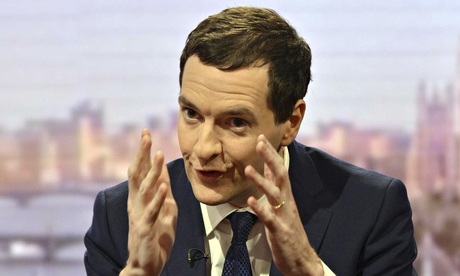
George Osborne, the chancellor, has come under fire after it emerged that a headline-grabbing extra £2bn a year being allocated to the NHS includes £750m being re-allocated from within the Department of Health.
The extra health funding, announced before the chancellor’s autumn statement this week, was widely welcomed by health experts. Labour said it would match the extra funding and top it up with an extra £2.5bn a year for the NHS from its planned “Time to Care” fund.
Tories argued that the £2bn headline “extra funding” figure was justified because, in addition to the increase in the overall health budget, Osborne also announced that £1.1bn would be spent over four years modernising GP surgeries. That £1.1bn is a one-off sum that comes from the fines imposed on banks after the Libor rate-rigging scandal.
Speaking on the BBC’s Andrew Marr Show, the chancellor described the extra funding as a downpayment on the NHS’s five-year plan.
The NHS’s chief executive, Simon Stevens, launched the new five-year plan in October, and said the health service would need an extra £8bn a year by 2020. The health secretary, Jeremy Hunt, is due to make a statement in the Commons on Monday formally announcing that the government is accepting the target.
But Hunt will not say how the government will be able to find an extra £8bn for the NHS by the end of the next parliament, and the controversy generated by Sunday’s £2bn announcement illustrates how difficult it will be for the next government to increase health spending in real terms so substantially.
Osborne will announce more details of future government spending plans in the autumn statement on Wednesday, but he faces a particularly tough task because he is expected to admit that his deficit reduction programme has stalled.
On Monday Ed Miliband, the Labour leader, will argue that because income tax receipts and national insurance receipts have been lower than expected over this parliament, and welfare spending has been higher, Osborne’s “failure to tackle the cost-of-living crisis” has cost the Treasury £116.5bn. The party will say that the loss is the equivalent of almost £4,000 for every taxpayer.
Osborne’s decision to make health a key feature of the autumn statement reflects his eagerness to neutralise the issue in the runup to the general election. Labour, which has a clear lead on health in opinion polls, wants to put the NHS at the heart of the campaign, but the Conservatives want the election to be fought over the economy.
Speaking on the Marr show, Osborne confirmed Sunday newspaper reports that he would be putting an extra £2bn a year into the NHS, starting from April next year. Government sources subsequently confirmed that £750m of that was coming from internal health department savings – “essentially moving money from [the back office] to the NHS front line” – while the rest would come from underspends in other government departments.
Andy Burnham, the shadow health secretary, said that this meant the £2bn figure was “spin”, because Osborne was “proposing to recycle funds already in the Department of Health budget. “Labour’s plan is fully funded and will give the NHS £2.5bn a year over and above the plans left by this government,” he said.
The Tories argued the £2bn new money figure could be justified by the additional £1.1bn being spent on GP services, with the money coming from the fines paid by banks involved in the Libor rate-rigging scandal. Some £1bn will be going to England and the rest to other parts of the UK by using the Barnett formula.
In England, the money will be used to improve GP community services, with premises being modernised and technology improved so that facilities such as chemotherapy and dialysis can be provided in local centres. This is in line with the strategy set out in the NHS five-year plan.
Stevens, the NHS England chief executive, said the extra money “represents an extremely welcome vote of confidence in the NHS’s own five-year plan”.
Nigel Edwards, chief executive of the Nuffield Trust, the health thinktank, also welcomed the investment, saying it would help the NHS “through what looked like being an impossible year in 2015/16”. But he warned that in future, governments would not be able to rely on recycling money from the Department for Health budget.
“Taking money from elsewhere in the health budget may not be an option in coming years, as the vast majority already goes towards the NHS and underspends are running out. Future increases will have to be almost entirely new money,” he said.
Paul Johnson, the head of the Institute for Fiscal Studies, said on Sunday that Osborne would have to admit on Wednesday that the public finances are in worse shape than the Office for Budget Responsibility was forecasting at the time of the last budget, in March.
“Things haven’t gone as well as hoped since March, not in the sense that the economy has done less well than hoped but, because earnings growth has been relatively poor, other tax receipts have been relatively poor. We’ll probably end up with the deficit a bit higher than the OBR was expecting back in March,” Johnson told BBC1’s Sunday Politics programme.
He said that even with Osborne’s promised squeeze on welfare benefits, there would have to be big cuts to other public services in the next parliament. “The consequence will be that by 2018 we are looking at spending cuts of one-third in a whole slew of public services – local government, police, justice, police environment – all of these things,” he said.
But, in his interview, Osborne argued that the IFS analysis was wrong, because it did not make allowance for the fact that a future Conservative government could introduce even more welfare cuts.
“The IFS and others assume there are no further savings in the welfare budget. I don’t think that’s the right choice for this country,” he said. “We should be making savings in welfare.”
Speaking on the same programme, the shadow chancellor, Ed Balls, said Osborne had failed to meet his aim of eliminating the deficit and that his proposed tax cuts were unfunded. He said that “pretty much everything” Osborne was saying “falls apart under scrutiny”.
Osborne refused to rule out increasing VAT after the election, saying he had no plans to do so.
Balls said that “no plans to raise VAT” was exactly what Osborne said before the 2010 general election, after which he raised it from 17.5% to 20%.
Balls told the programme that Labour would put an extra £2.5bn a year into the NHS, partly paid for by its mansion tax on homes worth more than £2bn. Osborne said it was more accurate to describe this as a “homes tax”.
He said: “Of course they come on this show and say it’s for people with houses worth £10m or £15m, but once Labour introduces a homes tax, it will be people with homes with a fraction of that who will be clobbered with it.”
On Monday, at an event in Nottingham, Miliband will argue that the government’s failure to tackle the cost of living crisis is hampering deficit reduction, because it has cost the Treasury so much in lost revenue and extra welfare spending.
According to House of Commons library research for Labour, income tax receipts during this parliament have been £66bn lower than expected in 2010, national insurance contributions £25.5bn lower, and social security spending £25bn higher.
“The government’s failure to build a recovery that works for every-day people and tackle the cost-of-living crisis isn’t just bad for every person affected, it also hampers our ability to pay down the deficit,” Miliband will say.
“Britain’s public finances have been weakened by a Tory-led government overseeing stagnant wages which keep tax revenues low.
“The result has been David Cameron and George Osborne missing every single target they set themselves on clearing the deficit and balancing the books by the end of this parliament.”
Labour dismiss announcement as ‘spin’ after it emerges that £750m of extra funding is recycled health department cash. 30/11/2014
George Osborne, the chancellor, has come under fire after it emerged that a headline-grabbing extra £2bn a year being allocated to the NHS includes £750m being re-allocated from within the Department of Health.
The extra health funding, announced before the chancellor’s autumn statement this week, was widely welcomed by health experts. Labour said it would match the extra funding and top it up with an extra £2.5bn a year for the NHS from its planned “Time to Care” fund.
Tories argued that the £2bn headline “extra funding” figure was justified because, in addition to the increase in the overall health budget, Osborne also announced that £1.1bn would be spent over four years modernising GP surgeries. That £1.1bn is a one-off sum that comes from the fines imposed on banks after the Libor rate-rigging scandal.
Speaking on the BBC’s Andrew Marr Show, the chancellor described the extra funding as a downpayment on the NHS’s five-year plan.
The NHS’s chief executive, Simon Stevens, launched the new five-year plan in October, and said the health service would need an extra £8bn a year by 2020. The health secretary, Jeremy Hunt, is due to make a statement in the Commons on Monday formally announcing that the government is accepting the target.
But Hunt will not say how the government will be able to find an extra £8bn for the NHS by the end of the next parliament, and the controversy generated by Sunday’s £2bn announcement illustrates how difficult it will be for the next government to increase health spending in real terms so substantially.
Osborne will announce more details of future government spending plans in the autumn statement on Wednesday, but he faces a particularly tough task because he is expected to admit that his deficit reduction programme has stalled.
On Monday Ed Miliband, the Labour leader, will argue that because income tax receipts and national insurance receipts have been lower than expected over this parliament, and welfare spending has been higher, Osborne’s “failure to tackle the cost-of-living crisis” has cost the Treasury £116.5bn. The party will say that the loss is the equivalent of almost £4,000 for every taxpayer.
Osborne’s decision to make health a key feature of the autumn statement reflects his eagerness to neutralise the issue in the runup to the general election. Labour, which has a clear lead on health in opinion polls, wants to put the NHS at the heart of the campaign, but the Conservatives want the election to be fought over the economy.
Speaking on the Marr show, Osborne confirmed Sunday newspaper reports that he would be putting an extra £2bn a year into the NHS, starting from April next year. Government sources subsequently confirmed that £750m of that was coming from internal health department savings – “essentially moving money from [the back office] to the NHS front line” – while the rest would come from underspends in other government departments.
Andy Burnham, the shadow health secretary, said that this meant the £2bn figure was “spin”, because Osborne was “proposing to recycle funds already in the Department of Health budget. “Labour’s plan is fully funded and will give the NHS £2.5bn a year over and above the plans left by this government,” he said.
The Tories argued the £2bn new money figure could be justified by the additional £1.1bn being spent on GP services, with the money coming from the fines paid by banks involved in the Libor rate-rigging scandal. Some £1bn will be going to England and the rest to other parts of the UK by using the Barnett formula.
In England, the money will be used to improve GP community services, with premises being modernised and technology improved so that facilities such as chemotherapy and dialysis can be provided in local centres. This is in line with the strategy set out in the NHS five-year plan.
Stevens, the NHS England chief executive, said the extra money “represents an extremely welcome vote of confidence in the NHS’s own five-year plan”.
Nigel Edwards, chief executive of the Nuffield Trust, the health thinktank, also welcomed the investment, saying it would help the NHS “through what looked like being an impossible year in 2015/16”. But he warned that in future, governments would not be able to rely on recycling money from the Department for Health budget.
“Taking money from elsewhere in the health budget may not be an option in coming years, as the vast majority already goes towards the NHS and underspends are running out. Future increases will have to be almost entirely new money,” he said.
Paul Johnson, the head of the Institute for Fiscal Studies, said on Sunday that Osborne would have to admit on Wednesday that the public finances are in worse shape than the Office for Budget Responsibility was forecasting at the time of the last budget, in March.
“Things haven’t gone as well as hoped since March, not in the sense that the economy has done less well than hoped but, because earnings growth has been relatively poor, other tax receipts have been relatively poor. We’ll probably end up with the deficit a bit higher than the OBR was expecting back in March,” Johnson told BBC1’s Sunday Politics programme.
He said that even with Osborne’s promised squeeze on welfare benefits, there would have to be big cuts to other public services in the next parliament. “The consequence will be that by 2018 we are looking at spending cuts of one-third in a whole slew of public services – local government, police, justice, police environment – all of these things,” he said.
But, in his interview, Osborne argued that the IFS analysis was wrong, because it did not make allowance for the fact that a future Conservative government could introduce even more welfare cuts.
“The IFS and others assume there are no further savings in the welfare budget. I don’t think that’s the right choice for this country,” he said. “We should be making savings in welfare.”
Speaking on the same programme, the shadow chancellor, Ed Balls, said Osborne had failed to meet his aim of eliminating the deficit and that his proposed tax cuts were unfunded. He said that “pretty much everything” Osborne was saying “falls apart under scrutiny”.
Osborne refused to rule out increasing VAT after the election, saying he had no plans to do so.
Balls said that “no plans to raise VAT” was exactly what Osborne said before the 2010 general election, after which he raised it from 17.5% to 20%.
Balls told the programme that Labour would put an extra £2.5bn a year into the NHS, partly paid for by its mansion tax on homes worth more than £2bn. Osborne said it was more accurate to describe this as a “homes tax”.
He said: “Of course they come on this show and say it’s for people with houses worth £10m or £15m, but once Labour introduces a homes tax, it will be people with homes with a fraction of that who will be clobbered with it.”
On Monday, at an event in Nottingham, Miliband will argue that the government’s failure to tackle the cost of living crisis is hampering deficit reduction, because it has cost the Treasury so much in lost revenue and extra welfare spending.
According to House of Commons library research for Labour, income tax receipts during this parliament have been £66bn lower than expected in 2010, national insurance contributions £25.5bn lower, and social security spending £25bn higher.
“The government’s failure to build a recovery that works for every-day people and tackle the cost-of-living crisis isn’t just bad for every person affected, it also hampers our ability to pay down the deficit,” Miliband will say.
“Britain’s public finances have been weakened by a Tory-led government overseeing stagnant wages which keep tax revenues low.
“The result has been David Cameron and George Osborne missing every single target they set themselves on clearing the deficit and balancing the books by the end of this parliament.”
goldfinger
- 30 Nov 2014 22:36
- 51785 of 81564
from above.....
According to House of Commons library research for Labour, income tax receipts during this parliament have been £66bn lower than expected in 2010, national insurance contributions £25.5bn lower, and social security spending £25bn higher.
According to House of Commons library research for Labour, income tax receipts during this parliament have been £66bn lower than expected in 2010, national insurance contributions £25.5bn lower, and social security spending £25bn higher.
goldfinger
- 30 Nov 2014 22:40
- 51786 of 81564

goldfinger
- 30 Nov 2014 22:43
- 51787 of 81564

Haystack
- 30 Nov 2014 22:59
- 51788 of 81564
A case of rats not joining a sinking ship
http://www.independent.co.uk/news/uk/politics/alan-johnson-snubbed-ed-miliband-over-return-to-shadow-cabinet-9894265.html
Sunday 30 November 2014
Alan Johnson snubbed Ed Miliband over return to Shadow Cabinet
Ed Miliband approached Alan Johnson about a return to the Shadow Cabinet ahead of the next election but was turned down by the former Home Secretary.
Mr Johnson, still one of Labour’s most popular politicians and now a best-selling author, revealed how much he had disliked his short spell as shadow chancellor after the 2010 election.
http://www.independent.co.uk/news/uk/politics/alan-johnson-snubbed-ed-miliband-over-return-to-shadow-cabinet-9894265.html
Sunday 30 November 2014
Alan Johnson snubbed Ed Miliband over return to Shadow Cabinet
Ed Miliband approached Alan Johnson about a return to the Shadow Cabinet ahead of the next election but was turned down by the former Home Secretary.
Mr Johnson, still one of Labour’s most popular politicians and now a best-selling author, revealed how much he had disliked his short spell as shadow chancellor after the 2010 election.
Stan
- 01 Dec 2014 00:11
- 51789 of 81564
Where you moving to then H/S? Not near me I hope.
Haystack
- 01 Dec 2014 00:43
- 51790 of 81564
Where would that be?
Stan
- 01 Dec 2014 01:03
- 51791 of 81564
Not saying, just in case -):
Haystack
- 01 Dec 2014 01:39
- 51792 of 81564
Which broad area? NSEW?
TANKER - 01 Dec 2014 08:05 - 51793 of 81564
well we now no that camerons speech was all bull shit lies and more lies
this man is taking the public for fools he needs to look at is gov for those
a party of liars and crooks
this man is taking the public for fools he needs to look at is gov for those
a party of liars and crooks
cynic
- 01 Dec 2014 08:06
- 51794 of 81564
most popular boy's name in UK for 2014
a definite one for MrT ......
the answer is Mohammad!!
interestingly, no counterpart girl's name in Top 20 :-)
a definite one for MrT ......
the answer is Mohammad!!
interestingly, no counterpart girl's name in Top 20 :-)
Stan
- 01 Dec 2014 08:09
- 51795 of 81564
I'm surprised.. where did Alf come Alf -):
| About MoneyAM | Ts and Cs | Privacy Policy | Investment Warning | Content Standards | Corporate Solutions | Advertise With Us | Site Map | © 2026 MoneyAM |
Register now for FREE
Share Prices,
Stock Quotes,
Charts, Bulletin Boards, Indices, Watchlists, Portfolio, Market News, Research
or see our Premium Services including Level 2, Terminal and much more.
 Follow us on Twitter