

| Home | Log In | Register | Our Services | My Account | Contact | Help |
You are NOT currently logged in
Register now or login to post to this thread.
THE TALK TO YOURSELF THREAD. (NOWT)
goldfinger

 - 09 Jun 2005 12:25


Thought Id start this one going because its rather dead on this board at the moment and I suppose all my usual muckers are either at the Stella tennis event watching Dim Tim (lose again) or at Henly Regatta eating cucumber sandwiches (they wish,...NOT).
Anyway please feel free to just talk to yourself blast away and let it go on any company or subject you wish. Just wish Id thought of this one before.
cheers GF.
Anyway please feel free to just talk to yourself blast away and let it go on any company or subject you wish. Just wish Id thought of this one before.
cheers GF.
Stan
- 28 Jan 2015 12:53
- 55962 of 81564
Tell us Alf, Has your PT told you when your training is going to end yet?
cynic
- 28 Jan 2015 12:59
- 55963 of 81564
not his call of course
i hope that now i have committed (not have been!), that i'll maintain it for a many more years
i hope that now i have committed (not have been!), that i'll maintain it for a many more years
Fred1new
- 28 Jan 2015 13:02
- 55964 of 81564
Shortie,
Was allowed out earlier this morning, but wanted to make sure Max knew what he was wishing for before I went!
=========
Was allowed out earlier this morning, but wanted to make sure Max knew what he was wishing for before I went!
=========
Stan
- 28 Jan 2015 13:09
- 55965 of 81564
What do you mean not his call? he's the trainer not you.
doodlebug4 - 28 Jan 2015 13:20 - 55966 of 81564
By Alan Cochrane
6:30AM GMT 28 Jan 2015
The Scottish Labour leader needs to decide if he is a Blairite reformer or an old-school left-winger
Either the polls have gone mad or the voters have. The sentiment, widely felt north of the border, is prompted by some incredible surveys of voter opinion – the latest being the poll of polls, conducted by Sky News, which suggested that as things stand the SNP is on course to win 53 seats at the general election on May 7.
If accurate it means that the nationalists’ tally would increase almost ninefold from the six they won in 2010 with the remaining six Scottish seats being shared amongst Labour (41 last time), Liberal Democrats (11) and the Conservatives (one). Fantastical? It seems so, but the very prospect is scaring the living daylights out of what used to be called the ‘mainstream’ political parties at Westminster.
None more so than Labour, because if what the polls suggest comes to pass then a big Nat surge in Scotland might well deprive Ed Miliband of his chances of an overall majority at Westminster and then, irony of ironies, he’d then be faced with the prospect of having to do a deal with an Alex Salmond-dominated phalanx of SNP MPs. The Nats are currently toying with Mr Miliband – saying they won’t form a coalition government with him but telling him that they’re open to a bit of horse-trading: they’ll allow him to be Prime Minister but will only let him keep 10 Downing Street if he agrees to their demands.
Like a rabbit caught in the headlights, the Labour leader seems transfixed by the Nats' demands. He can’t bring himself to positively rule out any deals with the SNP-- in sharp contrast to Ed Balls, the Shadow Chancellor, who has done just that.
Apart from progress to their ultimate objective of independence – for which the SNP is perfectly happy to hold Westminster to ransom for as long as it takes - the other ‘red line’ demand from First Minister Nicola Sturgeon is the removal of Trident from Scotland. But it is a demand that a Labour government simply cannot concede.
Labour supports the British nuclear deterrent and even if a costly replacement for Trident was shelved and something cheaper – like a Cruise-based system – was decided upon, the missiles would still be submarine-launched. And as all of the Royal Navy’s submarines are due to be based on the Clyde within five years, Britain’s independent deterrent would still be situated in Scotland – a fact that the SNP would, presumably, oppose.
So what’s Labour to do? Clearly, it’s best option would be to halt that Nat tide and hang onto all those Westminster seats and, thus, help Mr Miliband get that overall majority that the polls are currently saying is beyond his reach. Charged with that uphill task since the beginning of December is Jim Murphy, one of the heroes of the successful defeat of the Nats in the referendum.
Whether he goes from champ to chump is now Scotland’s hottest political topic. Mr Murphy is a talented politician – even his Nat opponents concede that - but his main problem at present appears to be that he can’t make up his mind what manner of politician he is.
Tagged from the start as an avowed Blairite, he’s been treated as such by those once termed the Brownies in Labour’s ranks and it was unfortunate for Jim that the ‘wrong’ brother won the Labour leadership. The victory for Ed quickly saw Mr Murphy demoted from the defence portfolio to that of international development in the Shadow Cabinet.
Although he’s denied the Blairite label, he didn’t help his cause by appointing John McTernan, his former special advisor and also Tony Blair’s one-time political secretary, as his chief of staff when he assumed the Scottish leadership.
But in an attempt both to bury that image and also to recapture those Labour voters who voted Yes against their party in the referendum and who now appear to have deserted it in droves, Mr Murphy is brandishing his left-wing credentials.
He deliberately picked a fight with Tories like Boris Johnson by saying that he’d use the mansion tax in London to pay for Scottish nurses. He tried to outbid the SNP by saying he’d ban fracking until all the environmental issues connected with it were resolved. He claimed the SNP’s council tax freeze and new property taxes as benefitting the better off and he pledged that a future Labour-controlled Scottish government would re-nationalise the country’s rail services.
Bizarrely, at least in light of his sterling service for the No campaign last year, he assured those Labour supporters in West Central Scotland, who associate the term with the sectarian politics of Northern Ireland, by insisting he wasn’t a "Unionist".
Whilst all of this will be seen as pure political posturing to regain that traditional Labour vote, it’s doing nothing for those other Unionists – Tories and Lib Dems – who may be prepared to vote tactically for Labour to stop the Nats. “ Jim Murphy used to say that you can’t win from the Left. But that’s where he is just now and he won’t get many Centre-Right votes from there,” said one senior Tory yesterday.
Adding to the confusion is the fact that he won’t tell us if he’s standing for election in his Renfrewshire seat in May’s general election.
All of which leads to one obvious question: Will the real Jim Murphy please stand up?
6:30AM GMT 28 Jan 2015
The Scottish Labour leader needs to decide if he is a Blairite reformer or an old-school left-winger
Either the polls have gone mad or the voters have. The sentiment, widely felt north of the border, is prompted by some incredible surveys of voter opinion – the latest being the poll of polls, conducted by Sky News, which suggested that as things stand the SNP is on course to win 53 seats at the general election on May 7.
If accurate it means that the nationalists’ tally would increase almost ninefold from the six they won in 2010 with the remaining six Scottish seats being shared amongst Labour (41 last time), Liberal Democrats (11) and the Conservatives (one). Fantastical? It seems so, but the very prospect is scaring the living daylights out of what used to be called the ‘mainstream’ political parties at Westminster.
None more so than Labour, because if what the polls suggest comes to pass then a big Nat surge in Scotland might well deprive Ed Miliband of his chances of an overall majority at Westminster and then, irony of ironies, he’d then be faced with the prospect of having to do a deal with an Alex Salmond-dominated phalanx of SNP MPs. The Nats are currently toying with Mr Miliband – saying they won’t form a coalition government with him but telling him that they’re open to a bit of horse-trading: they’ll allow him to be Prime Minister but will only let him keep 10 Downing Street if he agrees to their demands.
Like a rabbit caught in the headlights, the Labour leader seems transfixed by the Nats' demands. He can’t bring himself to positively rule out any deals with the SNP-- in sharp contrast to Ed Balls, the Shadow Chancellor, who has done just that.
Apart from progress to their ultimate objective of independence – for which the SNP is perfectly happy to hold Westminster to ransom for as long as it takes - the other ‘red line’ demand from First Minister Nicola Sturgeon is the removal of Trident from Scotland. But it is a demand that a Labour government simply cannot concede.
Labour supports the British nuclear deterrent and even if a costly replacement for Trident was shelved and something cheaper – like a Cruise-based system – was decided upon, the missiles would still be submarine-launched. And as all of the Royal Navy’s submarines are due to be based on the Clyde within five years, Britain’s independent deterrent would still be situated in Scotland – a fact that the SNP would, presumably, oppose.
So what’s Labour to do? Clearly, it’s best option would be to halt that Nat tide and hang onto all those Westminster seats and, thus, help Mr Miliband get that overall majority that the polls are currently saying is beyond his reach. Charged with that uphill task since the beginning of December is Jim Murphy, one of the heroes of the successful defeat of the Nats in the referendum.
Whether he goes from champ to chump is now Scotland’s hottest political topic. Mr Murphy is a talented politician – even his Nat opponents concede that - but his main problem at present appears to be that he can’t make up his mind what manner of politician he is.
Tagged from the start as an avowed Blairite, he’s been treated as such by those once termed the Brownies in Labour’s ranks and it was unfortunate for Jim that the ‘wrong’ brother won the Labour leadership. The victory for Ed quickly saw Mr Murphy demoted from the defence portfolio to that of international development in the Shadow Cabinet.
Although he’s denied the Blairite label, he didn’t help his cause by appointing John McTernan, his former special advisor and also Tony Blair’s one-time political secretary, as his chief of staff when he assumed the Scottish leadership.
But in an attempt both to bury that image and also to recapture those Labour voters who voted Yes against their party in the referendum and who now appear to have deserted it in droves, Mr Murphy is brandishing his left-wing credentials.
He deliberately picked a fight with Tories like Boris Johnson by saying that he’d use the mansion tax in London to pay for Scottish nurses. He tried to outbid the SNP by saying he’d ban fracking until all the environmental issues connected with it were resolved. He claimed the SNP’s council tax freeze and new property taxes as benefitting the better off and he pledged that a future Labour-controlled Scottish government would re-nationalise the country’s rail services.
Bizarrely, at least in light of his sterling service for the No campaign last year, he assured those Labour supporters in West Central Scotland, who associate the term with the sectarian politics of Northern Ireland, by insisting he wasn’t a "Unionist".
Whilst all of this will be seen as pure political posturing to regain that traditional Labour vote, it’s doing nothing for those other Unionists – Tories and Lib Dems – who may be prepared to vote tactically for Labour to stop the Nats. “ Jim Murphy used to say that you can’t win from the Left. But that’s where he is just now and he won’t get many Centre-Right votes from there,” said one senior Tory yesterday.
Adding to the confusion is the fact that he won’t tell us if he’s standing for election in his Renfrewshire seat in May’s general election.
All of which leads to one obvious question: Will the real Jim Murphy please stand up?
Fred1new
- 28 Jan 2015 13:22
- 55967 of 81564
Stan,
I breathed a sigh of relief for a moment, or two, when I read Manuel's post.
I thought he had posted that he had been committed.
Disappointment soon set in again, on rereading.
I breathed a sigh of relief for a moment, or two, when I read Manuel's post.
I thought he had posted that he had been committed.
Disappointment soon set in again, on rereading.
Haystack
- 28 Jan 2015 13:27
- 55968 of 81564
cynic
It was the Mirror
Farage has admitted setting up offshore trust. His current view is that it was a mistake and he regrets it.
It was the Mirror
Farage has admitted setting up offshore trust. His current view is that it was a mistake and he regrets it.
cynic
- 28 Jan 2015 13:32
- 55969 of 81564
whoops! i didn't mean to set up an off-shore account; i thought it was a post office savings account!
Haystack
- 28 Jan 2015 13:33
- 55970 of 81564
20 Bogus Arguments for Mass Immigration
http://www.migrationwatchuk.org/briefingPaper/document/269#jump7
http://www.migrationwatchuk.org/briefingPaper/document/269#jump7
cynic
- 28 Jan 2015 13:33
- 55971 of 81564
fred- you need to be careful of getting over-excited at your age or your wife's wishes may come true :-)
Shortie - 28 Jan 2015 13:34 - 55972 of 81564
My prediction for the GE is.... It'll be the worst public voting turn out ever... I've always voted but this GE I doubt I'll bother.. Clegg, Cameron, Miliband might as well form a single party as splitting them on differences is near impossible. As for UKIP how could they ever win, the best polled realistic achievement currently is 16 MPs....
Haystack
- 28 Jan 2015 13:38
- 55973 of 81564

Fred1new
- 28 Jan 2015 14:15
- 55974 of 81564
I wish it was that simple.
Bur I can't get the bloody manacles off.
Do you know that it is so bad that even the dog has left home.
Bur I can't get the bloody manacles off.
Do you know that it is so bad that even the dog has left home.
Haystack
- 28 Jan 2015 14:27
- 55975 of 81564

Stan
- 28 Jan 2015 14:29
- 55976 of 81564
Just mention my name Fred, that should do the trick -):
MaxK - 28 Jan 2015 14:41 - 55977 of 81564
Alexis Tsipras begins rolling back Greek austerity policies
New prime minister says there is no time to waste, as privatisation programme demanded by EU and IMF is put on hold
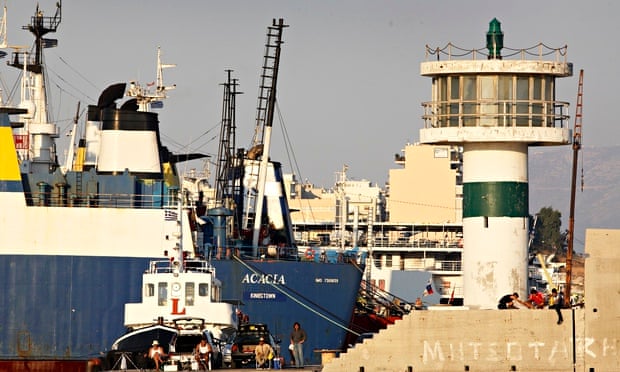
The privatisation of Piraeus Port, Greece's largest docks, has been postponed. A Chinese consortium and four other suitors were vying for a 67% stake in the port authority. Photograph: David Levene for the Guardian
Helena Smith
Wednesday 28 January 2015 13.17 GMT
In a dramatic start to his tenure in office, Greece’s new prime minister, Alexis Tsipras, has begun unpicking the deeply unpopular austerity policies underpinning the debt-stricken country’s bailout programme.
After storming to power on Sunday, the leftwinger said there was no time to waste. “We will continue with our plan,” he told his first cabinet meeting on Wednesday. “We don’t have the right to disappoint our voters.”
The government’s top priority would be to tackle the “humanitarian crisis” – the result of five years of punitive belt-tightening measures – but also open negotiations over Greece’s unsustainable debt, at €320bn (£239bn) the largest in Europe.
“We won’t get into a mutually destructive clash, but we will not continue a policy of subjection,” said Tsipras, who at 40 is Greece’s youngest postwar leader.
Catapulted into office for the first time, Syriza – in power with the small, rightwing Independent Greeks party after falling two seats short of an overall majority in the 300-seat house – set about acting on its pledges before the cabinet meeting even began.
Earlier, the energy minister, Panagiotis Lafazanis, called a halt to the privatisation programme that the EU and IMF have demanded in exchange for the €240bn in aid keeping Greece afloat. Plans to sell off the country’s dominant power corporation, PPC, were to be frozen with immediate effect. “We will immediately stop any privatisation of PPC,” said the politician, who heads Syriza’s militant Left Platform. Plans to privatise the port of Pireaus, the country’s largest docks, were also put on hold. China’s giant consortium, Cosco, and four other suitors had been vying for a 67% stake in the port authority, agreed in consultation with creditors by Greece’s previous conservative-led coalition government. “The Cosco deal will be reviewed to the benefit of the Greek people,” Thodoris Dritsas, the deputy minister in charge of shipping, told Reuters.
Shares in PCC and Piraeus Port both tumbled by around 7% at the start of trading in Athens, while Greek government bond yields rose to near record levels and bank shares fell.
Dismantling the EU-IMF mandated measures that had plunged Greece into poverty and despair would, declared Panos Skourletis, the labour minister, be his single greatest priority.
“The reinstatement of the minimum wage to €751 (£560) [a month] will be among the government’s first bills,” Skourletis announced on Antenna TV.
More: http://www.theguardian.com/world/2015/jan/28/greece-new-prime-minister-halts-austerity-policies
cynic
- 28 Jan 2015 14:55
- 55978 of 81564
“The reinstatement of the minimum wage to €751 (£560) [a month] will be among the government’s first bills”
that should slash unemployment at a stroke!
that should slash unemployment at a stroke!
MaxK - 28 Jan 2015 15:00 - 55979 of 81564
Cant see how it will make it any worse.
cynic
- 28 Jan 2015 15:09
- 55980 of 81564
could drive even more businesses to the wall and is assuredly a disincentive to take on new people
MaxK - 28 Jan 2015 15:13 - 55981 of 81564
If a business cant afford the ><£115 a week wages, there's something wrong with the model.
| About MoneyAM | Ts and Cs | Privacy Policy | Investment Warning | Content Standards | Corporate Solutions | Advertise With Us | Site Map | © 2026 MoneyAM |
Register now for FREE
Share Prices,
Stock Quotes,
Charts, Bulletin Boards, Indices, Watchlists, Portfolio, Market News, Research
or see our Premium Services including Level 2, Terminal and much more.
 Follow us on Twitter