

| Home | Log In | Register | Our Services | My Account | Contact | Help |
You are NOT currently logged in
Register now or login to post to this thread.
THE TALK TO YOURSELF THREAD. (NOWT)
goldfinger

 - 09 Jun 2005 12:25


Thought Id start this one going because its rather dead on this board at the moment and I suppose all my usual muckers are either at the Stella tennis event watching Dim Tim (lose again) or at Henly Regatta eating cucumber sandwiches (they wish,...NOT).
Anyway please feel free to just talk to yourself blast away and let it go on any company or subject you wish. Just wish Id thought of this one before.
cheers GF.
Anyway please feel free to just talk to yourself blast away and let it go on any company or subject you wish. Just wish Id thought of this one before.
cheers GF.
Fred1new
- 13 Feb 2015 16:25
- 56568 of 81564
OR the BOX!
Deep down below!
Deep down below!
Fred1new
- 13 Feb 2015 17:04
- 56569 of 81564
What surprised me about the article is that Germany economy has bounced upwards and yet the trade with Russia has been "sanctioned", or has it, or is it a false bounce?
Euro zone economy accelerates thanks to German 'thunderbolt'
BY PHILIP BLENKINSOP AND ALEXANDRA HUDSON
BRUSSELS/BERLIN Fri Feb 13, 2015 4:48pm GMT
http://uk.reuters.com/article/2015/02/13/uk-eurozone-economy-idUKKBN0LH0MC20150213?feedType=nl&feedName=uktopnewsearly
Fred1new
- 13 Feb 2015 17:05
- 56570 of 81564
. I wish my finger would stop bouncing!
cynic
- 13 Feb 2015 17:13
- 56571 of 81564
i had trouble believing that too
MaxK - 13 Feb 2015 18:08 - 56572 of 81564
Ma Merkel is taking care of business, German business, and to hell with everyone else.
Why do you think the €urobun is still around?
Why do you think the €urobun is still around?
Stan
- 13 Feb 2015 18:22
- 56573 of 81564
Don't watch QT usually now but did last night.
Who's that useless Susanne Evans when she's at home?
Who's that useless Susanne Evans when she's at home?
Fred1new
- 13 Feb 2015 19:54
- 56574 of 81564
Max.
I am sure that Putin would be impressed with a UK outside the EU and bow his head and curtsy to PM like Cameron or Farage if that was so
He would consider them errand boys.
If you noticed Cameron for all his rants was not at the table with Putin. His opinion wasn't asked for.
-=-==-=-=-=-
Farage is just huffing and puffing.
I am sure that Putin would be impressed with a UK outside the EU and bow his head and curtsy to PM like Cameron or Farage if that was so
He would consider them errand boys.
If you noticed Cameron for all his rants was not at the table with Putin. His opinion wasn't asked for.
-=-==-=-=-=-
Farage is just huffing and puffing.
Fred1new
- 13 Feb 2015 20:08
- 56575 of 81564
Stan,
I thought it was Farage's girl friend.
I thought it was Farage's girl friend.
dreamcatcher
- 13 Feb 2015 21:31
- 56576 of 81564
A guy walks into a bar and sits down next to a good-looking woman and starts looking at his watch. The woman notices this and asks him if his date is late. "No," he replies. "I've just got this new state-of-the-art watch and I was just about to test it."
"What does it do?"
"It uses alpha waves to telepathically talk to me."
"What's it telling you now?"
"Well, it says you're not wearing a bra or panties."
"Ha! Well it must be broken then, because I am!"
"Darn thing must be an hour fast."
"What does it do?"
"It uses alpha waves to telepathically talk to me."
"What's it telling you now?"
"Well, it says you're not wearing a bra or panties."
"Ha! Well it must be broken then, because I am!"
"Darn thing must be an hour fast."
Stan
- 13 Feb 2015 22:43
- 56577 of 81564
Post 56576.
Max who on earth is it? she was absolutely useless.
Max who on earth is it? she was absolutely useless.
ExecLine
 - 14 Feb 2015 09:33
- 56578 of 81564
- 14 Feb 2015 09:33
- 56578 of 81564

Happy Valentine's Day.
required field - 14 Feb 2015 10:50 - 56579 of 81564
That Ukraine peace treaty won't last 5mn.....
Stan
- 14 Feb 2015 11:20
- 56580 of 81564
A bit like your attention span RF, how long you been over here now?
Fred1new
- 14 Feb 2015 13:22
- 56581 of 81564
Oh, what a lovely party.
Finks blustered and ducks like Cameron.
Mind he is their beloved leader!

Finks blustered and ducks like Cameron.
Mind he is their beloved leader!
Fred1new
- 14 Feb 2015 13:26
- 56582 of 81564
I wonder if any in the cabinet have pass keys?
Also, wonder how many of the party euro-phobes have similar?
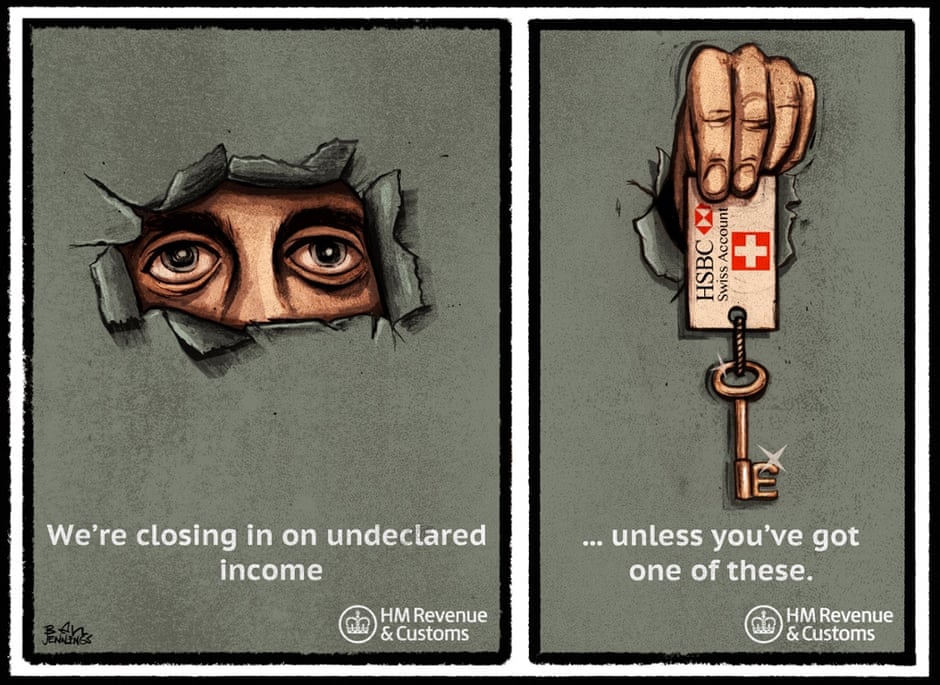
Also, wonder how many of the party euro-phobes have similar?
ExecLine
- 14 Feb 2015 15:44
- 56583 of 81564
Now that is a good cartoon.
cynic
- 14 Feb 2015 17:09
- 56584 of 81564
and unless it looks too much like hard work - eg the guy who had assets etc in uk but hadn't paid tax for 24 years
much easier to issue fines of £100/150 for marginally late returns
i also note that hmrc is effectively self-regulating when it comes to complaints - just like the police and the law society
much easier to issue fines of £100/150 for marginally late returns
i also note that hmrc is effectively self-regulating when it comes to complaints - just like the police and the law society
Chris Carson
- 14 Feb 2015 17:40
- 56585 of 81564
We need more City firms to speak out on Labour’s economics
Bank of America has so far led the way in nailing its colours to the mast
By Allister Heath
7:59PM GMT 13 Feb 2015
Follow
CommentsComments
Bland, boring and eminently binnable: that is the only way most political research from investment banks can be described. When it comes to general elections and political parties, City analysts are usually too scared to be punchy and don’t want to offend or fall out with anybody.
It may be understandable for straightforward, short-term commercial reasons - but it means that those who rely on this sort of research, including our top businesses and the financial markets, tend to have a poor understanding of domestic and global politics.
They tend to believe that the most sensible solution, at least from a technocratic perspective, will always triumph. As a result, they are often wrong-footed or at least politically tone-deaf.
Every so often, however, the City does get it right, or at least pins its colours to the mast. Many banks openly took sides during the Scottish referendum, and one or two are now breaking ranks on the general election.
The best so far is a note from Bank of America. Its authors, Gilles Moec and Sebastien Cross, believe that a Labour government would “seriously interfere with the private sector”. There would be a return to a 50pc income tax rate, a mansion tax and yet another bonus tax.
There would be endless interference in other industries, including via an energy price cap. Labour would also be likely to “massively” increase the minimum wage, they argue, taking it to the level - relative to the median wage - now seen in France.
The authors don’t really explain what this would mean, so let me do it for them: it would help some low-income workers but would almost certainly reduce opportunities for younger and lower-skilled workers. That certainly has been France’s disastrous experience.
The two economists are also right about the Blair/Brown years. As they point out, for all the pro-market, centrist rhetoric, the role of government under so-called New Labour expanded dramatically. Public spending as a share of GDP “quickly converged to the average observed in the Euro area”, they rightly observe.
Sadly, far too few observers realised this at the time. The Blair/Brown governments were able to reap the benefits of the Tory supply-side reforms of the 1980s and 1990s, as well as of the Great Moderation, otherwise known as the giant bubble of the 2000s.
The private sector was encouraged, as were foreign investors; globalisation and a buoyant private sector meant greater tax receipts for the Labour government to spend on its core supporters.
As Bank of America puts it, “under New Labour the UK was looking towards Europe on public spending, and towards the US on the way the private sector operated”.
All of this is now well and truly over: Ed Miliband’s Labour party is openly socialist and wants not just to spend more than the Tories but also to regulate and tax much more heavily.
It is worth pointing out, for the sake of fairness, that the authors aren’t keen on the Tory policy on the EU (they are wrong on this, but that is a debate for another day).
Bank of America’s take on the slow but steady deleveraging of corporate Britain is also worth highlighting.
Eurozone non-financial companies remain burdened with a heavy debt load, they point out, making them vulnerable to the stagnation that is still affecting France and Italy.
The region’s non-financial corporate debt has stabilised at 200pc of corporate output. In stark contrast, the same metric in the UK has seen a near 50-percentage point collapse to 140pc in the third quarter.
A reduction in debt combined with lower interest rates means that the corporate sector’s average net interest charge has fallen to just 2pc, a very low number that is significantly below the levels seen in the 1990s.
Families and individuals haven’t reduced their debt burden by anything like as much, unfortunately, but the UK private sector could clearly bear a moderate increase in interest rates.
But while rate rises will be manageable, a left-wing labour party, potentially propped up by the Scottish nationalists and intent on waging war on the successful and the City, will be an entirely different matter.
allister.heath@telegraph.co.uk
Bank of America has so far led the way in nailing its colours to the mast
By Allister Heath
7:59PM GMT 13 Feb 2015
Follow
CommentsComments
Bland, boring and eminently binnable: that is the only way most political research from investment banks can be described. When it comes to general elections and political parties, City analysts are usually too scared to be punchy and don’t want to offend or fall out with anybody.
It may be understandable for straightforward, short-term commercial reasons - but it means that those who rely on this sort of research, including our top businesses and the financial markets, tend to have a poor understanding of domestic and global politics.
They tend to believe that the most sensible solution, at least from a technocratic perspective, will always triumph. As a result, they are often wrong-footed or at least politically tone-deaf.
Every so often, however, the City does get it right, or at least pins its colours to the mast. Many banks openly took sides during the Scottish referendum, and one or two are now breaking ranks on the general election.
The best so far is a note from Bank of America. Its authors, Gilles Moec and Sebastien Cross, believe that a Labour government would “seriously interfere with the private sector”. There would be a return to a 50pc income tax rate, a mansion tax and yet another bonus tax.
There would be endless interference in other industries, including via an energy price cap. Labour would also be likely to “massively” increase the minimum wage, they argue, taking it to the level - relative to the median wage - now seen in France.
The authors don’t really explain what this would mean, so let me do it for them: it would help some low-income workers but would almost certainly reduce opportunities for younger and lower-skilled workers. That certainly has been France’s disastrous experience.
The two economists are also right about the Blair/Brown years. As they point out, for all the pro-market, centrist rhetoric, the role of government under so-called New Labour expanded dramatically. Public spending as a share of GDP “quickly converged to the average observed in the Euro area”, they rightly observe.
Sadly, far too few observers realised this at the time. The Blair/Brown governments were able to reap the benefits of the Tory supply-side reforms of the 1980s and 1990s, as well as of the Great Moderation, otherwise known as the giant bubble of the 2000s.
The private sector was encouraged, as were foreign investors; globalisation and a buoyant private sector meant greater tax receipts for the Labour government to spend on its core supporters.
As Bank of America puts it, “under New Labour the UK was looking towards Europe on public spending, and towards the US on the way the private sector operated”.
All of this is now well and truly over: Ed Miliband’s Labour party is openly socialist and wants not just to spend more than the Tories but also to regulate and tax much more heavily.
It is worth pointing out, for the sake of fairness, that the authors aren’t keen on the Tory policy on the EU (they are wrong on this, but that is a debate for another day).
Bank of America’s take on the slow but steady deleveraging of corporate Britain is also worth highlighting.
Eurozone non-financial companies remain burdened with a heavy debt load, they point out, making them vulnerable to the stagnation that is still affecting France and Italy.
The region’s non-financial corporate debt has stabilised at 200pc of corporate output. In stark contrast, the same metric in the UK has seen a near 50-percentage point collapse to 140pc in the third quarter.
A reduction in debt combined with lower interest rates means that the corporate sector’s average net interest charge has fallen to just 2pc, a very low number that is significantly below the levels seen in the 1990s.
Families and individuals haven’t reduced their debt burden by anything like as much, unfortunately, but the UK private sector could clearly bear a moderate increase in interest rates.
But while rate rises will be manageable, a left-wing labour party, potentially propped up by the Scottish nationalists and intent on waging war on the successful and the City, will be an entirely different matter.
allister.heath@telegraph.co.uk
cynic
- 14 Feb 2015 17:47
- 56586 of 81564
an interesting article
just a pity that it has been put out by the telegraph rather than say the guardian
just a pity that it has been put out by the telegraph rather than say the guardian
Chris Carson
- 14 Feb 2015 17:49
- 56587 of 81564
With his distracting assault on tax avoidance, Miliband is peddling class-war populism
Telegraph View: If every taxpayer were free to set their own rate of income tax, how many, really, would set it as low as possible?
By Telegraph View
6:20AM GMT 14 Feb 2015
CommentsComments
Labour wants to fight this election from the back of a populist bandwagon. This week, we have seen the consequences for our politics. One has been humour. Whoever came up with the idea of sending the Labour women’s campaign around the country in a pink bus deserves credit for brightening up this dull February. As is traditional among the Left, the party immediately split over the issue: some insisted the van was in fact magenta while others called it cerise. For the Tories it was a golden opportunity, a chance to expose Labour’s special-interest group approach to politics as anachronistic and patronising.
They found it harder, however, to fight back on the subject of tax. At a time when Labour should be laying out its plan for the economy, Ed Miliband managed to squeeze a few headlines out of tax avoidance instead.
In the debate that followed, a critical distinction was missed. Tax avoidance is perfectly legal. Lord Fink, a Tory peer, may well have transferred shares into family trusts while working in Switzerland – but he was within his right to do so. Ethically, it was no different to someone investing in an Isa or buying something duty-free while abroad. Or to gaining a deed of variation on a house after someone’s death to avoid paying inheritance tax on it, which is what the Miliband family did.
Tax avoidance has been made possible by successive governments in order to draw more wealth into the country or to encourage certain kinds of savings and investment. It is up to the individual involved to decide whether or not they are comfortable with what they do with their own money.
Certainly, no one should feel they are under any obligation voluntarily to pay more to the state than they absolutely have to. If every taxpayer were free to set their own rate of income tax, how many would set it as low as possible – because they believe that they have a better idea of how to spend their money than Whitehall bureaucrats do?
There is certainly a huge difference between tax avoidance and tax evasion. The former is legal, the latter is not. And yet, depressingly, Mr Miliband seemed to conflate the two. This, of course, is exactly how a populist agenda operates. The demagogue identifies a “culprit” for all of society’s ills, applies fanciful charges about who they are and what they do, and whips up outrage over very little at all. The result is that politics is not only debased but made simplistic. The world ceases to be a complex and nuanced collection of interrelated problems that have to be addressed with care and reason. It becomes, instead, a children’s crusade.
Populism rarely does anyone any good. For instance, when Mr Miliband went after the energy companies with a pledge to freeze bills it seemed as if he was playing the consumer’s champion. On the contrary, it is suspected that energy companies have been reluctant to lower prices despite falling energy costs precisely because they are frightened that Mr Miliband will attempt to fix their tariffs should he win the general election.
Labour should not be able to get away with its class-war populism. But, in the tax fight, the Tories have failed to respond confidently and aggressively enough and so surrendered the field of battle. Part of the problem is that they, too, have indulged in anti-avoidance rhetoric, as though avoidance is borderline illegal. Yet isn’t the Conservative Party meant to be all about low taxes? And a simpler, cheaper and more transparent tax system would surely reduce any need for clever accounting in the first place.
David Cameron has to avoid allowing Mr Miliband to set the tone of this campaign, by pushing back harder when the Labour leader next raises some silly socialist mantra in place of serious policy. The Tory leader should demand that Mr Miliband, instead of moaning about the world, tell us what he would do actually to improve it.
There is certainly a huge difference between tax avoidance and tax evasion. The former is legal, the latter is not. And yet, depressingly, Mr Miliband seemed to conflate the two. This, of course, is exactly how a populist agenda operates. The demagogue identifies a “culprit” for all of society’s ills, applies fanciful charges about who they are and what they do, and whips up outrage over very little at all. The result is that politics is not only debased but made simplistic. The world ceases to be a complex and nuanced collection of interrelated problems that have to be addressed with care and reason. It becomes, instead, a children’s crusade.
Populism rarely does anyone any good. For instance, when Mr Miliband went after the energy companies with a pledge to freeze bills it seemed as if he was playing the consumer’s champion. On the contrary, it is suspected that energy companies have been reluctant to lower prices despite falling energy costs precisely because they are frightened that Mr Miliband will attempt to fix their tariffs should he win the general election.
Labour should not be able to get away with its class-war populism. But, in the tax fight, the Tories have failed to respond confidently and aggressively enough and so surrendered the field of battle. Part of the problem is that they, too, have indulged in anti-avoidance rhetoric, as though avoidance is borderline illegal. Yet isn’t the Conservative Party meant to be all about low taxes? And a simpler, cheaper and more transparent tax system would surely reduce any need for clever accounting in the first place.
David Cameron has to avoid allowing Mr Miliband to set the tone of this campaign, by pushing back harder when the Labour leader next raises some silly socialist mantra in place of serious policy. The Tory leader should demand that Mr Miliband, instead of moaning about the world, tell us what he would do actually to improve it.
Telegraph View: If every taxpayer were free to set their own rate of income tax, how many, really, would set it as low as possible?
By Telegraph View
6:20AM GMT 14 Feb 2015
CommentsComments
Labour wants to fight this election from the back of a populist bandwagon. This week, we have seen the consequences for our politics. One has been humour. Whoever came up with the idea of sending the Labour women’s campaign around the country in a pink bus deserves credit for brightening up this dull February. As is traditional among the Left, the party immediately split over the issue: some insisted the van was in fact magenta while others called it cerise. For the Tories it was a golden opportunity, a chance to expose Labour’s special-interest group approach to politics as anachronistic and patronising.
They found it harder, however, to fight back on the subject of tax. At a time when Labour should be laying out its plan for the economy, Ed Miliband managed to squeeze a few headlines out of tax avoidance instead.
In the debate that followed, a critical distinction was missed. Tax avoidance is perfectly legal. Lord Fink, a Tory peer, may well have transferred shares into family trusts while working in Switzerland – but he was within his right to do so. Ethically, it was no different to someone investing in an Isa or buying something duty-free while abroad. Or to gaining a deed of variation on a house after someone’s death to avoid paying inheritance tax on it, which is what the Miliband family did.
Tax avoidance has been made possible by successive governments in order to draw more wealth into the country or to encourage certain kinds of savings and investment. It is up to the individual involved to decide whether or not they are comfortable with what they do with their own money.
Certainly, no one should feel they are under any obligation voluntarily to pay more to the state than they absolutely have to. If every taxpayer were free to set their own rate of income tax, how many would set it as low as possible – because they believe that they have a better idea of how to spend their money than Whitehall bureaucrats do?
There is certainly a huge difference between tax avoidance and tax evasion. The former is legal, the latter is not. And yet, depressingly, Mr Miliband seemed to conflate the two. This, of course, is exactly how a populist agenda operates. The demagogue identifies a “culprit” for all of society’s ills, applies fanciful charges about who they are and what they do, and whips up outrage over very little at all. The result is that politics is not only debased but made simplistic. The world ceases to be a complex and nuanced collection of interrelated problems that have to be addressed with care and reason. It becomes, instead, a children’s crusade.
Populism rarely does anyone any good. For instance, when Mr Miliband went after the energy companies with a pledge to freeze bills it seemed as if he was playing the consumer’s champion. On the contrary, it is suspected that energy companies have been reluctant to lower prices despite falling energy costs precisely because they are frightened that Mr Miliband will attempt to fix their tariffs should he win the general election.
Labour should not be able to get away with its class-war populism. But, in the tax fight, the Tories have failed to respond confidently and aggressively enough and so surrendered the field of battle. Part of the problem is that they, too, have indulged in anti-avoidance rhetoric, as though avoidance is borderline illegal. Yet isn’t the Conservative Party meant to be all about low taxes? And a simpler, cheaper and more transparent tax system would surely reduce any need for clever accounting in the first place.
David Cameron has to avoid allowing Mr Miliband to set the tone of this campaign, by pushing back harder when the Labour leader next raises some silly socialist mantra in place of serious policy. The Tory leader should demand that Mr Miliband, instead of moaning about the world, tell us what he would do actually to improve it.
There is certainly a huge difference between tax avoidance and tax evasion. The former is legal, the latter is not. And yet, depressingly, Mr Miliband seemed to conflate the two. This, of course, is exactly how a populist agenda operates. The demagogue identifies a “culprit” for all of society’s ills, applies fanciful charges about who they are and what they do, and whips up outrage over very little at all. The result is that politics is not only debased but made simplistic. The world ceases to be a complex and nuanced collection of interrelated problems that have to be addressed with care and reason. It becomes, instead, a children’s crusade.
Populism rarely does anyone any good. For instance, when Mr Miliband went after the energy companies with a pledge to freeze bills it seemed as if he was playing the consumer’s champion. On the contrary, it is suspected that energy companies have been reluctant to lower prices despite falling energy costs precisely because they are frightened that Mr Miliband will attempt to fix their tariffs should he win the general election.
Labour should not be able to get away with its class-war populism. But, in the tax fight, the Tories have failed to respond confidently and aggressively enough and so surrendered the field of battle. Part of the problem is that they, too, have indulged in anti-avoidance rhetoric, as though avoidance is borderline illegal. Yet isn’t the Conservative Party meant to be all about low taxes? And a simpler, cheaper and more transparent tax system would surely reduce any need for clever accounting in the first place.
David Cameron has to avoid allowing Mr Miliband to set the tone of this campaign, by pushing back harder when the Labour leader next raises some silly socialist mantra in place of serious policy. The Tory leader should demand that Mr Miliband, instead of moaning about the world, tell us what he would do actually to improve it.
| About MoneyAM | Ts and Cs | Privacy Policy | Investment Warning | Content Standards | Corporate Solutions | Advertise With Us | Site Map | © 2026 MoneyAM |
Register now for FREE
Share Prices,
Stock Quotes,
Charts, Bulletin Boards, Indices, Watchlists, Portfolio, Market News, Research
or see our Premium Services including Level 2, Terminal and much more.
 Follow us on Twitter