

| Home | Log In | Register | Our Services | My Account | Contact | Help |
You are NOT currently logged in
Register now or login to post to this thread.
THE TALK TO YOURSELF THREAD. (NOWT)
goldfinger

 - 09 Jun 2005 12:25


Thought Id start this one going because its rather dead on this board at the moment and I suppose all my usual muckers are either at the Stella tennis event watching Dim Tim (lose again) or at Henly Regatta eating cucumber sandwiches (they wish,...NOT).
Anyway please feel free to just talk to yourself blast away and let it go on any company or subject you wish. Just wish Id thought of this one before.
cheers GF.
Anyway please feel free to just talk to yourself blast away and let it go on any company or subject you wish. Just wish Id thought of this one before.
cheers GF.
Haystack
- 16 Jun 2015 14:42
- 60817 of 81564

Haystack
- 16 Jun 2015 14:42
- 60818 of 81564

Haystack
- 16 Jun 2015 14:45
- 60819 of 81564

ExecLine
 - 16 Jun 2015 19:45
- 60820 of 81564
- 16 Jun 2015 19:45
- 60820 of 81564

He he he.
:-)
:-)
Fred1new
- 17 Jun 2015 08:03
- 60821 of 81564
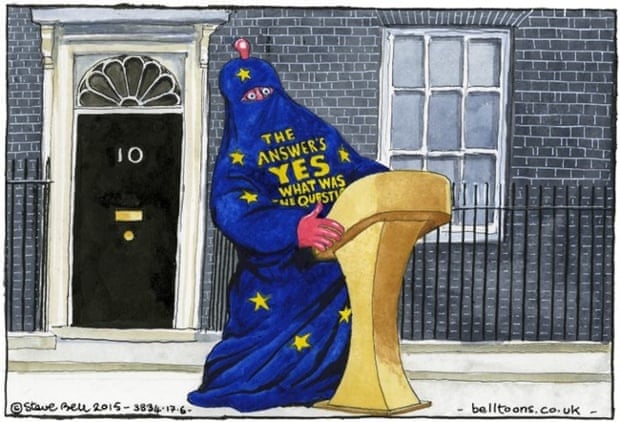
The u-turn.

Fred1new
- 17 Jun 2015 08:05
- 60822 of 81564
jimmy b
- 17 Jun 2015 08:12
- 60823 of 81564
Lighten up Fred just for one day ............

MaxK - 17 Jun 2015 08:14 - 60824 of 81564

Fred1new
- 17 Jun 2015 08:26
- 60825 of 81564
JB.
You don't have to show your family photos on this thread.
You don't have to show your family photos on this thread.
MaxK - 17 Jun 2015 08:46 - 60826 of 81564
This will cheer you up Fred
Chris Evans confirmed as new Top Gear presenter
The radio and television presenter said he was "thrilled" to get the job

More BBC bollox here: http://www.telegraph.co.uk/news/bbc/11679612/Chris-Evans-confirmed-as-new-Top-Gear-presenter.html
Chris Evans confirmed as new Top Gear presenter
The radio and television presenter said he was "thrilled" to get the job
More BBC bollox here: http://www.telegraph.co.uk/news/bbc/11679612/Chris-Evans-confirmed-as-new-Top-Gear-presenter.html
ExecLine
- 17 Jun 2015 09:19
- 60827 of 81564
From Telegraph.co.uk
Savers face 10pc hit to shares if Greece exits euro
Shares sell-off hits people using pension freedoms and facing delays, as well as millions who invested in Isas at the beginning of the tax-year
Dan Hyde By Dan Hyde, Consumer Affairs Editor9:31PM BST 16 Jun 2015
British savers can expect at least 10 per cent to be wiped off the value of pensions and Isas if Greece exits the euro, economists have warned as the crisis in southern Europe escalates. With Greece on the brink of bankruptcy, it has emerged that no talks to find a resolution have taken place since negotiations broke down on Sunday.
Jean-Claude Juncker, the president of the European Commission, said: "I don't care about the Greek government, I do care about the Greek people."
His comment on Tuesday came after Greek prime minister Alexis Tsipras branded the International Monetary Fund "criminals" and accused the body, one of his country's main creditors, of "humiliating an entire people" that was suffering "through no fault of its own".
The threat of Greek meltdown spreading through Europe is causing jitters among stock-market traders, with the FTSE 100 in London falling almost 6 per cent in the two months since it reached a record high.
The sell-off has hit people using this year's new freedoms to cash in pensions, some of whom have faced months of delays, and millions of savers who invested money in Isas at the beginning of the tax-year. Someone with £100,000 in the stock market in April has lost £5,800.
Shares fell again on Tuesday, at one point reaching a five-month low, before recovering to close down slightly at 6,710, well below the 7,122 peak two months ago.
Savers face even greater losses if Greek defaults on its €1.5 billion (£1.1 billion) debt and leaves the single currency, experts warned.
In a note to clients, one bank advised selling "all euro zone assets - meaning stocks, bonds and the euro" if no resolution to the standoff can be found.
Under the headline "crisis management", Steve Barrow, head of strategy at Standard Bank, said: "Unless there’s a dramatic improvement in negotiations between Greece and the EU it looks as if the country will be staring down the barrel of default over the next month or so."
Jonathan Loynes, chief European economist at forecasters Capital Economics, said: "While Greece makes only a small contribution to the eurozone economy, the markets have been a little bit too sanguine and quiet - at least until the last few days." He said it was "not hard to envisage" share prices falling 10 per cent or more should Greece leave the euro.
Howard Archer, chief European and UK economist at analysts IHS Economics, said: "We are now in last-chance saloon. "If Greek were to exit the euro, the impact on the UK and other European nations would be more contained than if it had happened two years ago. But no one really knows [what the true impact will be] and you can expect a negative reaction in the markets when faced with that kind of uncertainty."
dan.hyde@telegraph.co.uk
Savers face 10pc hit to shares if Greece exits euro
Shares sell-off hits people using pension freedoms and facing delays, as well as millions who invested in Isas at the beginning of the tax-year
Dan Hyde By Dan Hyde, Consumer Affairs Editor9:31PM BST 16 Jun 2015
British savers can expect at least 10 per cent to be wiped off the value of pensions and Isas if Greece exits the euro, economists have warned as the crisis in southern Europe escalates. With Greece on the brink of bankruptcy, it has emerged that no talks to find a resolution have taken place since negotiations broke down on Sunday.
Jean-Claude Juncker, the president of the European Commission, said: "I don't care about the Greek government, I do care about the Greek people."
His comment on Tuesday came after Greek prime minister Alexis Tsipras branded the International Monetary Fund "criminals" and accused the body, one of his country's main creditors, of "humiliating an entire people" that was suffering "through no fault of its own".
The threat of Greek meltdown spreading through Europe is causing jitters among stock-market traders, with the FTSE 100 in London falling almost 6 per cent in the two months since it reached a record high.
The sell-off has hit people using this year's new freedoms to cash in pensions, some of whom have faced months of delays, and millions of savers who invested money in Isas at the beginning of the tax-year. Someone with £100,000 in the stock market in April has lost £5,800.
Shares fell again on Tuesday, at one point reaching a five-month low, before recovering to close down slightly at 6,710, well below the 7,122 peak two months ago.
Savers face even greater losses if Greek defaults on its €1.5 billion (£1.1 billion) debt and leaves the single currency, experts warned.
In a note to clients, one bank advised selling "all euro zone assets - meaning stocks, bonds and the euro" if no resolution to the standoff can be found.
Under the headline "crisis management", Steve Barrow, head of strategy at Standard Bank, said: "Unless there’s a dramatic improvement in negotiations between Greece and the EU it looks as if the country will be staring down the barrel of default over the next month or so."
Jonathan Loynes, chief European economist at forecasters Capital Economics, said: "While Greece makes only a small contribution to the eurozone economy, the markets have been a little bit too sanguine and quiet - at least until the last few days." He said it was "not hard to envisage" share prices falling 10 per cent or more should Greece leave the euro.
Howard Archer, chief European and UK economist at analysts IHS Economics, said: "We are now in last-chance saloon. "If Greek were to exit the euro, the impact on the UK and other European nations would be more contained than if it had happened two years ago. But no one really knows [what the true impact will be] and you can expect a negative reaction in the markets when faced with that kind of uncertainty."
dan.hyde@telegraph.co.uk
jimmy b
- 17 Jun 2015 09:24
- 60828 of 81564
It has to be a totally new format , he can't just show up with a couple of others and do the same thing .
So it will not be Top Gear and the worldwide ratings will reflect that .
So it will not be Top Gear and the worldwide ratings will reflect that .
required field - 17 Jun 2015 11:00 - 60829 of 81564
He could turn it into a sexycar show of a sort and call it "small gear" !....
jimmy b
- 17 Jun 2015 11:04
- 60830 of 81564
I like Evans ,i used to like TFI Friday and i'm sure he can present a car show .
However i think Top Gear as we know it will be finished and as i said above will it still sell worldwide ? .
However i think Top Gear as we know it will be finished and as i said above will it still sell worldwide ? .
ExecLine
- 17 Jun 2015 14:15
- 60831 of 81564
Hmmm? Yes.
Undoubtedly, this is one for 'Limpy' and the other technical analysts amongst us....
The Fitbit
Undoubtedly, this is one for 'Limpy' and the other technical analysts amongst us....
The Fitbit
ExecLine
- 17 Jun 2015 22:47
- 60832 of 81564
Fred1new
- 18 Jun 2015 07:34
- 60833 of 81564

Fred1new
- 18 Jun 2015 07:37
- 60834 of 81564
MaxK - 18 Jun 2015 07:47 - 60835 of 81564

ExecLine
- 18 Jun 2015 10:53
- 60836 of 81564
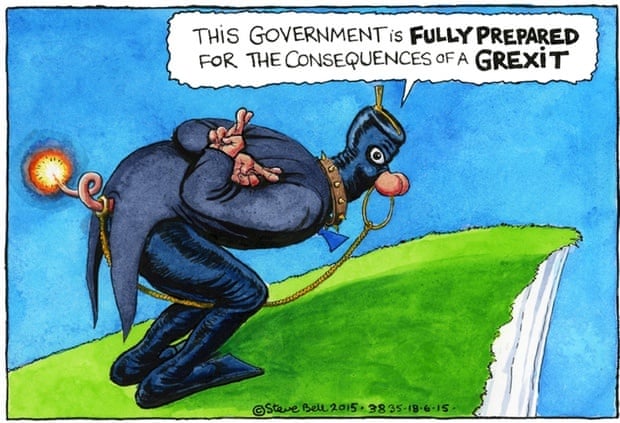
Obviously, everyone is just hanging around waiting for the Greek Exit to happen - or not.
From the Sydney Morning Herald:
Will leaving the euro break Greece or make it?
June 18, 2015 - 3:55PM
Nick Miller - Europe Correspondent
London: Less than a century ago, Europeans were literally walking across borders with suitcases full of money. Millions of Austro-Hungarian crowns were put in sacks and tied to horses or jammed into boxcars.
That is until they closed the borders and made it illegal.
Before the Grexit, there was the "Austrexit".
The last time a major currency broke up was in the days of the Austro-Hungarian Empire.
For an insight into the exit of Greece from the euro – how it could happen, and the chaos that may ensue, economist Michael Spencer dials back almost 100 years, to the wreckage of World War I.
With the breakup of the Austro-Hungarian Empire into Austria, Hungary and Czechoslovakia, so too the currency union broke down. Citizens were told they had to bring their old crowns to the post office, to be stamped and thereby turned into new, local currency.
But when you create a new currency, Mr Spencer explains, you get "massive cross-border flows of the old currency", as everyone tries to move their money to where it will be worth the most.
One estimate is that 6.5 billion crowns, equal to the entire estimated circulation in Hungary, were transferred out of Czechoslovakia and Austria (which faced unprecedented unemployment, huge debt payments and the problem of paying for a big civil service, leading to justified fears the new currency would quickly inflate).
In Czechoslovakia, as the currency separation began, borders were ordered closed and all postal communications abroad were suspended for two weeks. Heads of households were ordered to surrender all their crowns for stamping, and bank deposits were converted at a 1:1 rate. Half of the stamped currency was withheld by the government as a "forced loan".
In Austria, the government put controls on the sale of securities and stocks to the other states to prevent an influx of notes from Czechoslovakia.
A return to the drachma would dramatically raise the cost of imports.
For the record Mr Spencer, chief economist for Deutsche Bank Asia Pacific, is not saying Grexit will happen. They are "still of the view that a deal will get done in the next few days", making this all just hypothetical.
"The Greeks dislike austerity but they want to stay in the euro . . . If they put in place capital controls and people in Greece are trading IOUs or tax refund receipts or whatever people come up with . . . that's a scenario in which we think the Greek government loses its popular support. [Greek Prime Minister Alexis] Tsipras will do what he needs to do to avoid that outcome."
But nevertheless, Grexit is on the table, governments are making contingency plans and economists are imagining what it would look like.
'The Greeks dislike austerity but they want to stay in the euro' says Deutsche Bank economist Michael Spencer.
In 1994, Mr Spencer co-wrote a paper on the fragmentation of the Austro-Hungarian crown. He still sees it as the "key historical example of a currency union breakup".
Though things are different now. "Now of course you don't need to walk across the border, you just log onto your bank account with your security code and transfer money out of the country," Mr Spencer says. "There's nothing to stop someone in Greece taking their entire [bank] deposit, transferring it to a bank in France, then living off the ATM."
There will have to be strict controls on money to stop that happening – the Greek banking system has already lost 40 per cent of its deposits in three years. "It's going to be absolutely chaotic for a few weeks and the rest of Europe will look on in [horror]."
Should Greece leave the euro, domestic banks and financial markets would probably close to prevent capital flight.
And there is a lingering hangover.
"My reading of economic history is that when you've had these kinds of crises you don't wake up the next morning saying 'oh what a relief the currency's been devalued', you wake up thinking 'I am poorer, prices of everything that I want to import have gone up by 40 per cent'. Consumption collapses, imports collapse.
"It's entirely possible that a year later the economy is growing . . . but it could be years before Greeks feel that they are better off than they were before the devaluation."
A Greek exit from the euro 'wouldn't be a disaster, it would be a salvation', says economist Roger Bootle.
But other economists disagree.
In 2012, a team from Capital Economics led by Roger Bootle won a £250,000 ($508,000) prize for outlining the "smoothest process by which a member state could exit the Eurozone".
The model is highly technical, and envisions a "substantial default" of government debt. It proposes top-secret preparations, followed by a public announcement just three days ahead of the new currency being introduced.
Immediately after the announcement, domestic banks and financial markets close to prevent capital flight. There would be no "stamping" of euros into drachmas - instead all wages, prices and bank deposits are immediately converted to the new currency, and "non-cash" means of payment are used until the new money is printed.
Mr Bootle says his plan is not only possible, it's desirable.
"The main purpose of making such a change is to allow the exchange rate to fall. That should not be resisted by the Greek authorities, it's part of the solution," he says. He would expect the drachma to stabilise at more than half the value of the euro.
There is no escaping the need for capital controls and restrictions on the banks, to avoid "financial catastrophe", Mr Bootle says.
However he doesn't think the practical challenges of printing a new currency are particularly difficult. People can carry on using euros, or build up credit, or circulate IOUs. "It's a comparatively minor problem, a short-term thing," he says.
And the project as a whole is "eminently desirable", he says.
After the disruption to transactions, and the banking system, and the shock for Greeks as import prices shoot up, the economy would respond and start to recover (helped by a massive upsurge in tourism and a boost to local agriculture and manufacturing).
"I don't see any way, without this, that Greece can escape from the current mess," Mr Bootle says. "When people say to me 'oh wouldn't an exit from the euro cause a few problems', I want to know which planet they're living on. There's a question of what the alternatives are, and this does offer the prospect of a very real escape.
"It wouldn't be a disaster, it would be a salvation. In a year's time people will look back and say - why on Earth didn't we do that sooner?"
From the Sydney Morning Herald:
Will leaving the euro break Greece or make it?
June 18, 2015 - 3:55PM
Nick Miller - Europe Correspondent
London: Less than a century ago, Europeans were literally walking across borders with suitcases full of money. Millions of Austro-Hungarian crowns were put in sacks and tied to horses or jammed into boxcars.
That is until they closed the borders and made it illegal.
Before the Grexit, there was the "Austrexit".
The last time a major currency broke up was in the days of the Austro-Hungarian Empire.
For an insight into the exit of Greece from the euro – how it could happen, and the chaos that may ensue, economist Michael Spencer dials back almost 100 years, to the wreckage of World War I.
With the breakup of the Austro-Hungarian Empire into Austria, Hungary and Czechoslovakia, so too the currency union broke down. Citizens were told they had to bring their old crowns to the post office, to be stamped and thereby turned into new, local currency.
But when you create a new currency, Mr Spencer explains, you get "massive cross-border flows of the old currency", as everyone tries to move their money to where it will be worth the most.
One estimate is that 6.5 billion crowns, equal to the entire estimated circulation in Hungary, were transferred out of Czechoslovakia and Austria (which faced unprecedented unemployment, huge debt payments and the problem of paying for a big civil service, leading to justified fears the new currency would quickly inflate).
In Czechoslovakia, as the currency separation began, borders were ordered closed and all postal communications abroad were suspended for two weeks. Heads of households were ordered to surrender all their crowns for stamping, and bank deposits were converted at a 1:1 rate. Half of the stamped currency was withheld by the government as a "forced loan".
In Austria, the government put controls on the sale of securities and stocks to the other states to prevent an influx of notes from Czechoslovakia.
A return to the drachma would dramatically raise the cost of imports.
For the record Mr Spencer, chief economist for Deutsche Bank Asia Pacific, is not saying Grexit will happen. They are "still of the view that a deal will get done in the next few days", making this all just hypothetical.
"The Greeks dislike austerity but they want to stay in the euro . . . If they put in place capital controls and people in Greece are trading IOUs or tax refund receipts or whatever people come up with . . . that's a scenario in which we think the Greek government loses its popular support. [Greek Prime Minister Alexis] Tsipras will do what he needs to do to avoid that outcome."
But nevertheless, Grexit is on the table, governments are making contingency plans and economists are imagining what it would look like.
'The Greeks dislike austerity but they want to stay in the euro' says Deutsche Bank economist Michael Spencer.
In 1994, Mr Spencer co-wrote a paper on the fragmentation of the Austro-Hungarian crown. He still sees it as the "key historical example of a currency union breakup".
Though things are different now. "Now of course you don't need to walk across the border, you just log onto your bank account with your security code and transfer money out of the country," Mr Spencer says. "There's nothing to stop someone in Greece taking their entire [bank] deposit, transferring it to a bank in France, then living off the ATM."
There will have to be strict controls on money to stop that happening – the Greek banking system has already lost 40 per cent of its deposits in three years. "It's going to be absolutely chaotic for a few weeks and the rest of Europe will look on in [horror]."
Should Greece leave the euro, domestic banks and financial markets would probably close to prevent capital flight.
And there is a lingering hangover.
"My reading of economic history is that when you've had these kinds of crises you don't wake up the next morning saying 'oh what a relief the currency's been devalued', you wake up thinking 'I am poorer, prices of everything that I want to import have gone up by 40 per cent'. Consumption collapses, imports collapse.
"It's entirely possible that a year later the economy is growing . . . but it could be years before Greeks feel that they are better off than they were before the devaluation."
A Greek exit from the euro 'wouldn't be a disaster, it would be a salvation', says economist Roger Bootle.
But other economists disagree.
In 2012, a team from Capital Economics led by Roger Bootle won a £250,000 ($508,000) prize for outlining the "smoothest process by which a member state could exit the Eurozone".
The model is highly technical, and envisions a "substantial default" of government debt. It proposes top-secret preparations, followed by a public announcement just three days ahead of the new currency being introduced.
Immediately after the announcement, domestic banks and financial markets close to prevent capital flight. There would be no "stamping" of euros into drachmas - instead all wages, prices and bank deposits are immediately converted to the new currency, and "non-cash" means of payment are used until the new money is printed.
Mr Bootle says his plan is not only possible, it's desirable.
"The main purpose of making such a change is to allow the exchange rate to fall. That should not be resisted by the Greek authorities, it's part of the solution," he says. He would expect the drachma to stabilise at more than half the value of the euro.
There is no escaping the need for capital controls and restrictions on the banks, to avoid "financial catastrophe", Mr Bootle says.
However he doesn't think the practical challenges of printing a new currency are particularly difficult. People can carry on using euros, or build up credit, or circulate IOUs. "It's a comparatively minor problem, a short-term thing," he says.
And the project as a whole is "eminently desirable", he says.
After the disruption to transactions, and the banking system, and the shock for Greeks as import prices shoot up, the economy would respond and start to recover (helped by a massive upsurge in tourism and a boost to local agriculture and manufacturing).
"I don't see any way, without this, that Greece can escape from the current mess," Mr Bootle says. "When people say to me 'oh wouldn't an exit from the euro cause a few problems', I want to know which planet they're living on. There's a question of what the alternatives are, and this does offer the prospect of a very real escape.
"It wouldn't be a disaster, it would be a salvation. In a year's time people will look back and say - why on Earth didn't we do that sooner?"
| About MoneyAM | Ts and Cs | Privacy Policy | Investment Warning | Content Standards | Corporate Solutions | Advertise With Us | Site Map | © 2026 MoneyAM |
Register now for FREE
Share Prices,
Stock Quotes,
Charts, Bulletin Boards, Indices, Watchlists, Portfolio, Market News, Research
or see our Premium Services including Level 2, Terminal and much more.
 Follow us on Twitter