

| Home | Log In | Register | Our Services | My Account | Contact | Help |
You are NOT currently logged in
Register now or login to post to this thread.
THE TALK TO YOURSELF THREAD. (NOWT)
goldfinger

 - 09 Jun 2005 12:25


Thought Id start this one going because its rather dead on this board at the moment and I suppose all my usual muckers are either at the Stella tennis event watching Dim Tim (lose again) or at Henly Regatta eating cucumber sandwiches (they wish,...NOT).
Anyway please feel free to just talk to yourself blast away and let it go on any company or subject you wish. Just wish Id thought of this one before.
cheers GF.
Anyway please feel free to just talk to yourself blast away and let it go on any company or subject you wish. Just wish Id thought of this one before.
cheers GF.
TANKER - 26 Jun 2015 12:24 - 60995 of 81564
Cameron is a traitor a liar .
get us out of the eu
get us out of the eu
Haystack
- 26 Jun 2015 12:26
- 60996 of 81564
We won't leave the EU. The public will vote against it.
TANKER - 26 Jun 2015 12:33 - 60997 of 81564
ever one I know and I no thousands will vote out .
Cameron to step down the week after the vote
remember this post ,
the liar to step down
Cameron to step down the week after the vote
remember this post ,
the liar to step down
Haystack
- 26 Jun 2015 12:43
- 60998 of 81564
You may know lots who will vote to leave, but the polls indicate otherwise. Logic also would tend to show that people will vote to stay in as they did in Scotland. The fear of leaving will keep them in. It is also clear that the government will press for us to stay in as Harold Wilson's government did years ago. Leaving the EU is a lost cause. We may, at most, stay on the fringes as we do now outside the Euro. The crunch will come a few years down the line when increased federalism will conflict with our sovereignty. Some EU countries will happily surrender their sovereignty, but not all.
ExecLine
 - 26 Jun 2015 12:45
- 60999 of 81564
- 26 Jun 2015 12:45
- 60999 of 81564

'The public' might be voting to keep us in but that will exclude me, because I will be voting to take us 'Out'. I think wifey feels the same.
Just a minute, I'll go and ask her. She is chained to the sink.
"At the moment, I feel 'Out!' ", she tells me. "And for the last time, please unlock these chains."
"Computer says 'No!'."
Just a minute, I'll go and ask her. She is chained to the sink.
"At the moment, I feel 'Out!' ", she tells me. "And for the last time, please unlock these chains."
"Computer says 'No!'."
2517GEORGE
- 26 Jun 2015 12:59
- 61000 of 81564
H you can't put any faith in opinion polls. If the electorate feels as if it is being conned then the 'out' vote would receive a hugh boost.
2517
2517
2517GEORGE
- 26 Jun 2015 13:00
- 61001 of 81564
Of course I meant 'huge'
2517
2517
TANKER - 26 Jun 2015 13:47 - 61002 of 81564
more murders by you no who its time to attack all these scum and wipe them out
and any member who say they did nt no are either thick or liars no excuse
and any member who say they did nt no are either thick or liars no excuse
TANKER - 26 Jun 2015 13:50 - 61003 of 81564
now saying 27 murder on the beach how do you tell a muslim from a murderer
that's e question which no one can answer so you should trust not one
that's e question which no one can answer so you should trust not one
TANKER - 26 Jun 2015 13:53 - 61004 of 81564
Tunisia is now finished what a shame no one should go to any muslim country
only idiots .
only idiots .
TANKER - 26 Jun 2015 13:54 - 61005 of 81564
Cameron speaking toss the soft touch is the big problem they only understand hard punishment
MaxK - 26 Jun 2015 14:19 - 61006 of 81564
cynic
- 26 Jun 2015 15:00
- 61007 of 81564
there was a very interesting interview with martin sorrell (wpp) at luchtime
smart and very sharp cookie and did more than hold his own
smart and very sharp cookie and did more than hold his own
Haystack
- 26 Jun 2015 15:13
- 61008 of 81564
Yes. I saw it last night. It was the BBC Hardtalk series. He seems quite a tough character and very interesting
MaxK - 27 Jun 2015 08:09 - 61009 of 81564
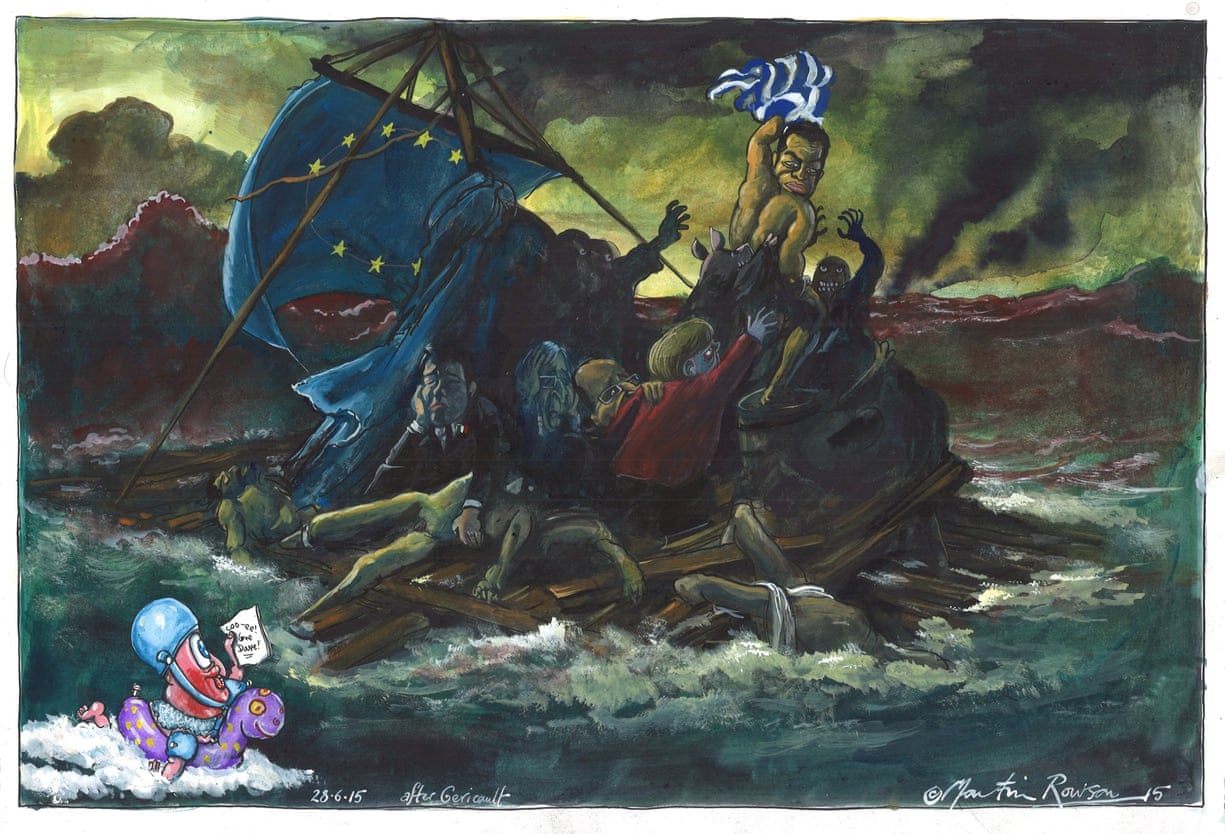
Greek PM Alexis Tsipras calls referendum on bailout terms
Prime minister returns from Brussels and tells Greece that terms offered by creditors ‘clearly violate the European rules’
Helena Smith in Athens
Friday 26 June 2015 23.25 BST
In a dramatic move that will put Europe on tenterhooks, the Greek prime minister Alexis Tsipras told his fellow citizens last night he would call a referendum on the bailout accord that international creditors have proposed to keep the debt-stricken country afloat.
Following an emergency meeting of his cabinet, Tsipras said his leftist-led government had decided a package of austerity measures proposed by the country’s creditors – made in a last-ditch effort to avert default – would be put to popular vote. The referendum will take place on Sunday 5 July.
“After five months of hard negotiations our partners, unfortunately, ended up making a proposal that was an ultimatum towards Greek democracy and the Greek people,” he said in a national address, “an ultimatum at odds with the founding principles and values of Europe, the values of our common European construction.”
The leader, who only hours earlier had rejected the proposed reforms after several days of high-stakes talks in Brussels, said Greeks now faced a “historic responsibility” to respond to the ultimatum.
He said the reforms were “blackmail for the acceptance on our part of severe and humiliating austerity without end and without the prospect of ever prospering socially and economically”.
Describing the vote as a “historic decision”, Tsipras said he had informed the leaders of France, Germany and Mario Draghi, the head of the European Central Bank about the decision. “I asked them to extend our current bailout by a few days so this democratic process could take place,” he said.
Greeks would be asked whether they wanted to accept or reject excoriating tax hikes and pension cuts that the EU, ECB and International Monetary Fund have set as a condition to release desperately needed bailout funds. Greece’s current rescue programme, already extended once, expires on 30 June.
More: http://www.theguardian.com/world/2015/jun/26/greece-calls-referendum-on-bailout-terms-offered-by-creditors
Prime minister returns from Brussels and tells Greece that terms offered by creditors ‘clearly violate the European rules’
Helena Smith in Athens
Friday 26 June 2015 23.25 BST
In a dramatic move that will put Europe on tenterhooks, the Greek prime minister Alexis Tsipras told his fellow citizens last night he would call a referendum on the bailout accord that international creditors have proposed to keep the debt-stricken country afloat.
Following an emergency meeting of his cabinet, Tsipras said his leftist-led government had decided a package of austerity measures proposed by the country’s creditors – made in a last-ditch effort to avert default – would be put to popular vote. The referendum will take place on Sunday 5 July.
“After five months of hard negotiations our partners, unfortunately, ended up making a proposal that was an ultimatum towards Greek democracy and the Greek people,” he said in a national address, “an ultimatum at odds with the founding principles and values of Europe, the values of our common European construction.”
The leader, who only hours earlier had rejected the proposed reforms after several days of high-stakes talks in Brussels, said Greeks now faced a “historic responsibility” to respond to the ultimatum.
He said the reforms were “blackmail for the acceptance on our part of severe and humiliating austerity without end and without the prospect of ever prospering socially and economically”.
Describing the vote as a “historic decision”, Tsipras said he had informed the leaders of France, Germany and Mario Draghi, the head of the European Central Bank about the decision. “I asked them to extend our current bailout by a few days so this democratic process could take place,” he said.
Greeks would be asked whether they wanted to accept or reject excoriating tax hikes and pension cuts that the EU, ECB and International Monetary Fund have set as a condition to release desperately needed bailout funds. Greece’s current rescue programme, already extended once, expires on 30 June.
More: http://www.theguardian.com/world/2015/jun/26/greece-calls-referendum-on-bailout-terms-offered-by-creditors
Fred1new
- 27 Jun 2015 08:51
- 61010 of 81564
cynic
- 27 Jun 2015 17:22
- 61011 of 81564
an easy summation ......
Greece Referendum Not A Simple Yes Or No
Sky News
Austerity, deficits, loans and currencies. Greece's euro crisis is about lots of things, but in the end it has always been about something else: national sovereignty and democracy.
When Greece joined the Eurozone (without a referendum, it should be said) it ceded some of its sovereignty.
Since the country now shared a currency with fellow Europeans it would no longer have direct control over its monetary policy.
That was simply part of the deal - and it is part of the explanation for how it ended up in the mess it is in.
It meant a dilution of sovereignty in economic "peacetime".
As part of the single currency, Greece lost control of its own interest rates, and thus lost influence over the yield on government bonds.
The country could suddenly borrow at unprecedented cheap rates - despite not having the productivity to justify it.
So began the bubble that fuelled the Greek crisis in the first place (a simplified version of history, I admit).
But even during "peacetime" Greece still maintained a certain amount of control over its fiscal policy - taxing and spending.
When the crisis struck and it needed to rely on its fellow Eurozone nations (and the IMF, and ECB) for financial assistance, it effectively ceded most of its fiscal sovereignty too.
In return for the loans, the Greeks had to accede to certain demands.
There is nothing particularly unusual in this.
When the UK borrowed money from the US after the Second World War a whole host of demands came attached to it: that the UK should open up its economic system; that it should sell off a whole load of publicly-owned assets at cheap prices.
There was even talk about selling off the Crown Jewels.
None of this is particularly pleasant, but it is an unfortunate reality.
To make matters worse, in Greece's case, the lenders deciding those conditions discredited themselves repeatedly.
Their forecasts for the impact of austerity on Greece were completely wrong.
Their programme contributed to a depression deeper and longer than anything seen since modern records began.
But, having ceded its sovereignty - both monetary and fiscal - the Greeks could do little about it.
They had to suffer as a poorly-constructed bailout and overly-aggressive austerity was imposed on them.
In January the Greeks voted in Alexis Tsipras as prime minister on a manifesto which promised to cancel austerity.
The problem, of course, was that because of all of the above, in practice the Greeks did not and do not have the sovereign right to do that themselves.
The best Mr Tsipras could do was to try to get a better deal and improve the terms of the bailout, which is what he has been doing in Brussels and Athens for the past six months.
His decision to call a referendum next weekend seems to be a tacit admission he has failed.
There are a number of short and medium term problems, the most pressing of which is what happens to the financial system between now and next weekend.
The slow-motion invisible system-wide bank run afflicting Greece's financial system over the past couple of months threatens to turn into a rapid, visible one.
People are already being photographed queuing up to take money out of their bank accounts.
There is the question of what the Eurozone decides today at its finance ministers' meeting.
Do they grant Greece the five-day bailout extension they are demanding? Do they refuse?
Do they simply talk about plan b - the capital controls and restrictions they would need to impose to incubate Greece ahead of a possible euro exit?
What part does the International Monetary Fund, who will almost certainly not get paid on time on Tuesday, play in the saga?
But more than these short-term questions is the bigger medium to long term one: if Greeks do as their prime minister is suggesting and vote no to the current bailout deal, what does that imply?
As far as many here in Brussels are concerned, it means Greece will effectively have voted to leave the Eurozone.
But Syriza figures are insisting it simply means another stage in the negotiations.
The answer to that question will determine the way many vote.
In Greece there is both widespread disdain for the bailout and the conditions attached to it, and widespread support for euro membership.
So the way the debate is framed will determine the result.
But the reality is that if Greece did leave the euro, it would face even greater short-term austerity and pain than it has in the past year or so.
It would face more financial turbulence.
It might swap euro bailout conditions with even more shady ones from Russia or China.
It would regain some of its monetary sovereignty, but in exchange for this it would suffer a fair amount of pain.
There are no easy answers here, which is why what looks like a simple yes/no question is far more complex and unpredictable than it seems.
Greece Referendum Not A Simple Yes Or No
Sky News
Austerity, deficits, loans and currencies. Greece's euro crisis is about lots of things, but in the end it has always been about something else: national sovereignty and democracy.
When Greece joined the Eurozone (without a referendum, it should be said) it ceded some of its sovereignty.
Since the country now shared a currency with fellow Europeans it would no longer have direct control over its monetary policy.
That was simply part of the deal - and it is part of the explanation for how it ended up in the mess it is in.
It meant a dilution of sovereignty in economic "peacetime".
As part of the single currency, Greece lost control of its own interest rates, and thus lost influence over the yield on government bonds.
The country could suddenly borrow at unprecedented cheap rates - despite not having the productivity to justify it.
So began the bubble that fuelled the Greek crisis in the first place (a simplified version of history, I admit).
But even during "peacetime" Greece still maintained a certain amount of control over its fiscal policy - taxing and spending.
When the crisis struck and it needed to rely on its fellow Eurozone nations (and the IMF, and ECB) for financial assistance, it effectively ceded most of its fiscal sovereignty too.
In return for the loans, the Greeks had to accede to certain demands.
There is nothing particularly unusual in this.
When the UK borrowed money from the US after the Second World War a whole host of demands came attached to it: that the UK should open up its economic system; that it should sell off a whole load of publicly-owned assets at cheap prices.
There was even talk about selling off the Crown Jewels.
None of this is particularly pleasant, but it is an unfortunate reality.
To make matters worse, in Greece's case, the lenders deciding those conditions discredited themselves repeatedly.
Their forecasts for the impact of austerity on Greece were completely wrong.
Their programme contributed to a depression deeper and longer than anything seen since modern records began.
But, having ceded its sovereignty - both monetary and fiscal - the Greeks could do little about it.
They had to suffer as a poorly-constructed bailout and overly-aggressive austerity was imposed on them.
In January the Greeks voted in Alexis Tsipras as prime minister on a manifesto which promised to cancel austerity.
The problem, of course, was that because of all of the above, in practice the Greeks did not and do not have the sovereign right to do that themselves.
The best Mr Tsipras could do was to try to get a better deal and improve the terms of the bailout, which is what he has been doing in Brussels and Athens for the past six months.
His decision to call a referendum next weekend seems to be a tacit admission he has failed.
There are a number of short and medium term problems, the most pressing of which is what happens to the financial system between now and next weekend.
The slow-motion invisible system-wide bank run afflicting Greece's financial system over the past couple of months threatens to turn into a rapid, visible one.
People are already being photographed queuing up to take money out of their bank accounts.
There is the question of what the Eurozone decides today at its finance ministers' meeting.
Do they grant Greece the five-day bailout extension they are demanding? Do they refuse?
Do they simply talk about plan b - the capital controls and restrictions they would need to impose to incubate Greece ahead of a possible euro exit?
What part does the International Monetary Fund, who will almost certainly not get paid on time on Tuesday, play in the saga?
But more than these short-term questions is the bigger medium to long term one: if Greeks do as their prime minister is suggesting and vote no to the current bailout deal, what does that imply?
As far as many here in Brussels are concerned, it means Greece will effectively have voted to leave the Eurozone.
But Syriza figures are insisting it simply means another stage in the negotiations.
The answer to that question will determine the way many vote.
In Greece there is both widespread disdain for the bailout and the conditions attached to it, and widespread support for euro membership.
So the way the debate is framed will determine the result.
But the reality is that if Greece did leave the euro, it would face even greater short-term austerity and pain than it has in the past year or so.
It would face more financial turbulence.
It might swap euro bailout conditions with even more shady ones from Russia or China.
It would regain some of its monetary sovereignty, but in exchange for this it would suffer a fair amount of pain.
There are no easy answers here, which is why what looks like a simple yes/no question is far more complex and unpredictable than it seems.
Fred1new
- 27 Jun 2015 18:24
- 61012 of 81564
Manuel,
If you understand what you posted above would you please post a brief synopsis!
If you understand what you posted above would you please post a brief synopsis!
Haystack
- 27 Jun 2015 18:37
- 61013 of 81564
I can understand that Greece was fed up with austerity. Their reaction was to elect a far left government that lied when it said it could fix things. Those lies have come home to roost and the country is in worse shape than it was before the election. The previous government was applying austerity, but the economy was improving and by now things would have got a lot better. The French did the same thing and now Hollander is the most unpopular leader ever. We are lucky that our electorate was not so stupid.
Greece now wants a referendum on the latest offer. It's a bit late. The time was weeks ago. I think the lending group was right a month ago when they said they needed to talk to adults.
Greece now wants a referendum on the latest offer. It's a bit late. The time was weeks ago. I think the lending group was right a month ago when they said they needed to talk to adults.
cynic
- 27 Jun 2015 21:41
- 61014 of 81564
the fault also lies with ECB and IMF for such irresponsible lending over the years
as it now stands, greece cannot possibly repay its debt over any timescale
==============
fred - i think a brief synopsis would be, "f'ed if i can work out what will happen next"
the biggest fear is surely along the lines that russia will buy into greece in exchange for a naval base in the med, or something along those lines
to me, the sensible back down would be for IMF to write-off a huge swathe of debt as it's done elsewhere in the past, in exchange for (inter alia) the greek retirement age being raised to 65
as it now stands, greece cannot possibly repay its debt over any timescale
==============
fred - i think a brief synopsis would be, "f'ed if i can work out what will happen next"
the biggest fear is surely along the lines that russia will buy into greece in exchange for a naval base in the med, or something along those lines
to me, the sensible back down would be for IMF to write-off a huge swathe of debt as it's done elsewhere in the past, in exchange for (inter alia) the greek retirement age being raised to 65
| About MoneyAM | Ts and Cs | Privacy Policy | Investment Warning | Content Standards | Corporate Solutions | Advertise With Us | Site Map | © 2026 MoneyAM |
Register now for FREE
Share Prices,
Stock Quotes,
Charts, Bulletin Boards, Indices, Watchlists, Portfolio, Market News, Research
or see our Premium Services including Level 2, Terminal and much more.
 Follow us on Twitter