

| Home | Log In | Register | Our Services | My Account | Contact | Help |
You are NOT currently logged in
Register now or login to post to this thread.
THE TALK TO YOURSELF THREAD. (NOWT)
goldfinger

 - 09 Jun 2005 12:25


Thought Id start this one going because its rather dead on this board at the moment and I suppose all my usual muckers are either at the Stella tennis event watching Dim Tim (lose again) or at Henly Regatta eating cucumber sandwiches (they wish,...NOT).
Anyway please feel free to just talk to yourself blast away and let it go on any company or subject you wish. Just wish Id thought of this one before.
cheers GF.
Anyway please feel free to just talk to yourself blast away and let it go on any company or subject you wish. Just wish Id thought of this one before.
cheers GF.
Haystack
- 13 Jul 2015 16:04
- 61412 of 81564
He was expecting negotiations because that is what Greece wanted. The Eurozone did not want negotiations. They just wanted to know how Greece were going to pay up. I would have liked them to have been even tougher with Greece. The country had never fulfilled the necessary conditions to save their economy. The new government reversed many of the policies of the previous one. They rehired civil servants that they could not afford to pay. They reversed pension reforms and lots of other requirements accepted when they received the previous bailout. The result was that a crisis was coming and it did. They promised anti austerity and that got them elected even though they could never deliver it. Other countries in the Eurozone had similar problems and austerity has got them out of it and they are now expanding. Greece steadfastly refused to take the medicine. They didn't collect the taxes in a country where tax is almost optional. Incomes are self declared with the result that no one apparently earns much at all including people in areas where all the houses are £1m plus. Greece lived it up after they joined the Euro. They spent cheap money on things they didn't need. They want to stay in the Euro because they want the gravy train to start again.
You need to have visited Greece before the Euro and their hosting the Olympics (another disaster for them). They were a borderline 3rd world country. Even now, with shortages and unemployment, they have no where near returned to their pre Euro level. They took the money, won't do what is necessary and really don't want to pay back the money at all.
Throw them out as it will all blow up asgain. I think the Eurozone has postponed their expulsion because Europe is not booming again yet.
You need to have visited Greece before the Euro and their hosting the Olympics (another disaster for them). They were a borderline 3rd world country. Even now, with shortages and unemployment, they have no where near returned to their pre Euro level. They took the money, won't do what is necessary and really don't want to pay back the money at all.
Throw them out as it will all blow up asgain. I think the Eurozone has postponed their expulsion because Europe is not booming again yet.
Haystack
- 13 Jul 2015 17:05
- 61413 of 81564
You have to remember that the article above was in the New Statesman, which is the voice of the Labour Party. It is a very left wing interview of a very left wing politician.
Fred1new
- 13 Jul 2015 18:05
- 61414 of 81564
Oh, hang on. We haven't mentioned anything about brown envelopes, bribery and corruption.<
I thought that was the disease of the English tory party!
I thought that was the disease of the English tory party!
MaxK - 13 Jul 2015 18:07 - 61415 of 81564
By email:
A deal for Greece?
"In short, if you give up your currency, you give up your sovereignty"
Europe has reached a deal on Greece, we hear. As per usual, this deal was reached by forcing everyone to stay up all night until they were too sleep-deprived and gasping for a pint to give a flying monkey’s about what was on the piece of paper.
We’ll get a better idea of where we stand as the day goes on. But it sounds as though Greece has capitulated, basically, in return for the promise of another bailout package.
Part of this involves Greece creating a €50bn asset fund through privatisation, half of which will be used to recapitalise the banking system.
Later today, the European Central Bank (ECB) will decide on whether to expand its emergency loans – if it does, the Greek banks could reopen for limited service.
The tricky thing, of course, is going to be getting all this past the national parliaments. Greece’s in particular, given that the people essentially voted against this deal just a weekend ago.
Greek prime minister Alexis Tsipras has to pass six reforms through the Greek parliament by Wednesday. These include, says Reuters, “spending cuts, tax hikes and pension reforms”. That sounds like all the things the people just voted to throw out. Tsipras’ labour minister has already gone on telly to object to them, arguing that they will lead to new elections later this year.
So it’s not at all inconceivable that we’ll be revisiting this for a whole new series of Greek deadlines at some point in the near future, though I do hope not.
The eurozone is a folly of breathtaking arrogance
Various factions are trying to portray this as a ‘coup’ or some other such melodramatic nonsense. It’s not. This is simply the inevitable result of taking a group of countries into a currency union without being upfront with voters about the true implications.
This is what happens when you share a currency. You lose control of your monetary policy, and therefore a vast chunk of economic policy. It can only work if you all agree to abide by certain rules. These rules go way beyond simply using the same coinage.
This is all even more pertinent in today’s world. Our politicians have ceded a great deal of responsibility for the economy – responsibility that should remain in the hands of elected officials – to central bankers. As a result, we have unelected officials making decisions that redistribute wealth from one section of the population to another.
That’s bad enough when it’s the Bank of England, or the Federal Reserve, which are at least answerable to British or American politicians. It’s far, far worse when it’s the ECB, in which Greek politicians inevitably have very little say.
In short, if you give up your currency, you give up your sovereignty. And this goes for Germany just as much as Greece. If Germany wants the euro to work, then it needs to be willing to help out the likes of Greece, just as Greece, in exchange, needs to be willing to follow certain rules.
So the euro really only works if you create a United States of Europe. Preferably before you introduce the currency. But ask the average citizen of Europe if they want their country to be downgraded to a state within the USE and I suspect the answer will be a firm “no”.
No wonder the euro’s creators tried to avoid giving any of their citizens a vote on whether to join or not!
Given that Britain is struggling to hold together a 300-year-old currency union between only four countries, how much harder will it be to keep the eurozone together, even if Greece manages to stay in?
Europhiles often make the point that this project isn’t about economics. It’s about peace. My question to that would be: do you think the Greeks and Germans like each other more today than they did in 2000?
As German chancellor Angela Merkel put it: “The most important currency has been lost, and that is trust”. She was just complaining about the Greeks of course – but the destruction of trust was an inevitable consequence of the euro being foisted on European electorates. And it won’t have a happy ending.
For some of the most intelligent commentary on the eurozone, you should check out my colleague Merryn Somerset Webb’s interview with Bernard Connolly. It’s from a few years back – but it only becomes more pertinent with each and every Greek deadline that slouches by.
John Stepek
Editor, MoneyWeek
A deal for Greece?
"In short, if you give up your currency, you give up your sovereignty"
Europe has reached a deal on Greece, we hear. As per usual, this deal was reached by forcing everyone to stay up all night until they were too sleep-deprived and gasping for a pint to give a flying monkey’s about what was on the piece of paper.
We’ll get a better idea of where we stand as the day goes on. But it sounds as though Greece has capitulated, basically, in return for the promise of another bailout package.
Part of this involves Greece creating a €50bn asset fund through privatisation, half of which will be used to recapitalise the banking system.
Later today, the European Central Bank (ECB) will decide on whether to expand its emergency loans – if it does, the Greek banks could reopen for limited service.
The tricky thing, of course, is going to be getting all this past the national parliaments. Greece’s in particular, given that the people essentially voted against this deal just a weekend ago.
Greek prime minister Alexis Tsipras has to pass six reforms through the Greek parliament by Wednesday. These include, says Reuters, “spending cuts, tax hikes and pension reforms”. That sounds like all the things the people just voted to throw out. Tsipras’ labour minister has already gone on telly to object to them, arguing that they will lead to new elections later this year.
So it’s not at all inconceivable that we’ll be revisiting this for a whole new series of Greek deadlines at some point in the near future, though I do hope not.
The eurozone is a folly of breathtaking arrogance
Various factions are trying to portray this as a ‘coup’ or some other such melodramatic nonsense. It’s not. This is simply the inevitable result of taking a group of countries into a currency union without being upfront with voters about the true implications.
This is what happens when you share a currency. You lose control of your monetary policy, and therefore a vast chunk of economic policy. It can only work if you all agree to abide by certain rules. These rules go way beyond simply using the same coinage.
This is all even more pertinent in today’s world. Our politicians have ceded a great deal of responsibility for the economy – responsibility that should remain in the hands of elected officials – to central bankers. As a result, we have unelected officials making decisions that redistribute wealth from one section of the population to another.
That’s bad enough when it’s the Bank of England, or the Federal Reserve, which are at least answerable to British or American politicians. It’s far, far worse when it’s the ECB, in which Greek politicians inevitably have very little say.
In short, if you give up your currency, you give up your sovereignty. And this goes for Germany just as much as Greece. If Germany wants the euro to work, then it needs to be willing to help out the likes of Greece, just as Greece, in exchange, needs to be willing to follow certain rules.
So the euro really only works if you create a United States of Europe. Preferably before you introduce the currency. But ask the average citizen of Europe if they want their country to be downgraded to a state within the USE and I suspect the answer will be a firm “no”.
No wonder the euro’s creators tried to avoid giving any of their citizens a vote on whether to join or not!
Given that Britain is struggling to hold together a 300-year-old currency union between only four countries, how much harder will it be to keep the eurozone together, even if Greece manages to stay in?
Europhiles often make the point that this project isn’t about economics. It’s about peace. My question to that would be: do you think the Greeks and Germans like each other more today than they did in 2000?
As German chancellor Angela Merkel put it: “The most important currency has been lost, and that is trust”. She was just complaining about the Greeks of course – but the destruction of trust was an inevitable consequence of the euro being foisted on European electorates. And it won’t have a happy ending.
For some of the most intelligent commentary on the eurozone, you should check out my colleague Merryn Somerset Webb’s interview with Bernard Connolly. It’s from a few years back – but it only becomes more pertinent with each and every Greek deadline that slouches by.
John Stepek
Editor, MoneyWeek
MaxK - 13 Jul 2015 20:03 - 61416 of 81564
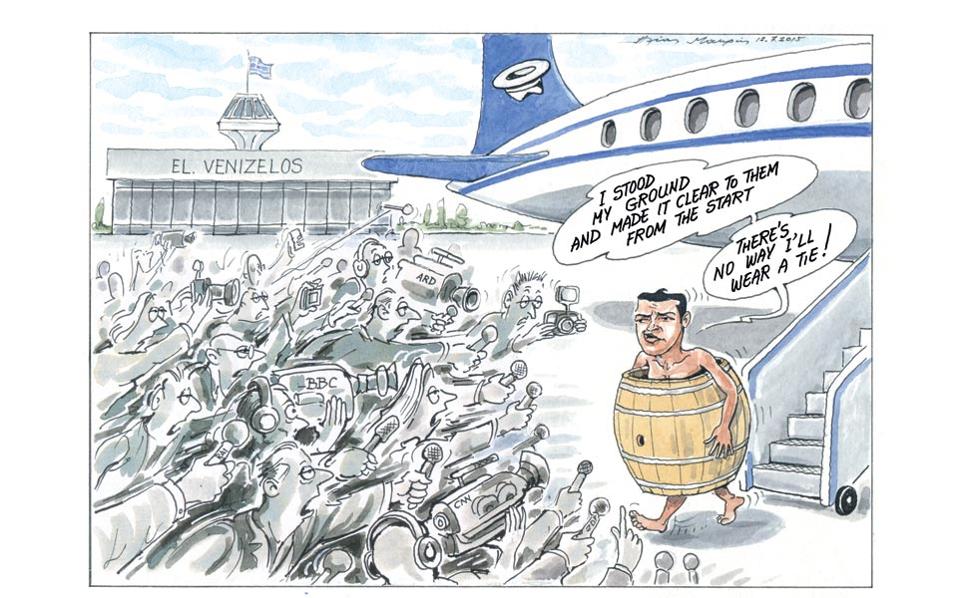
MaxK - 13 Jul 2015 23:04 - 61417 of 81564

trebles all round
Haystack
- 14 Jul 2015 00:02
- 61418 of 81564
"I can't believe they went for it!".
ExecLine
 - 14 Jul 2015 07:14
- 61419 of 81564
- 14 Jul 2015 07:14
- 61419 of 81564

Greece debt crisis: No UK cash for bailout, Osborne says
1 hour ago
Chancellor George Osborne has moved to block any attempt to use British taxpayers' money as part of the Greek bailout, Treasury sources have said.
Mr Osborne is said to have told other ministers that using EU-wide cash for a bridging loan was a "non-starter".
Doing so would breach an agreement that an EU-wide emergency fund would not be used to underwrite bailouts, he is expected to tell eurozone colleagues.
Finance ministers from 28 EU countries are due to meet in Brussels later.
'Loud and clear' message
Prime Minister David Cameron said in 2010 he had won a "clear and unanimous agreement" that the European Financial Stabilisation Mechanism (EFSM) would not be used for further eurozone bailouts, after it was used to assist Ireland and Portugal.
Instead, responsibility was meant to fall on member states using the single currency.
The Financial Times reported EU officials as saying that Martin Selmayr, chief of staff to European Commission president Jean-Claude Juncker, had urged the use of the EFSM - a fund covering all EU members - to access bridge financing.
It reported that France was understood to be "particularly keen" to use the EFSM.
"Our eurozone colleagues have received the message loud and clear that it would not be acceptable for this issue of British support for eurozone bailouts to be revisited," the Press Association news agency quoted a Treasury source as saying.
"The idea that British taxpayers' money is going to be on the line in this latest Greek deal is a non-starter."
A Number 10 spokesman said: "Leaders from across the EU agreed in 2010 that the EFSM would not be used again for those in the euro area, and that remains the Prime Minister's view.
"We have not received a proposal and one is not on the table."
1 hour ago
Chancellor George Osborne has moved to block any attempt to use British taxpayers' money as part of the Greek bailout, Treasury sources have said.
Mr Osborne is said to have told other ministers that using EU-wide cash for a bridging loan was a "non-starter".
Doing so would breach an agreement that an EU-wide emergency fund would not be used to underwrite bailouts, he is expected to tell eurozone colleagues.
Finance ministers from 28 EU countries are due to meet in Brussels later.
'Loud and clear' message
Prime Minister David Cameron said in 2010 he had won a "clear and unanimous agreement" that the European Financial Stabilisation Mechanism (EFSM) would not be used for further eurozone bailouts, after it was used to assist Ireland and Portugal.
Instead, responsibility was meant to fall on member states using the single currency.
The Financial Times reported EU officials as saying that Martin Selmayr, chief of staff to European Commission president Jean-Claude Juncker, had urged the use of the EFSM - a fund covering all EU members - to access bridge financing.
It reported that France was understood to be "particularly keen" to use the EFSM.
"Our eurozone colleagues have received the message loud and clear that it would not be acceptable for this issue of British support for eurozone bailouts to be revisited," the Press Association news agency quoted a Treasury source as saying.
"The idea that British taxpayers' money is going to be on the line in this latest Greek deal is a non-starter."
A Number 10 spokesman said: "Leaders from across the EU agreed in 2010 that the EFSM would not be used again for those in the euro area, and that remains the Prime Minister's view.
"We have not received a proposal and one is not on the table."
ExecLine
- 14 Jul 2015 07:26
- 61420 of 81564
Slated for release in spring of 2016, the 2017 E-Class may be below the S-Class in the Mercedes-Benz food chain, but it will be more technologically advanced. In fact, it will be jam-packed with the most recent active and passive safety systems and will set a new standard for autonomous driving.

Michael Hafner, Mercedes-Benz’s Director of Advanced Driver Assistance Systems and Active Safety, compares the new E-Class to “upgrading from business class to first class.”
We live in an era when technology is advancing faster than vehicle production cycles, which is why the German manufacturer has decided to integrate its new technology into the E-Class instead of waiting for the S-Class’ next cycle.
Here’s an overview of the state-of-the-art systems found on board the 2017 E-Class.
Unlock it with your smart phone
With the Digital Car Key downloaded onto a smart phone, you can lock and unlock the 2017 E-Class simply by placing your telephone near the door handle. The app uses the Near Field Communication protocol to send a signal to the car. Once inside, just place the phone on the induction charging pad to activate the ignition.
Automatic parking
Drivers will also be able to park or exit a parking spot using a smart phone—all while standing within three metres of the car and using an application called Remote Parking Pilot installed on a Bluetooth telephone. Simply trace a circle on your phone’s screen, and the car parks itself or leaves its parking space, all on its own.
 Automated driving
The 2017 E-Class will be more advanced than the S-Class in terms of autonomous driving, too. As with the S-Class, drivers will have to keep their hands on the wheel, but the car will be able to drive itself and follow the road autonomously for short periods of time.
The system will work on the highway and on secondary roads (even roads without white line lane demarcations) as long as the car’s speed remains under 100 kilometres per hour.
In fact, the E-Class will be able to follow the vehicle in front of it. To do so, it will detect guardrails and buildings lining the road. What’s more, the adaptive cruise control will be functional from 0 to 200 kilometres per hour, allowing you to program a cruising speed that the system will regulate depending on how far you are from the car in front of you. Furthermore, this regulator will “read” speed limit signs and adjust the car’s speed accordingly.
Automatic braking and collision avoidance
The 2017 E-Class’ automatic braking will help avoid collisions, or at least limit the consequences if a collision is inevitable. The system features new responses to different scenarios. At intersections, the system will intervene if another vehicle or pedestrian is about to cross into the E-Class’ lane. This system is also equipped with a feature called Evasive Steering Assist, which springs into action when the driver initiates an avoidance manoeuvre. The system will then increase the angle of the swerve as much as needed to avoid hitting the obstacle.
Mutual warnings
If you’re driving an 2017 E-Class and you come across an accident, obstacle, animal or ice on the road, you’ll be able to automatically warn nearby Mercedes-Benz drivers with models also equipped with this system.
If an accident is inevitable
When a collision is unavoidable, the 2017 E-Class will intervene in several ways. The Pre-Safe system will automatically order the seat belts to tighten, just like in the S-Class. If it’s a lateral collision, the driver’s side airbag will inflate to distance the driver away from the door before impact.
Using the audio system, the Pre-Safe Sound system will emit an interference signal, which will trigger an acoustic reflex in your ears, thus protecting your hearing from the sound of the imminent collision.
Let there be light
The lighting system developed by Mercedes-Benz for the 2017 E-Class is keenly sophisticated. Its headlights feature 84 individual, electronically controlled light-emitting diodes (LEDs) that help adapt the beam in real time according to the speed and the environment. Thus, the beam naturally follows the curves of the road. It is also continuously adjustable to avoid overwhelming drivers that cross paths with the 2017 E-Class.
This cutting-edge lighting system probably won’t be available in North America though, due to archaic laws that prohibit the use of modular beams. We’re still waiting for legislation to catch up with technology.
And here's how it does all of the above - but in diagrammatic form
Michael Hafner, Mercedes-Benz’s Director of Advanced Driver Assistance Systems and Active Safety, compares the new E-Class to “upgrading from business class to first class.”
We live in an era when technology is advancing faster than vehicle production cycles, which is why the German manufacturer has decided to integrate its new technology into the E-Class instead of waiting for the S-Class’ next cycle.
Here’s an overview of the state-of-the-art systems found on board the 2017 E-Class.
Unlock it with your smart phone
With the Digital Car Key downloaded onto a smart phone, you can lock and unlock the 2017 E-Class simply by placing your telephone near the door handle. The app uses the Near Field Communication protocol to send a signal to the car. Once inside, just place the phone on the induction charging pad to activate the ignition.
Automatic parking
Drivers will also be able to park or exit a parking spot using a smart phone—all while standing within three metres of the car and using an application called Remote Parking Pilot installed on a Bluetooth telephone. Simply trace a circle on your phone’s screen, and the car parks itself or leaves its parking space, all on its own.
Automated drivingThe 2017 E-Class will be more advanced than the S-Class in terms of autonomous driving, too. As with the S-Class, drivers will have to keep their hands on the wheel, but the car will be able to drive itself and follow the road autonomously for short periods of time.
The system will work on the highway and on secondary roads (even roads without white line lane demarcations) as long as the car’s speed remains under 100 kilometres per hour.
In fact, the E-Class will be able to follow the vehicle in front of it. To do so, it will detect guardrails and buildings lining the road. What’s more, the adaptive cruise control will be functional from 0 to 200 kilometres per hour, allowing you to program a cruising speed that the system will regulate depending on how far you are from the car in front of you. Furthermore, this regulator will “read” speed limit signs and adjust the car’s speed accordingly.
Automatic braking and collision avoidance
The 2017 E-Class’ automatic braking will help avoid collisions, or at least limit the consequences if a collision is inevitable. The system features new responses to different scenarios. At intersections, the system will intervene if another vehicle or pedestrian is about to cross into the E-Class’ lane. This system is also equipped with a feature called Evasive Steering Assist, which springs into action when the driver initiates an avoidance manoeuvre. The system will then increase the angle of the swerve as much as needed to avoid hitting the obstacle.
Mutual warnings
If you’re driving an 2017 E-Class and you come across an accident, obstacle, animal or ice on the road, you’ll be able to automatically warn nearby Mercedes-Benz drivers with models also equipped with this system.
If an accident is inevitable
When a collision is unavoidable, the 2017 E-Class will intervene in several ways. The Pre-Safe system will automatically order the seat belts to tighten, just like in the S-Class. If it’s a lateral collision, the driver’s side airbag will inflate to distance the driver away from the door before impact.
Using the audio system, the Pre-Safe Sound system will emit an interference signal, which will trigger an acoustic reflex in your ears, thus protecting your hearing from the sound of the imminent collision.
Let there be light
The lighting system developed by Mercedes-Benz for the 2017 E-Class is keenly sophisticated. Its headlights feature 84 individual, electronically controlled light-emitting diodes (LEDs) that help adapt the beam in real time according to the speed and the environment. Thus, the beam naturally follows the curves of the road. It is also continuously adjustable to avoid overwhelming drivers that cross paths with the 2017 E-Class.
This cutting-edge lighting system probably won’t be available in North America though, due to archaic laws that prohibit the use of modular beams. We’re still waiting for legislation to catch up with technology.
And here's how it does all of the above - but in diagrammatic form
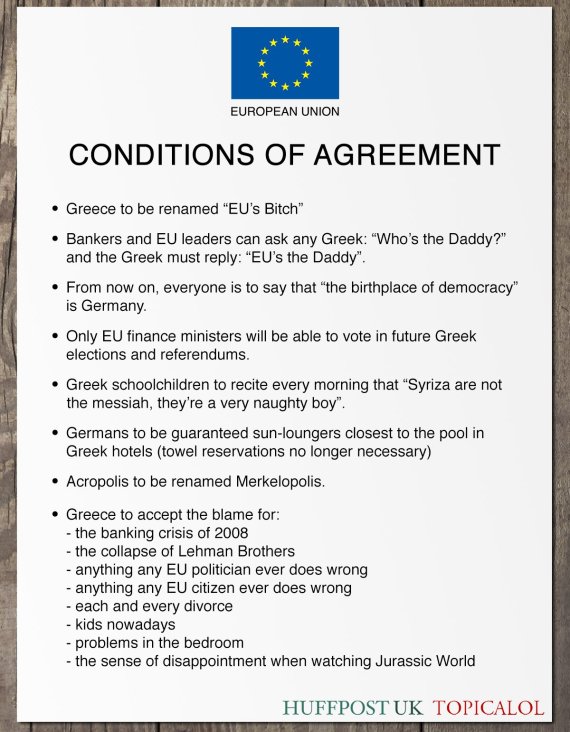
MaxK - 14 Jul 2015 08:23 - 61421 of 81564
Fred1new
- 14 Jul 2015 08:25
- 61422 of 81564

VICTIM - 14 Jul 2015 08:26 - 61423 of 81564
Do you think the Greeks will get a discount off Mercedes .
Fred1new
- 14 Jul 2015 08:29
- 61424 of 81564
If was a German holidayer I would give Greece a miss for a few years.
TANKER - 14 Jul 2015 09:00 - 61425 of 81564
news on the eu .
if the uk stays in the eu it will have to put billions into the rescue fund
if the uk stays in the eu it will have to put billions into the rescue fund
cynic
- 14 Jul 2015 09:03
- 61426 of 81564
from where did you glean that bit?
to the best of my knowledge, one of the advantages uk has held on to through not joining € is that we have not had to contribute to the assorted eurozone bailouts .... if we have, then only in a very limited way, probably due to any uk banks' exposure to any relevant sovereign loans
to the best of my knowledge, one of the advantages uk has held on to through not joining € is that we have not had to contribute to the assorted eurozone bailouts .... if we have, then only in a very limited way, probably due to any uk banks' exposure to any relevant sovereign loans
TANKER - 14 Jul 2015 09:13 - 61427 of 81564
cnbc a quest said at the moment the uk is out of the bail outs but if it votes to stay in the eu it will have to put money into the rescue fund for future failures
federal eu is coming
federal eu is coming
Chris Carson
- 14 Jul 2015 09:14
- 61428 of 81564
EU demands Britain joins Greek rescue fund
Jean-Claude Juncker, European Commission president, discards David Cameron's deal that spares Britain from Eurozone bailouts
By Matthew Holehouse, in Brussels6:54PM BST 13 Jul 2015Comments597 Comments
Britain will be liable for close to £1 billion of emergency loans to Greece, it can be revealed, after Jean-Claude Juncker tore up a “black and white” deal to protect UK taxpayers from Eurozone bailouts.
George Osborne, the Chancellor, today attempted to fight off a proposal to raid the EU budget to save Greek banks from financial collapse.
Under a plan drawn up in the small hours of Sunday night as leaders wrestled to save Greece from economic collapse, Mr Juncker, the president of the European Commission, wants to revive a mothballed bailout fund. It will use the EU budget as collateral against 8.6 billion euros of short-term bridging loans to Greece.
The proposal tosses aside a written agreement between David Cameron and his counterparts that stated British taxpayers would never again be exposed to Eurozone bailouts.
Mr Cameron subsequently assured the House of Commons that Britain be exempt from bailouts, and he has repeatedly used the deal as proof that he can radically renegotiate Britain’s membership with the EU.
Indeed, the 2015 Conservative manifesto boasts: “We took Britain out of Eurozone bailouts, including for Greece – the first ever return of powers from Brussels.”
EU officials this morning said that deal – arguably Mr Cameron’s greatest diplomatic coup in Europe to date – had been assessed by lawyers as nothing more than a “political” accord with no legal force.
Mr Cameron fought a bitter and lonely battle to block the appointment of Mr Juncker, the former Prime Minister of Luxembourg.
The episode will fuel concerns among Eurosceptics that the Commission will not be an honest broker during the renegotiation of British membership of the EU. It will add to demands for full treaty change before polling day – rather than a simply protocol promising future reform.
Mr Obsorne this afternoon rang his counterparts to say the plan was a "non-starter", ahead of a meeting in Brussels on Tuesday at which he could, in theory, be out-voted.
A Treasury source said: "Our Eurozone colleagues have received the message loud and clear that it would not be acceptable for this issue of British support for Eurozone bailouts to be revisited.
"The idea that British taxpayers’ money is going to be on the line in this latest Greek deal is a non-starter."
At breakfast this morning Alexis Tsipras, the Greek premier, capitulated to German demands for a gruelling package of austerity measures in exchange for a third bailout worth more than 86 billion euros. The cash will come from the European Stability Mechanism (ESM), a rescue fund backed by other Eurozone states set up in October 2012.
However, it will may be weeks before the cash is available because the package must be signed off by half a dozen European parliaments.
In the meantime, Greece must find 12 billion euros to service its debts by the end of August, or suffer a catastrophic banking collapse. It includes a vital 4.2 billion euros to repay the European Central Bank on Monday.
To cover these short-term costs, Mr Juncker wants to revive the European Financial Stabilisation Mechanism (EFSM), a loans facility used to rescue Ireland and Portugal early in the Eurozone crisis. It works by borrowing money on the international markets, using the EU’s own budget as collateral, and can release billions with the nod of of EU finance ministers.
Britain pays around 14 per cent of the EU budget – meaning that lending Greece 8.6 billion euros would leave UK taxpayers exposed to the tune of around £850 million. The risk of default is high.
Yet Mr Cameron secured a binding written agreement with his counterparts at a Brussels summit in December 2010, explicitly prohibiting such a deal.
In exchange for British consent to treaty change to create the ESM, the text of the deal stated that the EFSM would not be used again to bailout Eurozone members.
Mr Cameron told the House of Commons: “Both the Council conclusions and the decision that introduces the treaty change state in black and white the clear and unanimous agreement that from 2013 Britain will not be dragged into bailing out the eurozone.
“Britain is not in the euro and we are not going to join the euro, and that is why we should not have any liability for bailing out the Eurozone when the new permanent arrangements come into effect in 2013.”
In 2011, Mr Cameron fought and won to prevent the EFSM from being used to bailout Greece, even before the new deal came into force.
“I wanted to seek assurances at this European Council that Britain won’t be called upon to do that,” he said at the time. “I sought those assurances, I have received those assurances. Nevertheless I will continue to be vigilant on this issue.”
Jeroen Dijsselbloem, the Dutch chief of the Eurogroup, on Monday confirmed publicly that a bailout “involving all member states” will be considered by a meeting of EU finance ministers.
Britain has no veto, with approval instead requiring the consent of 85 per cent of states, weighted for population - presenting the risk that Mr Osborne could, in theory, be out-voted by his colleagues.
Asked about the British deal, a senior EU official said: “The council decision is a political agreement, and it can be argued that it does not prevent the activation of mechanism.”
A Downing Street spokesman said: "Leaders from across the EU agreed in 2010 that the EFSM would not be used again for those Euro area, and that remains the Prime Minister's view. We have not received a proposal and one is not on the table."
Jean-Claude Juncker, European Commission president, discards David Cameron's deal that spares Britain from Eurozone bailouts
By Matthew Holehouse, in Brussels6:54PM BST 13 Jul 2015Comments597 Comments
Britain will be liable for close to £1 billion of emergency loans to Greece, it can be revealed, after Jean-Claude Juncker tore up a “black and white” deal to protect UK taxpayers from Eurozone bailouts.
George Osborne, the Chancellor, today attempted to fight off a proposal to raid the EU budget to save Greek banks from financial collapse.
Under a plan drawn up in the small hours of Sunday night as leaders wrestled to save Greece from economic collapse, Mr Juncker, the president of the European Commission, wants to revive a mothballed bailout fund. It will use the EU budget as collateral against 8.6 billion euros of short-term bridging loans to Greece.
The proposal tosses aside a written agreement between David Cameron and his counterparts that stated British taxpayers would never again be exposed to Eurozone bailouts.
Mr Cameron subsequently assured the House of Commons that Britain be exempt from bailouts, and he has repeatedly used the deal as proof that he can radically renegotiate Britain’s membership with the EU.
Indeed, the 2015 Conservative manifesto boasts: “We took Britain out of Eurozone bailouts, including for Greece – the first ever return of powers from Brussels.”
EU officials this morning said that deal – arguably Mr Cameron’s greatest diplomatic coup in Europe to date – had been assessed by lawyers as nothing more than a “political” accord with no legal force.
Mr Cameron fought a bitter and lonely battle to block the appointment of Mr Juncker, the former Prime Minister of Luxembourg.
The episode will fuel concerns among Eurosceptics that the Commission will not be an honest broker during the renegotiation of British membership of the EU. It will add to demands for full treaty change before polling day – rather than a simply protocol promising future reform.
Mr Obsorne this afternoon rang his counterparts to say the plan was a "non-starter", ahead of a meeting in Brussels on Tuesday at which he could, in theory, be out-voted.
A Treasury source said: "Our Eurozone colleagues have received the message loud and clear that it would not be acceptable for this issue of British support for Eurozone bailouts to be revisited.
"The idea that British taxpayers’ money is going to be on the line in this latest Greek deal is a non-starter."
At breakfast this morning Alexis Tsipras, the Greek premier, capitulated to German demands for a gruelling package of austerity measures in exchange for a third bailout worth more than 86 billion euros. The cash will come from the European Stability Mechanism (ESM), a rescue fund backed by other Eurozone states set up in October 2012.
However, it will may be weeks before the cash is available because the package must be signed off by half a dozen European parliaments.
In the meantime, Greece must find 12 billion euros to service its debts by the end of August, or suffer a catastrophic banking collapse. It includes a vital 4.2 billion euros to repay the European Central Bank on Monday.
To cover these short-term costs, Mr Juncker wants to revive the European Financial Stabilisation Mechanism (EFSM), a loans facility used to rescue Ireland and Portugal early in the Eurozone crisis. It works by borrowing money on the international markets, using the EU’s own budget as collateral, and can release billions with the nod of of EU finance ministers.
Britain pays around 14 per cent of the EU budget – meaning that lending Greece 8.6 billion euros would leave UK taxpayers exposed to the tune of around £850 million. The risk of default is high.
Yet Mr Cameron secured a binding written agreement with his counterparts at a Brussels summit in December 2010, explicitly prohibiting such a deal.
In exchange for British consent to treaty change to create the ESM, the text of the deal stated that the EFSM would not be used again to bailout Eurozone members.
Mr Cameron told the House of Commons: “Both the Council conclusions and the decision that introduces the treaty change state in black and white the clear and unanimous agreement that from 2013 Britain will not be dragged into bailing out the eurozone.
“Britain is not in the euro and we are not going to join the euro, and that is why we should not have any liability for bailing out the Eurozone when the new permanent arrangements come into effect in 2013.”
In 2011, Mr Cameron fought and won to prevent the EFSM from being used to bailout Greece, even before the new deal came into force.
“I wanted to seek assurances at this European Council that Britain won’t be called upon to do that,” he said at the time. “I sought those assurances, I have received those assurances. Nevertheless I will continue to be vigilant on this issue.”
Jeroen Dijsselbloem, the Dutch chief of the Eurogroup, on Monday confirmed publicly that a bailout “involving all member states” will be considered by a meeting of EU finance ministers.
Britain has no veto, with approval instead requiring the consent of 85 per cent of states, weighted for population - presenting the risk that Mr Osborne could, in theory, be out-voted by his colleagues.
Asked about the British deal, a senior EU official said: “The council decision is a political agreement, and it can be argued that it does not prevent the activation of mechanism.”
A Downing Street spokesman said: "Leaders from across the EU agreed in 2010 that the EFSM would not be used again for those Euro area, and that remains the Prime Minister's view. We have not received a proposal and one is not on the table."
TANKER - 14 Jul 2015 09:16 - 61429 of 81564
cynic . Cameron will sell out the uk but the back benchers will revolt my pm
sent me a e mail yesterday saying she will vote out
sent me a e mail yesterday saying she will vote out
Haystack
- 14 Jul 2015 09:18
- 61430 of 81564
They are planning to use the EFSM as loan money (European Financial Stabilisation Mechanism). We may have to stump up £1b with no veto as it is voted on by majority. The fund is outside the Eurozone and all EU members contribute to it.
TANKER - 14 Jul 2015 09:19 - 61431 of 81564
cynic when I post something on the eu it is always correct .
watch cnn they always tell facts and figures
never listen to the stinking bbc you will never get facts
watch cnn they always tell facts and figures
never listen to the stinking bbc you will never get facts
| About MoneyAM | Ts and Cs | Privacy Policy | Investment Warning | Content Standards | Corporate Solutions | Advertise With Us | Site Map | © 2026 MoneyAM |
Register now for FREE
Share Prices,
Stock Quotes,
Charts, Bulletin Boards, Indices, Watchlists, Portfolio, Market News, Research
or see our Premium Services including Level 2, Terminal and much more.
 Follow us on Twitter