

| Home | Log In | Register | Our Services | My Account | Contact | Help |
You are NOT currently logged in
Register now or login to post to this thread.
THE TALK TO YOURSELF THREAD. (NOWT)
goldfinger

 - 09 Jun 2005 12:25


Thought Id start this one going because its rather dead on this board at the moment and I suppose all my usual muckers are either at the Stella tennis event watching Dim Tim (lose again) or at Henly Regatta eating cucumber sandwiches (they wish,...NOT).
Anyway please feel free to just talk to yourself blast away and let it go on any company or subject you wish. Just wish Id thought of this one before.
cheers GF.
Anyway please feel free to just talk to yourself blast away and let it go on any company or subject you wish. Just wish Id thought of this one before.
cheers GF.
VICTIM - 19 Mar 2016 07:33 - 69147 of 81564
What about panty pads , is this discrimination .
MaxK - 19 Mar 2016 08:44 - 69148 of 81564
Go north for Easter hols, Cameron tells Britons, but he's off to Lanzarote
PM made call to boost tourism in region hit by winter floods, but it has emerged the Camerons will holiday in Canaries instead
Heather Stewart and Rowena Mason
Friday 18 March 2016 16.23 GMT
The Liberal Democrat leader, Tim Farron, whose Cumbrian constituency was hit hard by the floods, said: “The prime minister previously said people should visit the north, but like virtually everything that comes out of his mouth what he actually meant was everyone else and not himself.
http://www.theguardian.com/politics/2016/mar/18/go-north-for-easter-hols-cameron-tells-britons-but-hes-off-to-lanzarote
Fred1new
- 19 Mar 2016 09:38
- 69149 of 81564

Fred1new
- 19 Mar 2016 09:42
- 69150 of 81564
Fred1new
- 19 Mar 2016 09:43
- 69151 of 81564
Who will go first, Osborne or Tampon Dave?
jimmy b
- 19 Mar 2016 11:21
- 69152 of 81564
Brave of Ian to quit over his beliefs ,now he can concentrate on helping to get us out of the EU .
Fred1new
- 19 Mar 2016 12:21
- 69153 of 81564
BELIEFS???????????
OPPORTUNISTIC more likely?
As one would expect from the present con artists in the cabinet!
OPPORTUNISTIC more likely?
As one would expect from the present con artists in the cabinet!
grannyboy
- 19 Mar 2016 12:55
- 69154 of 81564
"Who will go first, Osborne or Tampon Dave"
Its 'bleeding' obvious...'Call me Dave' !! once the results come back as a LEAVE vote, and with this knockout blow from IDS, closely followed by 'Daves' sidekick and fellow europhile sycophant Osborne ........
Its 'bleeding' obvious...'Call me Dave' !! once the results come back as a LEAVE vote, and with this knockout blow from IDS, closely followed by 'Daves' sidekick and fellow europhile sycophant Osborne ........
Haystack
- 19 Mar 2016 12:59
- 69155 of 81564
Even in the unlikely event of an out result in the referendum, Cameron will stay until just before the election.
grannyboy
- 19 Mar 2016 13:14
- 69156 of 81564
Don't be to sure on that score Haystacks, people arn't totally blind and stupid and can see whats happening and IS going to happen if there's a stay in vote.
As for 'DAVE', he'l be gone the moment the LEAVE vote results come in....DEAD MAN WALKING!!...
As for 'DAVE', he'l be gone the moment the LEAVE vote results come in....DEAD MAN WALKING!!...
TANKER - 19 Mar 2016 13:31 - 69157 of 81564
hay dave the walking dead man a liar has fcuked up the party with all is lies
kissing the eu back sides
Cameron the biggest scumbag ever to be pm
and yes I am a right wing tory Cameron is not he is just looking for is move into ius eu seat
kissing the eu back sides
Cameron the biggest scumbag ever to be pm
and yes I am a right wing tory Cameron is not he is just looking for is move into ius eu seat
TANKER - 19 Mar 2016 13:36 - 69158 of 81564
so the france to get the coward who run .thousands of muslims protected the scum
round them up and deport the scum . this tells the world you can never ever trust a MUSLIM THE ARE LIARS AND WILL STICK THE KNIFE IN YOUR BACK
round them up and deport the scum . this tells the world you can never ever trust a MUSLIM THE ARE LIARS AND WILL STICK THE KNIFE IN YOUR BACK
TANKER - 19 Mar 2016 13:37 - 69159 of 81564
I COULD MAKE HIM TALK BIG TIME HE WOULD NOT LIKE MY WAY
TANKER - 19 Mar 2016 13:39 - 69160 of 81564
NOW WE HAVE FAKE VETERANS YOU COULD NOT MAKE IT UP
Haystack
- 19 Mar 2016 13:48
- 69161 of 81564
Cameron said in January and this month that he would remain as PM if we vote out.
Fred1new
- 19 Mar 2016 14:16
- 69162 of 81564
Hays,
But how long will Tampon Dave stay and who the hell would want to be PM if the vote is for exit?
5-10 years of confusion.
I think JB and Granny will be disappointed and the more sensible will vote to stay in the EU.
But follow the pound!
But how long will Tampon Dave stay and who the hell would want to be PM if the vote is for exit?
5-10 years of confusion.
I think JB and Granny will be disappointed and the more sensible will vote to stay in the EU.
But follow the pound!
Chris Carson
- 19 Mar 2016 15:22
- 69163 of 81564
Stay or leave Freddy Boy be at least another ten years before that left wing shite you support will get even a sniff of governing this country. Long live Jezza!
Chris Carson
- 19 Mar 2016 15:33
- 69164 of 81564
Labour should be hurting the Tories, but Jeremy Corbyn and John McDonnell are too rubbish at politics
John McDonnell's feeble response to George Osborne's Budget shows yet again how Mr Corbyn's Labour struggles to lay a hand on the Government
Asa Bennett By Asa Bennett1:48PM GMT 17 Mar 2016 CommentsComment
The gloss is coming off George Osborne's Budget, with rumblings of concern among Tory backbenchers about his sugar tax and planned disability benefit cuts, while the Chancellor had to concede that he is borrowing £30 biliion more than originally planned. Even he isn't certain that it's possible to get the books in order as he outlined in the Budget, having just a "50/50 shot" of hitting his surplus target according to the Office for Budget Responsibility.
Such a Budget should give the Opposition a lot to go on, but John McDonnell's response was curiously lax. The Shadow Chancellor veered between making polite noises of discontent about things he didn't like, and wheeling out pointed soundbites. For a man who once promised to "swim through vomit" to vote against the Government's welfare cuts, Mr McDonnell was decidedly muted. His attack on the disability benefit cuts was confused, at one point insisting he would "not make party politics of this", but seconds later calling the move "cruel and unnecessary". The most passionate critique he could offer was to lambast "press release politics" and "the politics of spin and stunts".
"We’re not going to come back and say we are supporting cuts. No."
John McDonnell
Despite his aversion to "spin", John McDonnell was more than happy to sweve simple questions posed by Tory MPs - namely what he would do in the Treasury. The Shadow Chancellor repeatedly refused to say how much more he would borrow, but he has already indicated enough about his intended approach. Mr McDonnell has already promised to borrow billions more and to cut absolutely nothing, saying: "We’re not going to come back and say we are supporting cuts. No.” At the same time, he promised with a straight face that he would exert "iron discipline" over day-to-day spending as Chancellor. He even had a "fiscal credibility rule" to help ensure this, although a former Labour adviser pointed out that it was a rehash of his predecessor Ed Balls' flagship policy.
Mr Balls may be a smart man, but he is not an ideal person to copy given that voters decisively chose to stop him from taking over at the Treasury last year.
Mr McDonnell's lack of originality and coyness about his own agenda has done little to endear him to voters as a potential custodian of the nation's finances. This matters hugely to Labour's potential under Jeremy Corbyn as no party leader has ever become PM whilst trailing in the polls in leadership credentials and economic competence.
A recent poll by Ipsos MORI laid bare how voters struggle to take Labour seriously, finding that they tend to think George Osborne would be a much more capable Chancellor (46 per cent) than John McDonnell (29 per cent). The Shadow Chancellor's fans would argue that such a finding is inevitable given that voters would find it much easier to imagine the current Chancellor in the role, than someone aspiring to the position. However, Ed Balls showed that it is possible to run the Conservatives close in these stakes, being just five points behind him in 2013, lifted no doubt by the hit Mr Osborne suffered to his reputation from the "omnishambles" Budget.
The fact John McDonnell is 17 points behind the Chancellor in terms of economic credibility is all the more striking when looking at how voters feel the economy is doing under his management.
When voters were asked if the general economic condition of the country will improve, stay the same, or get worse over the next 12 months, 44 per cent said it would decline, whereas only one in four (25 per cent) said it would improve. The political climate is very choppy for George Osborne, but when voters consider who the alternative to him is, they remain firmly behind him.
Mr McDonnell's boss can hardly claim to be doing better job winning voters around. Voters started out feeling kind towards Jeremy Corbyn when he took over - 33 per cent saying they were satisfied with him and 36 per cent said dissatisfied (for a net disatisfaction rating of 3 per cent).
But by mid-December, many voters had come to the conclusion that he was a failure, with 50 per cent describing themselves as dissatisfied with his performance (a net dissatisfaction rating of -17). The pronounced disaste among voters has got even worse, with Ipsos MORI finding in February that 21 per cent more voters said they were dissatisfied with him than satisfied, a greater level of net dissatisfaction than David Cameron received. This should unnerve Mr Corbyn's supporters, as the Prime Minister has reached a net dissatisfaction rating of -15 after six years running the Government, while the Labour leader took four months to fall lower in public esteem.
Jeremy Corbyn has still yet to work out how to properly hold the Government to account. The biggest danger to George Osborne over his Budget is coming from dissenters in his own party rather than anything the Oppostion Leader - or his Shadow Chancellor - might say. Labour has effectively abandoned the role of scrutinising the Chancellor to the Institute for Fiscal Studies, which may be unsurprising given that all Mr Corbyn can offer is a critique is that he isn't spending enough.
The Labour leadership is floundering fast, and few can deny it given the state of public opinion. John McDonnell and his boss can't work out what they would do in power, and that's why they're struggling to convince voters that they can be trusted with the economy. George Osborne could not have dreamt of better enemies to oppose him this week.
Early 2016
A vote on the renewal of Trident exposes deep divisions in the party over defence. Mr Corbyn's attempt to whip MPs goes against promises made to his shadow cabinet ministers when they took up the posts. While a free vote is eventually agreed there are frontbench resignations over the saga.
May 2016
Scottish Labour sinks to a dismal election defeat as SNP secures an increased majority in Holyrood elections, undermining the argument that Mr Corbyn's left-wing politics could trigger a comeback north of the border. Labour also loses English council seats and - possibly - the London Mayoral election. Critics argue Mr Corbyn's unelectability has been proved.
Summer 2016
Mr Corbyn get a reprieve as political journalists turn their focus to the EU referendum battle. Splits within the Tories, spats between the campaign teams and polls predicting Brexit dominate ahead of an expected vote later in the year.
Autumn 2016
The Tories reveal the initial conclusions of their boundary review, which will see the number of seats drop by 50 to 600 for the next election. Naming Labour MPs in the firing line forces concern about deselection to the forefront, with moderates fearing they will be overlooked for left-wing candidates.
Spring 2017
As Mr Corbyn enters his third calendar year in charge there is no sign of a boost in the polls. Labour continues to trail far behind the Tories - defying hopes of a mid-term lull - while Mr Corbyn's personal polling fails to turn a corner. Shadow ministers make coded reference to their discontent own public.
May 2017
After weeks of building pressure over 'make or break' council elections, Mr Corbyn's Labour fails to make a serious breakthrough - and even loses some key seats in the party's heartland. Leadership rivals go public with their frustration while privately gathering the 47 MP signatures needed to trigger a contest. Mr Corbyn stands again - but by now the membership base has change. Everything is to play for.
John McDonnell's feeble response to George Osborne's Budget shows yet again how Mr Corbyn's Labour struggles to lay a hand on the Government
Asa Bennett By Asa Bennett1:48PM GMT 17 Mar 2016 CommentsComment
The gloss is coming off George Osborne's Budget, with rumblings of concern among Tory backbenchers about his sugar tax and planned disability benefit cuts, while the Chancellor had to concede that he is borrowing £30 biliion more than originally planned. Even he isn't certain that it's possible to get the books in order as he outlined in the Budget, having just a "50/50 shot" of hitting his surplus target according to the Office for Budget Responsibility.
Such a Budget should give the Opposition a lot to go on, but John McDonnell's response was curiously lax. The Shadow Chancellor veered between making polite noises of discontent about things he didn't like, and wheeling out pointed soundbites. For a man who once promised to "swim through vomit" to vote against the Government's welfare cuts, Mr McDonnell was decidedly muted. His attack on the disability benefit cuts was confused, at one point insisting he would "not make party politics of this", but seconds later calling the move "cruel and unnecessary". The most passionate critique he could offer was to lambast "press release politics" and "the politics of spin and stunts".
"We’re not going to come back and say we are supporting cuts. No."
John McDonnell
Despite his aversion to "spin", John McDonnell was more than happy to sweve simple questions posed by Tory MPs - namely what he would do in the Treasury. The Shadow Chancellor repeatedly refused to say how much more he would borrow, but he has already indicated enough about his intended approach. Mr McDonnell has already promised to borrow billions more and to cut absolutely nothing, saying: "We’re not going to come back and say we are supporting cuts. No.” At the same time, he promised with a straight face that he would exert "iron discipline" over day-to-day spending as Chancellor. He even had a "fiscal credibility rule" to help ensure this, although a former Labour adviser pointed out that it was a rehash of his predecessor Ed Balls' flagship policy.
Mr Balls may be a smart man, but he is not an ideal person to copy given that voters decisively chose to stop him from taking over at the Treasury last year.
Mr McDonnell's lack of originality and coyness about his own agenda has done little to endear him to voters as a potential custodian of the nation's finances. This matters hugely to Labour's potential under Jeremy Corbyn as no party leader has ever become PM whilst trailing in the polls in leadership credentials and economic competence.
A recent poll by Ipsos MORI laid bare how voters struggle to take Labour seriously, finding that they tend to think George Osborne would be a much more capable Chancellor (46 per cent) than John McDonnell (29 per cent). The Shadow Chancellor's fans would argue that such a finding is inevitable given that voters would find it much easier to imagine the current Chancellor in the role, than someone aspiring to the position. However, Ed Balls showed that it is possible to run the Conservatives close in these stakes, being just five points behind him in 2013, lifted no doubt by the hit Mr Osborne suffered to his reputation from the "omnishambles" Budget.
The fact John McDonnell is 17 points behind the Chancellor in terms of economic credibility is all the more striking when looking at how voters feel the economy is doing under his management.
When voters were asked if the general economic condition of the country will improve, stay the same, or get worse over the next 12 months, 44 per cent said it would decline, whereas only one in four (25 per cent) said it would improve. The political climate is very choppy for George Osborne, but when voters consider who the alternative to him is, they remain firmly behind him.
Mr McDonnell's boss can hardly claim to be doing better job winning voters around. Voters started out feeling kind towards Jeremy Corbyn when he took over - 33 per cent saying they were satisfied with him and 36 per cent said dissatisfied (for a net disatisfaction rating of 3 per cent).
But by mid-December, many voters had come to the conclusion that he was a failure, with 50 per cent describing themselves as dissatisfied with his performance (a net dissatisfaction rating of -17). The pronounced disaste among voters has got even worse, with Ipsos MORI finding in February that 21 per cent more voters said they were dissatisfied with him than satisfied, a greater level of net dissatisfaction than David Cameron received. This should unnerve Mr Corbyn's supporters, as the Prime Minister has reached a net dissatisfaction rating of -15 after six years running the Government, while the Labour leader took four months to fall lower in public esteem.
Jeremy Corbyn has still yet to work out how to properly hold the Government to account. The biggest danger to George Osborne over his Budget is coming from dissenters in his own party rather than anything the Oppostion Leader - or his Shadow Chancellor - might say. Labour has effectively abandoned the role of scrutinising the Chancellor to the Institute for Fiscal Studies, which may be unsurprising given that all Mr Corbyn can offer is a critique is that he isn't spending enough.
The Labour leadership is floundering fast, and few can deny it given the state of public opinion. John McDonnell and his boss can't work out what they would do in power, and that's why they're struggling to convince voters that they can be trusted with the economy. George Osborne could not have dreamt of better enemies to oppose him this week.
Early 2016
A vote on the renewal of Trident exposes deep divisions in the party over defence. Mr Corbyn's attempt to whip MPs goes against promises made to his shadow cabinet ministers when they took up the posts. While a free vote is eventually agreed there are frontbench resignations over the saga.
May 2016
Scottish Labour sinks to a dismal election defeat as SNP secures an increased majority in Holyrood elections, undermining the argument that Mr Corbyn's left-wing politics could trigger a comeback north of the border. Labour also loses English council seats and - possibly - the London Mayoral election. Critics argue Mr Corbyn's unelectability has been proved.
Summer 2016
Mr Corbyn get a reprieve as political journalists turn their focus to the EU referendum battle. Splits within the Tories, spats between the campaign teams and polls predicting Brexit dominate ahead of an expected vote later in the year.
Autumn 2016
The Tories reveal the initial conclusions of their boundary review, which will see the number of seats drop by 50 to 600 for the next election. Naming Labour MPs in the firing line forces concern about deselection to the forefront, with moderates fearing they will be overlooked for left-wing candidates.
Spring 2017
As Mr Corbyn enters his third calendar year in charge there is no sign of a boost in the polls. Labour continues to trail far behind the Tories - defying hopes of a mid-term lull - while Mr Corbyn's personal polling fails to turn a corner. Shadow ministers make coded reference to their discontent own public.
May 2017
After weeks of building pressure over 'make or break' council elections, Mr Corbyn's Labour fails to make a serious breakthrough - and even loses some key seats in the party's heartland. Leadership rivals go public with their frustration while privately gathering the 47 MP signatures needed to trigger a contest. Mr Corbyn stands again - but by now the membership base has change. Everything is to play for.
Chris Carson
- 19 Mar 2016 15:43
- 69165 of 81564
Any poll suggesting Jeremy Corbyn's doing well will make George Osborne laugh his head off
Even Ed Miliband enjoyed a double-digit lead at this point in the last parliament
By Tom Harris10:42AM GMT 18 Mar 2016
Remember this day. For this is the day that Labour won the 2020 general election.
Actually, it was yesterday, when the latest YouGov poll gave Labour – led by the nation’s favourite West-botherer – an astronomical one-point lead over the Tory party.
This followed an ICM poll a couple of days earlier by ICM which put the two parties neck-and-neck, on 36 per cent each – a poll which even ICM acknowledged might come to be described as a “rogue”.
But apparently not.
So the game’s up for Cameron, Osborne, Boris and the rest. They’ve had a good innings, though. Nothing to complain about. By 2020 they’ll have been in government for ten years, and that’s probably longer than Dave thought he’d get when he stood outside Number 10 on that cold dark night in May 2010 and announced that from hereon in, Nick Clegg was to blame for everything.
I expect Osborne will want to invite John McDonnell into the flat at Number 11 to let him measure up for curtains and go through the books – why leave it until the last minute, after all? Sam and the kids can show Jeremy the back garden, shift the trampoline and the Wendy house to let the diggers in to build the Prime Minister Designate a new allotment.
After all, when the leader of an opposition party takes his party to such a significant lead after six months in the job, the momentum is pretty irreversible, yeah?
No.
The Tories, older readers might recall, had a bad decade back in the ’90s. Following “Black Wednesday” in September 1992, when Britain was ignominiously invited to sling its hook from the European Exchange Rate Mechanism (ERM), John Major’s party never enjoyed a poll lead again.
Major’s successor, grinning baseball hat fashion model and lager-enthused Yorkshireman William Hague didn’t have much more luck.
Until September 2000, that is.
I remember that very well, because the selection meeting of Cathcart Labour Party was scheduled to take place then – right in the middle of the fuel crisis. That was when lorry drivers took unofficial and devastating action against the government’s fuel taxation policies by blockading refineries up and down the country. Queues of angry motorists formed at every petrol station, workers were advised to use their cars for only essential journeys. At one point I was extremely nervous that I might not have enough petrol in my car to get me to the selection meeting (I didn’t care if I ran out of fuel on the way back).
The important point to remember is that at that point, in the middle of the most severe political crisis the new Labour government had yet faced, the Conservatives, briefly, took a two-point lead in the polls.
Now, remind me – how did the following year’s general election work out for Hague? Ah, yes, I seem to remember: he barely increased his paltry number of MPs and resigned when it became clear that Blair’s majority was pretty much the same as it had been four years earlier – about 180.
But this week’s polls are good for Corbyn, while being very, very bad for Labour. Nervous, disloyal Labour MPs (pretty much all of them, then) will now perhaps think twice about mounting a challenge to the Bearded One, mindful of the tendency among their local activists towards unjustified optimism. Why get rid of Jeremy when he’s doing so well, they will shout at their local Member. Loudly.
Why indeed? Apart from the fact that even Ed Miliband enjoyed a double-digit lead at this point in the last parliament and still went down to a crushing defeat in 2015. Even Michael Foot’s ratings could give Jeremy’s a Chinese burn and shove their head down the toilet bowl.
So while Jeremy’s position is likely to be strengthened, Labour’s hopes of survival as a political force, consequently, just took another knock.
Which means these polls are good news for someone else. Two other people, in fact. Didn’t you wonder why Boris and George looked so cheerful this morning?
Even Ed Miliband enjoyed a double-digit lead at this point in the last parliament
By Tom Harris10:42AM GMT 18 Mar 2016
Remember this day. For this is the day that Labour won the 2020 general election.
Actually, it was yesterday, when the latest YouGov poll gave Labour – led by the nation’s favourite West-botherer – an astronomical one-point lead over the Tory party.
This followed an ICM poll a couple of days earlier by ICM which put the two parties neck-and-neck, on 36 per cent each – a poll which even ICM acknowledged might come to be described as a “rogue”.
But apparently not.
So the game’s up for Cameron, Osborne, Boris and the rest. They’ve had a good innings, though. Nothing to complain about. By 2020 they’ll have been in government for ten years, and that’s probably longer than Dave thought he’d get when he stood outside Number 10 on that cold dark night in May 2010 and announced that from hereon in, Nick Clegg was to blame for everything.
I expect Osborne will want to invite John McDonnell into the flat at Number 11 to let him measure up for curtains and go through the books – why leave it until the last minute, after all? Sam and the kids can show Jeremy the back garden, shift the trampoline and the Wendy house to let the diggers in to build the Prime Minister Designate a new allotment.
After all, when the leader of an opposition party takes his party to such a significant lead after six months in the job, the momentum is pretty irreversible, yeah?
No.
The Tories, older readers might recall, had a bad decade back in the ’90s. Following “Black Wednesday” in September 1992, when Britain was ignominiously invited to sling its hook from the European Exchange Rate Mechanism (ERM), John Major’s party never enjoyed a poll lead again.
Major’s successor, grinning baseball hat fashion model and lager-enthused Yorkshireman William Hague didn’t have much more luck.
Until September 2000, that is.
I remember that very well, because the selection meeting of Cathcart Labour Party was scheduled to take place then – right in the middle of the fuel crisis. That was when lorry drivers took unofficial and devastating action against the government’s fuel taxation policies by blockading refineries up and down the country. Queues of angry motorists formed at every petrol station, workers were advised to use their cars for only essential journeys. At one point I was extremely nervous that I might not have enough petrol in my car to get me to the selection meeting (I didn’t care if I ran out of fuel on the way back).
The important point to remember is that at that point, in the middle of the most severe political crisis the new Labour government had yet faced, the Conservatives, briefly, took a two-point lead in the polls.
Now, remind me – how did the following year’s general election work out for Hague? Ah, yes, I seem to remember: he barely increased his paltry number of MPs and resigned when it became clear that Blair’s majority was pretty much the same as it had been four years earlier – about 180.
But this week’s polls are good for Corbyn, while being very, very bad for Labour. Nervous, disloyal Labour MPs (pretty much all of them, then) will now perhaps think twice about mounting a challenge to the Bearded One, mindful of the tendency among their local activists towards unjustified optimism. Why get rid of Jeremy when he’s doing so well, they will shout at their local Member. Loudly.
Why indeed? Apart from the fact that even Ed Miliband enjoyed a double-digit lead at this point in the last parliament and still went down to a crushing defeat in 2015. Even Michael Foot’s ratings could give Jeremy’s a Chinese burn and shove their head down the toilet bowl.
So while Jeremy’s position is likely to be strengthened, Labour’s hopes of survival as a political force, consequently, just took another knock.
Which means these polls are good news for someone else. Two other people, in fact. Didn’t you wonder why Boris and George looked so cheerful this morning?
Chris Carson
- 19 Mar 2016 16:03
- 69166 of 81564
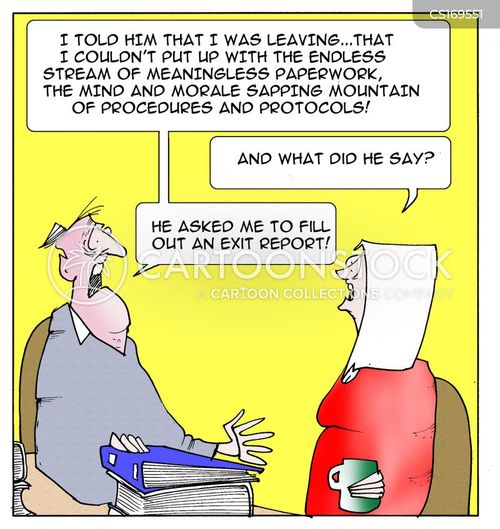
From the rag that Fred relies on for his cartoons LOL!!!
Labour asks its lost voters: will you come back?
Two shadow cabinet ministers criss-crossed the country to see if the party could convince former supporters in key seats
We are in the Royal Oak pub in Cannock, near Birmingham, on a miserable Wednesday night. Labour MP Gloria De Piero is buying a large round of drinks. “We had a bloody awful election result and we want to know why,” she tells a focus group of eight middle-aged men and women. All have been Labour voters at some time in their lives, but several have recently deserted to the Tories.
Labour ‘not winning back swing voters’ under Jeremy Corbyn
Read more
As she hands round beer, wine and soft drinks, De Piero, the MP for Ashfield, looks each of them in the eye. “We want to know how we win people like you, all of you, back to Labour.”
Ever since Jeremy Corbyn won the Labour leadership in dramatic circumstances last September, Labour has been consumed by debate about whether the revolution that delivered him represents a dead end for the party, or a new dawn.
The shift to the left has electrified the Labour base, but many party MPs fear it will alienate the wider public, including critical groups of floating voters on the middle ground, potentially keeping the party out of power for a generation.
For months at Westminster there has been dark talk of leadership plots. But among the expanded core of new members and supporters who propelled Corbyn to office, there is a belief that an evangelical push throughout the country can convert the necessary numbers. In the dozens of marginals Labour needs to win, does that feel like a plausible hypothesis?
The Observer accompanied De Piero and her shadow cabinet colleague Jonathan Ashworth, MP for Leicester South, as they headed across the country in search of answers in the key seats where Labour failed so catastrophically last May. A year on, council elections will give an indication of how Labour is doing. So what is the mood?
Cannock Chase constituency was typical of the disasters that hit Labour one after another on election night, proof that, despite five years of Tory-led austerity, its support was draining away in the former industrial areas which were its stronghold. It was number 50 on Labour’s target list of marginals and a must-win. The Tory MP who took the seat in 2010, Aidan Burley, had stepped down after organising a Nazi-themed stag party and, pre-election, the omens were good. Labour poured in resources. But to no avail. The Tories ended up increasing their majority.
It was the same story in several other key Midlands marginals. For the Labour party locally it was, as one official who worked seven-day weeks for two years put it, “demoralising and depressing beyond our wildest nightmares”.
The two shadow cabinet ministers want to confront the deserters face to face. De Piero and Ashworth ask for honesty from the assembled focus group, selected by the polling organisation Survation – and get it.
Advertisement
Mike Elliott, a former oil industry worker and trading standards officer in the West Midlands, says he will not vote Labour again, until it regains some economic credibility. “I am afraid I can remember the 1970s and the 1980s. I don’t think the Conservatives are running the economy well, but I think they are running it better than Labour would,” he says. There is broad agreement that the Tories – while not the party they would ideally want to vote for – are the least worst option as stewards of the nation’s finances.
De Piero looks on anxiously as it becomes clear that Paul West, one of the eight, will be the lone voice who is happy with Labour and Jeremy Corbyn. “I like what he says and I think people will get used to him,” he says.
Live Iain Duncan Smith resignation: 145,000 sign petition against benefits cuts – live
David Cameron says he is ‘puzzled and disappointed’ as the controversial work and pensions secretary quits the government over ‘indefensible’ cuts to disability benefits
Read more
The discussion remains about leadership for long periods. Sandra Dudley says she liked Ed Miliband but admits that he “just didn’t have it”. Dudley mentions Corbyn: “I know appearance is superficial, but people judge people by their appearances and when you see politicians in their smart suits, and then Jeremy Corbyn is there, he looks like he has just come off his allotment, and people aren’t drawn to him.”
Cindy Faulkner, a children’s books illustrator, chips in: “And he didn’t even sing the national anthem, which I think is most disrespectful because it means he doesn’t give a tinker’s toss about the Queen or he doesn’t know the national anthem – and if he doesn’t know the national anthem, that is disgraceful.”
The group gives its views on how to improve public services, particularly health and education, and all parties come in for criticism. But leadership returns time and again to the fore. Robert Jones, a former local authority worker and his wife, Judith, who worked in banks, arrive late and join in to take pot shots at Corbyn.
Advertisement
“When he sits there at prime minister’s questions, you think, ‘who let you in there?’ – he looks totally out of place,” says Robert. Judith then mentions Trident, which will become a recurring theme on subsequent visits. “Without some sort of defence, how are we going to stop, as an island, any sort of invasion that comes our way?” she asks.
Sandra Dudley adds: “We need a deterrent and we desperately hope we are never going to have to press that button but, if we haven’t got the deterrent, we are wide open.”
We move on days later to Kingswood, on the eastern outskirts of Bristol. Formerly a mining village, it was number 41 on Labour’s target list last May but Tory MP Chris Skidmore increased his share of the vote from 40% to 48.3% as Labour’s fell from 35% to 29.6%. This time, De Piero and Ashworth just want to meet people on the street, in cafes, out shopping, rather than repeat the focus group inquisition. Unsurprisingly, many look blank when asked about the state of Labour.
Ashworth talks at length to a man running a market stall who tells him he is not interested in politics or in voting and never will be, and they move on.
Evrim Tekim, the young manager of the Table Care Lounge Bar, says that when he has time to focus he still favours Labour and his friends on Facebook tell him that, under Corbyn, “it is all good and has a good feel about it”. In his cafe there are a couple of women drinking coffee who say they quite like Corbyn and one, Joy Penhaligon, says she could be tempted to vote for him because he is mild-mannered and comes over as honest. “He seems a nice, gentle man. He seems quite genuine to me.” But on a neighbouring table Sandra Weaver, a solid Labour voter and a close follower of politics, is unimpressed. “I think the party loyalists will vote for him whatever, but whether he will be prime minister is another matter. I am not convinced. I believe in Trident, put it that way.”
Yvonne Kelly, who runs Kingswood Florists, and who has never voted anything but Labour, tells De Piero she has not tuned in much to the political scene recently but the one thing she does recall about Labour is that Corbyn did not sing the national anthem. “He might have his opinions and all that but I wasn’t happy about it.”
This may be just a snapshot and a random sample in one shopping area in the west country, but there are more than faint echoes of views expressed in the Royal Oak in Cannock and if the Labour brand was ever strong here, it doesn’t feel like it is any more.
Enthusiasm for the new politics of Labour under Corbyn is strong among young Labour voters, so next we go in search of student enthusiasts and head for Southampton. Before hitting the university, De Piero and Ashworth canvass views in a council housing area of the Southampton Itchen constituency, where Ukip has been taking votes from Labour at local elections. This was the 22nd most winnable seat for Labour at the last election, but the Tories increased their majority from 192 to 2,316 votes on polling day.
Dan Jeffery, the local Labour councillor, says he has become worried that former Labour people are turning first to Ukip, then to the Tories. “You see it here. Someone who has voted Labour all his life then goes to Ukip. When he has broken the addiction of voting Labour, he feels he can vote Tory.”
On the housing estates, Ukip may have made headway but there is no obvious sign of strong loyalty to any party. Rather a sense that politics and politicians make no difference to lives. One man answers the door and says he voted Tory last time but can’t remember why. Another, who works in a supermarket, says Corbyn looks more like someone who should work alongside him at a checkout than someone he could vote for as a prospective prime minister. At the Spike Islander pub, Andrew White, who works in a warehouse, says he is solid Labour and will remain so. He likes Corbyn but doesn’t think he will be prime minister.
Labour's challenge: ‘Four years to find two million votes. We must listen’
Gloria de Piero, Labour MP for Ashfield, and Jonathan Ashworth, Labour MP for Leicester South
Read more
At Southampton University, De Piero and Ashworth have a canteen lunch with four leading lights in the student Labour club. “This is it. That is all we are, four of us,” says Ben Seifert, who was inspired to join the party by Corbyn and believes he should succeed. “The Labour party is the only credible force in British politics for equality and justice for all,” he says.
Clara Pope-Sutherland says she is annoyed by the way some Labour MPs are failing to rally round Corbyn and at talk of challenges to him so soon after he won with a huge mandate. “That upsets me. MPs need to rally round the person the party vote for,” she says. Only last week former paratrooper Dan Jarvis seemed to be laying out his stall in a speech, though he insisted he was only joining a healthy, open debate on Labour’s future.
Rob Bradshaw takes a different view to his fellow students and is sceptical about whether Corbyn can create a mass movement capable of winning the 2 million extra votes that Labour needs. “I think that everyone who will ever vote for Jeremy Corbyn has voted for him already,” he says.
Advertisement
Immigration has not been raised much across the tour so far but in Thurrock, in Essex – another former Labour stronghold where Ukip was involved in a tight three-way race last May – it is a dominant theme. De Piero and Ashworth say they found “real hostility” there from former Labour voters who had deserted to Ukip, interspersed with voter apathy and views that politicians never stand by their words.
Last weekend, in an interview with the Observer, Jess Phillips, the Labour MP for Birmingham Yardley, was asked whether she thought Labour could win in 2020 under Corbyn. “The honest answer is, ‘no, absolutely not’,” she said. The leadership is busy playing down its prospects for the May elections in England, Wales and Scotland. Corbyn and his inner circle are, however, taking a long-term view, pointing out that he and shadow chancellor John McDonnell continue to pack out halls up and down the country.
McDonnell wrote in this paper before Christmas that the challenge is to create a “mass movement capable of mobilising mass support to radically change our society”. That, he added, “requires a long-term, creative, patient socialism”. They have been underestimated before. They want time. Their challenge is to replicate the enthusiasm they mobilised during the leadership election and to spread it to the marginals where floating voters decide elections.
As De Piero and Ashworth can now tell them, they will have their work cut out.
• This article was amended on 13 March 2016 to change the headline for one that more accurately represented the text of the article.
Labour asks its lost voters: will you come back?
Two shadow cabinet ministers criss-crossed the country to see if the party could convince former supporters in key seats
We are in the Royal Oak pub in Cannock, near Birmingham, on a miserable Wednesday night. Labour MP Gloria De Piero is buying a large round of drinks. “We had a bloody awful election result and we want to know why,” she tells a focus group of eight middle-aged men and women. All have been Labour voters at some time in their lives, but several have recently deserted to the Tories.
Labour ‘not winning back swing voters’ under Jeremy Corbyn
Read more
As she hands round beer, wine and soft drinks, De Piero, the MP for Ashfield, looks each of them in the eye. “We want to know how we win people like you, all of you, back to Labour.”
Ever since Jeremy Corbyn won the Labour leadership in dramatic circumstances last September, Labour has been consumed by debate about whether the revolution that delivered him represents a dead end for the party, or a new dawn.
The shift to the left has electrified the Labour base, but many party MPs fear it will alienate the wider public, including critical groups of floating voters on the middle ground, potentially keeping the party out of power for a generation.
For months at Westminster there has been dark talk of leadership plots. But among the expanded core of new members and supporters who propelled Corbyn to office, there is a belief that an evangelical push throughout the country can convert the necessary numbers. In the dozens of marginals Labour needs to win, does that feel like a plausible hypothesis?
The Observer accompanied De Piero and her shadow cabinet colleague Jonathan Ashworth, MP for Leicester South, as they headed across the country in search of answers in the key seats where Labour failed so catastrophically last May. A year on, council elections will give an indication of how Labour is doing. So what is the mood?
Cannock Chase constituency was typical of the disasters that hit Labour one after another on election night, proof that, despite five years of Tory-led austerity, its support was draining away in the former industrial areas which were its stronghold. It was number 50 on Labour’s target list of marginals and a must-win. The Tory MP who took the seat in 2010, Aidan Burley, had stepped down after organising a Nazi-themed stag party and, pre-election, the omens were good. Labour poured in resources. But to no avail. The Tories ended up increasing their majority.
It was the same story in several other key Midlands marginals. For the Labour party locally it was, as one official who worked seven-day weeks for two years put it, “demoralising and depressing beyond our wildest nightmares”.
The two shadow cabinet ministers want to confront the deserters face to face. De Piero and Ashworth ask for honesty from the assembled focus group, selected by the polling organisation Survation – and get it.
Advertisement
Mike Elliott, a former oil industry worker and trading standards officer in the West Midlands, says he will not vote Labour again, until it regains some economic credibility. “I am afraid I can remember the 1970s and the 1980s. I don’t think the Conservatives are running the economy well, but I think they are running it better than Labour would,” he says. There is broad agreement that the Tories – while not the party they would ideally want to vote for – are the least worst option as stewards of the nation’s finances.
De Piero looks on anxiously as it becomes clear that Paul West, one of the eight, will be the lone voice who is happy with Labour and Jeremy Corbyn. “I like what he says and I think people will get used to him,” he says.
Live Iain Duncan Smith resignation: 145,000 sign petition against benefits cuts – live
David Cameron says he is ‘puzzled and disappointed’ as the controversial work and pensions secretary quits the government over ‘indefensible’ cuts to disability benefits
Read more
The discussion remains about leadership for long periods. Sandra Dudley says she liked Ed Miliband but admits that he “just didn’t have it”. Dudley mentions Corbyn: “I know appearance is superficial, but people judge people by their appearances and when you see politicians in their smart suits, and then Jeremy Corbyn is there, he looks like he has just come off his allotment, and people aren’t drawn to him.”
Cindy Faulkner, a children’s books illustrator, chips in: “And he didn’t even sing the national anthem, which I think is most disrespectful because it means he doesn’t give a tinker’s toss about the Queen or he doesn’t know the national anthem – and if he doesn’t know the national anthem, that is disgraceful.”
The group gives its views on how to improve public services, particularly health and education, and all parties come in for criticism. But leadership returns time and again to the fore. Robert Jones, a former local authority worker and his wife, Judith, who worked in banks, arrive late and join in to take pot shots at Corbyn.
Advertisement
“When he sits there at prime minister’s questions, you think, ‘who let you in there?’ – he looks totally out of place,” says Robert. Judith then mentions Trident, which will become a recurring theme on subsequent visits. “Without some sort of defence, how are we going to stop, as an island, any sort of invasion that comes our way?” she asks.
Sandra Dudley adds: “We need a deterrent and we desperately hope we are never going to have to press that button but, if we haven’t got the deterrent, we are wide open.”
We move on days later to Kingswood, on the eastern outskirts of Bristol. Formerly a mining village, it was number 41 on Labour’s target list last May but Tory MP Chris Skidmore increased his share of the vote from 40% to 48.3% as Labour’s fell from 35% to 29.6%. This time, De Piero and Ashworth just want to meet people on the street, in cafes, out shopping, rather than repeat the focus group inquisition. Unsurprisingly, many look blank when asked about the state of Labour.
Ashworth talks at length to a man running a market stall who tells him he is not interested in politics or in voting and never will be, and they move on.
Evrim Tekim, the young manager of the Table Care Lounge Bar, says that when he has time to focus he still favours Labour and his friends on Facebook tell him that, under Corbyn, “it is all good and has a good feel about it”. In his cafe there are a couple of women drinking coffee who say they quite like Corbyn and one, Joy Penhaligon, says she could be tempted to vote for him because he is mild-mannered and comes over as honest. “He seems a nice, gentle man. He seems quite genuine to me.” But on a neighbouring table Sandra Weaver, a solid Labour voter and a close follower of politics, is unimpressed. “I think the party loyalists will vote for him whatever, but whether he will be prime minister is another matter. I am not convinced. I believe in Trident, put it that way.”
Yvonne Kelly, who runs Kingswood Florists, and who has never voted anything but Labour, tells De Piero she has not tuned in much to the political scene recently but the one thing she does recall about Labour is that Corbyn did not sing the national anthem. “He might have his opinions and all that but I wasn’t happy about it.”
This may be just a snapshot and a random sample in one shopping area in the west country, but there are more than faint echoes of views expressed in the Royal Oak in Cannock and if the Labour brand was ever strong here, it doesn’t feel like it is any more.
Enthusiasm for the new politics of Labour under Corbyn is strong among young Labour voters, so next we go in search of student enthusiasts and head for Southampton. Before hitting the university, De Piero and Ashworth canvass views in a council housing area of the Southampton Itchen constituency, where Ukip has been taking votes from Labour at local elections. This was the 22nd most winnable seat for Labour at the last election, but the Tories increased their majority from 192 to 2,316 votes on polling day.
Dan Jeffery, the local Labour councillor, says he has become worried that former Labour people are turning first to Ukip, then to the Tories. “You see it here. Someone who has voted Labour all his life then goes to Ukip. When he has broken the addiction of voting Labour, he feels he can vote Tory.”
On the housing estates, Ukip may have made headway but there is no obvious sign of strong loyalty to any party. Rather a sense that politics and politicians make no difference to lives. One man answers the door and says he voted Tory last time but can’t remember why. Another, who works in a supermarket, says Corbyn looks more like someone who should work alongside him at a checkout than someone he could vote for as a prospective prime minister. At the Spike Islander pub, Andrew White, who works in a warehouse, says he is solid Labour and will remain so. He likes Corbyn but doesn’t think he will be prime minister.
Labour's challenge: ‘Four years to find two million votes. We must listen’
Gloria de Piero, Labour MP for Ashfield, and Jonathan Ashworth, Labour MP for Leicester South
Read more
At Southampton University, De Piero and Ashworth have a canteen lunch with four leading lights in the student Labour club. “This is it. That is all we are, four of us,” says Ben Seifert, who was inspired to join the party by Corbyn and believes he should succeed. “The Labour party is the only credible force in British politics for equality and justice for all,” he says.
Clara Pope-Sutherland says she is annoyed by the way some Labour MPs are failing to rally round Corbyn and at talk of challenges to him so soon after he won with a huge mandate. “That upsets me. MPs need to rally round the person the party vote for,” she says. Only last week former paratrooper Dan Jarvis seemed to be laying out his stall in a speech, though he insisted he was only joining a healthy, open debate on Labour’s future.
Rob Bradshaw takes a different view to his fellow students and is sceptical about whether Corbyn can create a mass movement capable of winning the 2 million extra votes that Labour needs. “I think that everyone who will ever vote for Jeremy Corbyn has voted for him already,” he says.
Advertisement
Immigration has not been raised much across the tour so far but in Thurrock, in Essex – another former Labour stronghold where Ukip was involved in a tight three-way race last May – it is a dominant theme. De Piero and Ashworth say they found “real hostility” there from former Labour voters who had deserted to Ukip, interspersed with voter apathy and views that politicians never stand by their words.
Last weekend, in an interview with the Observer, Jess Phillips, the Labour MP for Birmingham Yardley, was asked whether she thought Labour could win in 2020 under Corbyn. “The honest answer is, ‘no, absolutely not’,” she said. The leadership is busy playing down its prospects for the May elections in England, Wales and Scotland. Corbyn and his inner circle are, however, taking a long-term view, pointing out that he and shadow chancellor John McDonnell continue to pack out halls up and down the country.
McDonnell wrote in this paper before Christmas that the challenge is to create a “mass movement capable of mobilising mass support to radically change our society”. That, he added, “requires a long-term, creative, patient socialism”. They have been underestimated before. They want time. Their challenge is to replicate the enthusiasm they mobilised during the leadership election and to spread it to the marginals where floating voters decide elections.
As De Piero and Ashworth can now tell them, they will have their work cut out.
• This article was amended on 13 March 2016 to change the headline for one that more accurately represented the text of the article.
| About MoneyAM | Ts and Cs | Privacy Policy | Investment Warning | Content Standards | Corporate Solutions | Advertise With Us | Site Map | © 2026 MoneyAM |
Register now for FREE
Share Prices,
Stock Quotes,
Charts, Bulletin Boards, Indices, Watchlists, Portfolio, Market News, Research
or see our Premium Services including Level 2, Terminal and much more.
 Follow us on Twitter