

| Home | Log In | Register | Our Services | My Account | Contact | Help |
You are NOT currently logged in
Register now or login to post to this thread.
THE TALK TO YOURSELF THREAD. (NOWT)
goldfinger

 - 09 Jun 2005 12:25


Thought Id start this one going because its rather dead on this board at the moment and I suppose all my usual muckers are either at the Stella tennis event watching Dim Tim (lose again) or at Henly Regatta eating cucumber sandwiches (they wish,...NOT).
Anyway please feel free to just talk to yourself blast away and let it go on any company or subject you wish. Just wish Id thought of this one before.
cheers GF.
Anyway please feel free to just talk to yourself blast away and let it go on any company or subject you wish. Just wish Id thought of this one before.
cheers GF.
goldfinger
- 14 Jul 2014 21:54
- 43621 of 81564
ohhhhhhhhhhhhhhhhhhh...............
Iain Dale @IainDale 43s
I'm now hearing William Hague will not just step down as Foreign Secretary but will also announce he's standing down from Parliament.
Rats deserting the sinking ship.
WHAT A SHAMBLES.
Iain Dale @IainDale 43s
I'm now hearing William Hague will not just step down as Foreign Secretary but will also announce he's standing down from Parliament.
Rats deserting the sinking ship.
WHAT A SHAMBLES.
Fred1new
- 14 Jul 2014 22:42
- 43622 of 81564
The last throw of Cameron and the party of Cons.
Haystack
- 14 Jul 2014 23:02
- 43623 of 81564
He is staying on as an advisor.
MaxK - 14 Jul 2014 23:31 - 43624 of 81564
Confidence vote, it's the only chance to save the tory party, cos Dave has lost the plot.
If he ever had it?
If he ever had it?
Haystack
- 14 Jul 2014 23:34
- 43625 of 81564
They are doing a god job considering it is a coalition.
MaxK - 14 Jul 2014 23:38 - 43626 of 81564
Dave cant keep using the lib/dims as a bomb shelter, stand up and be counted.
Or why not go the whole hog and join them, €urope an all?
Or why not go the whole hog and join them, €urope an all?
goldfinger
- 15 Jul 2014 02:13
- 43627 of 81564
Camoron as certainly lost the plot.
Haystack
- 15 Jul 2014 03:24
- 43628 of 81564
http://www.theguardian.com/politics/2014/jul/14/ukip-guardian-icm-poll-tories-labour-nigel-farage
Ukip support plummets to push Tories back into the lead
Poll shows Tories picking up majority of deserters as Farage's party drops back into single figures, with Labour on 33%
Ukip support has plunged back from its high point of the European elections, giving a boost to all the established Westminster parties and pushing the Tories into the lead, according to a new Guardian/ICM poll.
Nigel Farage's party drops back into single figures to stand on 9%, down seven points from last month's score of 16%. The Tories pick up the lion's share of these deserters, gaining three points to climb to 34%, enough to put them a single point ahead of Labour, even though the opposition also edges up one to 33%.
The Liberal Democrats also climb two, to 12%.
Ukip support plummets to push Tories back into the lead
Poll shows Tories picking up majority of deserters as Farage's party drops back into single figures, with Labour on 33%
Ukip support has plunged back from its high point of the European elections, giving a boost to all the established Westminster parties and pushing the Tories into the lead, according to a new Guardian/ICM poll.
Nigel Farage's party drops back into single figures to stand on 9%, down seven points from last month's score of 16%. The Tories pick up the lion's share of these deserters, gaining three points to climb to 34%, enough to put them a single point ahead of Labour, even though the opposition also edges up one to 33%.
The Liberal Democrats also climb two, to 12%.
Haystack
- 15 Jul 2014 03:27
- 43629 of 81564
http://richardwillisuk.wordpress.com/2014/07/14/new-icm-poll-conservatives-move-1-ahead-as-ukip-plunges/
There is a new ICM poll in the Guardian tomorrow which the Conservatives taking a 1% lead over Labour following last month’s 1% Labour lead:
Conservative 34% (up 3%)
Labour 33% (up 1%)
Lib Dem 12% (up 2%)
UKIP 9% (down 7%)
This is a huge drop in UKIP support taking them down into single figures. However, the net effect of the changes this month is a small Conservative lead which will cheer David Cameron as he embarks on his reshuffle
There is a new ICM poll in the Guardian tomorrow which the Conservatives taking a 1% lead over Labour following last month’s 1% Labour lead:
Conservative 34% (up 3%)
Labour 33% (up 1%)
Lib Dem 12% (up 2%)
UKIP 9% (down 7%)
This is a huge drop in UKIP support taking them down into single figures. However, the net effect of the changes this month is a small Conservative lead which will cheer David Cameron as he embarks on his reshuffle
Haystack
- 15 Jul 2014 03:32
- 43630 of 81564
http://www.newsnetscotland.com/index.php/scottish-news/9460-double-blow-for-miliband-as-colleague-predicts-cameron-win-and-tories-edge-ahead-in-poll
Double blow for Miliband as colleague predicts Cameron win and Tories edge ahead in poll
Labour leader Ed Miliband’s hopes of replacing David Cameron at Number Ten have been severely dented after the Tories edged ahead in the latest opinion poll.
According to the survey by ICM, Labour has lost its lead over David Cameron's party and now trails the Conservatives by 34% to 33%.
The result is an increase of 3pts for David Cameron against a 1 point rise for Miliband. The survey came on the same day that a senior Labour party figure said he believed David Cameron would win the 2015 general election. Former Labour Home Secretary Charles Clarke warned that a Tory majority is the most likely outcome of the 2015 election.
Speaking to the Huffington Post, Mr Clarke criticised the lack of direction under Ed Miliband and the lack of positive reasons to vote Labour – both of which he says make an outright Tory victory probable at the next Westminster election.
"I think the most likely outcome is a Tory overall majority," he said.
Ed Miliband, he added, had not "set out a clear statement of what Labour would actually do" and relied instead on an "assembly of odd policies ".
Mr Clarke’s searing criticism is the latest blow to Ed Miliband’s leadership - with recent polls showing that only 9 per cent of Scots think the Labour leader looks like a Prime Minister, and 50 per cent believing he has been a weak leader of his party.
Pressure has piled on Mr Miliband with a string of senior party colleagues expressing disquiet over his lacklustre leadership.
Another former minister, Labour MP David Blunkett, recently warned that losing next year’s election would see Labour "in the wilderness for as much as 15 years".

Double blow for Miliband as colleague predicts Cameron win and Tories edge ahead in poll
Labour leader Ed Miliband’s hopes of replacing David Cameron at Number Ten have been severely dented after the Tories edged ahead in the latest opinion poll.
According to the survey by ICM, Labour has lost its lead over David Cameron's party and now trails the Conservatives by 34% to 33%.
The result is an increase of 3pts for David Cameron against a 1 point rise for Miliband. The survey came on the same day that a senior Labour party figure said he believed David Cameron would win the 2015 general election. Former Labour Home Secretary Charles Clarke warned that a Tory majority is the most likely outcome of the 2015 election.
Speaking to the Huffington Post, Mr Clarke criticised the lack of direction under Ed Miliband and the lack of positive reasons to vote Labour – both of which he says make an outright Tory victory probable at the next Westminster election.
"I think the most likely outcome is a Tory overall majority," he said.
Ed Miliband, he added, had not "set out a clear statement of what Labour would actually do" and relied instead on an "assembly of odd policies ".
Mr Clarke’s searing criticism is the latest blow to Ed Miliband’s leadership - with recent polls showing that only 9 per cent of Scots think the Labour leader looks like a Prime Minister, and 50 per cent believing he has been a weak leader of his party.
Pressure has piled on Mr Miliband with a string of senior party colleagues expressing disquiet over his lacklustre leadership.
Another former minister, Labour MP David Blunkett, recently warned that losing next year’s election would see Labour "in the wilderness for as much as 15 years".
niceonecyril - 15 Jul 2014 08:14 - 43631 of 81564
DailyMail
Monday, Jul 14th 2014 12PM 22°C 3PM 23°C 5-Day Forecast
£1billion 'film tax bill for stars': String of household names face paying huge sums over scheme that linked box office hits to tax breaks
Bob Geldof, Anne Robinson and Victoria Beckham said to be also among the 1,000 household names affected
They each paid a minimum £100,000 to invest in a movie venture that promised to combine box office hits with tempting tax breaks
By Sam Greenhill
Published: 23:39, 9 March 2014 | Updated: 12:03, 10 March 2014
A string of celebrities from David Beckham to Andrew Lloyd Webber face having to pay the taxman a total of £1 billion in a dispute over a suspected tax avoidance scheme.
They each paid a minimum £100,000 to invest in a movie venture that promised to combine box office hits with tempting tax breaks.
Gary Lineker, Bob Geldof, Anne Robinson and Victoria Beckham are also among the 1,000 household names affected.
A string of celebrities from David and Victoria Beckham to Andrew Lloyd Webber face having to pay the taxman a total of £1 billion in a dispute over a suspected tax avoidance scheme
A string of celebrities from David and Victoria Beckham to Andrew Lloyd Webber face having to pay the taxman a total of £1 billion in a dispute over a suspected tax avoidance scheme
The Ingenious Film Partners 2 LLP scheme qualified for tax breaks under rules designed to stimulate the British film industry. Hit movies such as Life of Pi, Avatar and Girl With a Pearl Earring all benefited from tax relief.
But HMRC now argues such schemes were not legitimate investment opportunities but a means of avoiding tax.
Now a confidential letter, seen by the Sunday Times, has been sent by Ingenious Media Investments to its celebrity investors warning them of ‘draconian’ plans by HM Revenue and Customs to make them pay up to £1billion they had received in tax relief.
The newspaper claimed the tough new approach reflected HMRC’s frustration at dealing with a backlog of some 65,000 individuals and businesses it suspects of using tax avoidance schemes.
The Ingenious film scheme is soon to be tested at a tax tribunal, but HMRC is asking investors to repay money even before their case comes to court.
Gary Lineker is also among those who paid a minimum £100,000 to invest in a movie venture that promised to combine box office hits with tempting tax breaks
Bob Geldof, Anne Robinson and Victoria Beckham are also among the 1,000 household names affected
Gary Lineker, Bob Geldof, Anne Robinson and Victoria Beckham are also among the 1,000 household names affected
The letter from John Boyton at Ingenious Media Investments tells clients: ‘This proposal would accelerate the payment of the tax repaid to you by HMRC, in advance of the outcome of the current legislation.’
Other household names who invested in the firm’s ventures include the singers Geri Halliwell and Annie Lennox, television presenters Ant and Dec and Davina McCall, and England football manager Roy Hodgson, along with football stars Wayne Rooney and Steven Gerrard.
Ingenious denies HMRC’s claims and intends to fight for its scheme in the tax tribunal scheduled for November.
Lord Lloyd-Webber told the Sunday Times he was advised that he was being ‘almost philanthropic by investing in the British film industry, and that this was a scheme to promote British films’, adding: ‘At no time did I consider it solely a tax scheme.’
A spokesman for the Beckhams said: ‘They have always paid the taxes they have owed in full.’
Last night Ingenious said the HMRC’s demands were ‘indiscriminate and unfair’. A company spokesman said: ‘Ingenious has been trying to obtain a definitive ruling on the tax status of its film and games partnerships for many years. The company requested a hearing before the tax tribunal in 2011 to resolve this matter as expeditiously as possible, but HMRC has repeatedly used stalling tactics to delay a hearing.
‘Ingenious is proud of its record in financing hit films, including Avatar, Life of Pi and The Best Exotic Marigold Hotel, which have generated more than £1 billion of taxable revenue for the UK Treasury, with a further £1 billion of taxable revenue expected over the life of the films.’
--------------------------------------------------------
TANKER - 15 Jul 2014 08:51 - 43632 of 81564
The Prime Minister is expected to use a reshuffle to promote Liz Truss and Esther McVey to his Cabinet ahead of the general election campaign
she s a evil bitch and now the party is finished a liar and a very dishonest person
conservative party Cameron you have fcuked up big time .
as a life long tory family we could never vote for the party now its finished
she s a evil bitch and now the party is finished a liar and a very dishonest person
conservative party Cameron you have fcuked up big time .
as a life long tory family we could never vote for the party now its finished
MaxK - 15 Jul 2014 08:54 - 43633 of 81564
It's all going to plan T, Cameroon was sent in to destroy the tory party and he's making a good job of it.
TANKER - 15 Jul 2014 08:54 - 43634 of 81564
tory party I will give you 4.1 lab 1.7
Fred1new
- 15 Jul 2014 09:00
- 43635 of 81564
Do you mean he is a self interested con man with a mission to destroy the Con Party?
===========
Now, I wonder what will be revealed about the party's fathers!
Will the enquiry be in public?
 Well, well, well
===========
Now, I wonder what will be revealed about the party's fathers!
Will the enquiry be in public?
Well, well, wellMaxK - 15 Jul 2014 09:04 - 43636 of 81564
Cabinet reshuffles should be decided by the voters, not a clique on the sofa at No 10
By Douglas Carswell Politics Last updated: July 14th, 2014
http://blogs.telegraph.co.uk/news/douglascarswellmp/100279612/cabinet-reshuffles-should-be-decided-by-the-voters-not-a-clique-on-the-sofa-at-no-10/

Who's in and who's out? And who gets to decide? (Photo: PA)
Today is not a good day to phone up an MP pretending to be the Downing Street switch board. “Hello, it's Downing Street here. The PM would like a word. Can I put you on hold?”
As rumours of an impending reshuffle swirl around SW1, it only takes the buzz of a mobile phone to set many an MP's heart – and hopes – racing.
With the power to make or break the career of MPs in the hands of a handful of people in Number 10, that phone call could be the defining moment of an MPs career. “Minister for Widgets!? I’d be absolutely delighted, Prime Minister.”
It wasn't always this way.
Until 1918, if the PM wanted to promote a backbench MP, it wasn't what Downing Street thought, but what constituents made of it that mattered. From 1701 until the First World War, any MP invited to join the government had to resign from Parliament, return to their constituency and seek re-election in a by-election. They faced, if you like, a very public confirmation hearing in which local voters were the interview panel.
This meant that the electorate, not some cliquey "sofa gang" in Downing Street, had the final say on who became a minister.
MPs were seen as tribunes of the people, not party apparatchiks. If a backbencher was to become part of the government, they were regarded as changing sides. They needed to seek the permission of those who elected them first.
Britain had, long before the drafting of any American constitution, a separation of powers, which we have only quite recently abandoned.
Once we did, of course, MPs began to answer to those in Westminster with the power to promote them. Parliament has become a poodle ever since. Until we have open primary candidate selection and a right of recall, which would force MPs to answer outward to the voters once again, it will remain that way.
One or two jokers might decide to tease MPs by impersonating the Number 10 switch board today. Perhaps it is the executive branch of government doing the impersonation when it presumes to hold powers that once belonged to the people.
Fred1new
- 15 Jul 2014 09:07
- 43637 of 81564
He has a clean pair of hands.
Not sure who would be a bigger disaster Cameron or Farage!
(Or Hazy one with Manuel as Minister for ??)
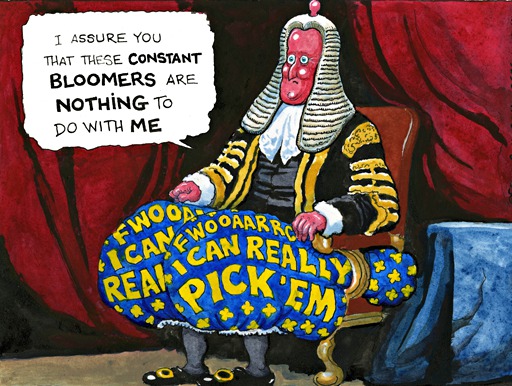
Not sure who would be a bigger disaster Cameron or Farage!
(Or Hazy one with Manuel as Minister for ??)
Fred1new
- 15 Jul 2014 09:11
- 43638 of 81564
Mind it is suggested that the old etonian club at No 10, is going to be changed into a club for tory harpies.
I wonder if Hairy one will be invited to join them.
ugggh!
The con party's response to the country's needs.
-----------
I wonder if Hairy one will be invited to join them.
ugggh!
The con party's response to the country's needs.
-----------
Fred1new
- 15 Jul 2014 09:55
- 43639 of 81564
Actually, I feel a bit sorry for Cameron.
He has such a bunch of lightweights to choose his next cock up from.
(Sorry, I meant cabinet. Didn't notice typing error.)
He has such a bunch of lightweights to choose his next cock up from.
(Sorry, I meant cabinet. Didn't notice typing error.)
Fred1new
- 15 Jul 2014 09:57
- 43640 of 81564
See inflation is up
Inflation rises to 1.9% in June.
http://www.bbc.co.uk/news/business-28308837
Perhaps, that is the damper on the housing market?
Inflation rises to 1.9% in June.
http://www.bbc.co.uk/news/business-28308837
Perhaps, that is the damper on the housing market?
| About MoneyAM | Ts and Cs | Privacy Policy | Investment Warning | Content Standards | Corporate Solutions | Advertise With Us | Site Map | © 2026 MoneyAM |
Register now for FREE
Share Prices,
Stock Quotes,
Charts, Bulletin Boards, Indices, Watchlists, Portfolio, Market News, Research
or see our Premium Services including Level 2, Terminal and much more.
 Follow us on Twitter