

| Home | Log In | Register | Our Services | My Account | Contact | Help |
You are NOT currently logged in
Register now or login to post to this thread.
THE TALK TO YOURSELF THREAD. (NOWT)
goldfinger

 - 09 Jun 2005 12:25


Thought Id start this one going because its rather dead on this board at the moment and I suppose all my usual muckers are either at the Stella tennis event watching Dim Tim (lose again) or at Henly Regatta eating cucumber sandwiches (they wish,...NOT).
Anyway please feel free to just talk to yourself blast away and let it go on any company or subject you wish. Just wish Id thought of this one before.
cheers GF.
Anyway please feel free to just talk to yourself blast away and let it go on any company or subject you wish. Just wish Id thought of this one before.
cheers GF.
Fred1new
- 27 Jun 2012 15:14
- 17361 of 81564
A possible resolution to the World Population may come from raising the economic expectancies, humane "welfare", educational standards and democratic standards of the poorer countries.
That would mean reduction of religious intolerances and practices, with the recognition of the human rights of women in general.
Economic expectancies will also have to moderated and more related to ultimate and realistic possibilities. But economic improvement of the poorer countries is the initiation of the other changes
(Also, needed is a change in values, and aspirations, which some of those within the richer and the poorer nations have.)
(Edited, as I couldn't understand what I had previously written,)
That would mean reduction of religious intolerances and practices, with the recognition of the human rights of women in general.
Economic expectancies will also have to moderated and more related to ultimate and realistic possibilities. But economic improvement of the poorer countries is the initiation of the other changes
(Also, needed is a change in values, and aspirations, which some of those within the richer and the poorer nations have.)
(Edited, as I couldn't understand what I had previously written,)
iturama - 27 Jun 2012 15:24 - 17362 of 81564
Dallas is returning, why not "Till death do us part" as well? We have our own Alf Garnett for the part..
aldwickk
- 27 Jun 2012 20:28
- 17363 of 81564
Alf Garnett was a Tory supporter , is son in law was labour. Who did you have in mind for the part ?
dreamcatcher
- 27 Jun 2012 20:31
- 17364 of 81564
Fred1new
- 27 Jun 2012 22:38
- 17365 of 81564
Ald,
It is an obvious job opportunity for you.
8-)
It is an obvious job opportunity for you.
8-)
iturama - 27 Jun 2012 22:39 - 17366 of 81564
I think Tanker would be a great Alf... As for Cherie Blair's scouser dad's part, how about John Bishop??
skinny
- 28 Jun 2012 05:24
- 17367 of 81564
Thames cable car opens for passengers
The new Thames cable car, spanning the river in east London, is set to open to the public later.
The Emirates Air Line, which links the O2 Arena in Greenwich with the ExCel exhibition centre at the Royal Docks, will open at 12:00 BST.
The service can carry up to 2,500 people an hour.
A single adult fare on the pay-as-you-go Oyster card will cost £3.20 while the cash fare will be £4.30, Transport for London (TfL) said.
The service will operate through the week from 07:00 BST until 21:00.
The new Thames cable car, spanning the river in east London, is set to open to the public later.
The Emirates Air Line, which links the O2 Arena in Greenwich with the ExCel exhibition centre at the Royal Docks, will open at 12:00 BST.
The service can carry up to 2,500 people an hour.
A single adult fare on the pay-as-you-go Oyster card will cost £3.20 while the cash fare will be £4.30, Transport for London (TfL) said.
The service will operate through the week from 07:00 BST until 21:00.
aldwickk
- 28 Jun 2012 08:23
- 17368 of 81564
I don't like John Bishop as a stand up comic
mnamreh - 28 Jun 2012 08:31 - 17369 of 81564
.
Fred1new
- 28 Jun 2012 09:22
- 17370 of 81564
N,
Have you developed a stutter or a stammer?
8-)
Have you developed a stutter or a stammer?
8-)
aldwickk
- 28 Jun 2012 09:24
- 17371 of 81564
Watched " A short history everything else " last night for the first time , was a bit put off by the title. But it was very funny.
That giant comedian [whats his name]on Have got new's 4u is very good .
That giant comedian [whats his name]on Have got new's 4u is very good .
TANKER - 28 Jun 2012 09:36 - 17372 of 81564
egypt read about those men ripping the clothes off a young girl and doing barbaric acts egypt is now a country to AVOID let them starve
mnamreh - 28 Jun 2012 09:52 - 17373 of 81564
.
TANKER - 28 Jun 2012 10:03 - 17374 of 81564
mna if it upsets you do not read it ,
it will make you sick if you are human .
EGYPT is a country now to avoid .
if you have the guts read the mail.
it will make you sick if you are human .
EGYPT is a country now to avoid .
if you have the guts read the mail.
skinny
- 28 Jun 2012 10:19
- 17375 of 81564
I guess this is what you mean.
Student journalist assaulted in Tahrir Square
I take it you read the whole article?
One of Smith's friends, Callum Paton, told CNN the mob dragged Smith naked across the ground before another group of men stepped in to protect her.
Read Natasha Smith's account.
"There were several moments at which I thought she was going to die," Paton said. "And I think that really the fact that we are still alive, and especially Natasha's still alive, was because there were so many people who were willing to help us and were willing to risk their own lives and put them in direct danger to get her out of that situation."
Student journalist assaulted in Tahrir Square
I take it you read the whole article?
One of Smith's friends, Callum Paton, told CNN the mob dragged Smith naked across the ground before another group of men stepped in to protect her.
Read Natasha Smith's account.
"There were several moments at which I thought she was going to die," Paton said. "And I think that really the fact that we are still alive, and especially Natasha's still alive, was because there were so many people who were willing to help us and were willing to risk their own lives and put them in direct danger to get her out of that situation."
mnamreh - 28 Jun 2012 10:20 - 17376 of 81564
.
Fred1new
- 28 Jun 2012 10:22
- 17377 of 81564
N,
-------------- to you!
. . . _ _ _ . . .
---------------------------
Two interesting programs relevant to present employment and social problems.
Can be down loaded for the car.
http://www.bbc.co.uk/radio/player/b01k2b12
Four Thought
Serial social entrepreneur Colin Crooks argues that politicians and the media are wrong to focus on youth unemployment.
Instead, he says, we should all be worried about the very high levels of persistent unemployment amongst the 'let-down generation' who were failed by poor education between the seventies and nineties. Teaching them the lessons of being in work, he argues, would not only benefit them, but their children, too.
And he believes that to make a meaningful impact in these unemployed people's lives, we should stop developing skills for jobs which often do not exist, and instead focus on creating real jobs where they live.
Four Thought is a series of talks which combine thought provoking ideas and engaging storytelling. Recorded in front of an audience at the RSA in London, speakers take to the stage to air their latest thinking on the trends, ideas, interests and passions that affect our culture and society.
Producer: Giles Edwards.
http://www.bbc.co.uk/radio/player/b01k29ph
The Prime Minister David Cameron has this week called for a radical shake up in the welfare state. This wasn't just a speech about benefits rates, or dole scroungers - the PM was going back to fundamental principles - what is social security for and who should it serve? To William Beveridge it was about eradicating evil - the "giant evils" of squalor, ignorance, want, idleness and disease. To David Cameron it is about encouraging citizens to do the right thing - to work, to save, to take personal responsibility. The speech and the row it is causing, exposes a profoundly moral divide. Should social benefit payments be the mechanism by which the state seeks greater social justice, or should they be a mechanism by which the state seeks to promote individual morals? On the one hand you have those who argue that it is the moral duty of those in society who are better off to help those less fortunate. The best mechanism to do that is through the state and the tax and benefit system - everyone contributes, everyone is entitled and social solidarity is the result. To others that creates a system that rewards the feckless and punishes the prudent. Or as high Tory thinker TE Utley more elegantly put it "an arrangement under which we all largely cease to be responsible for our own behaviour and in return become responsible for everyone else's." This battle between the "strivers" and the "skivers" has dogged arguments about the welfare state since the Poor Laws. Now the issue of inter-generational justice has complicated the rhetoric as it appears benefits paid to those under 25 could be scrapped first, while universal benefits to well off pensioners will be protected. So the Moral Maze this week is, what is the welfare state for and who should it help?
-------------- to you!
. . . _ _ _ . . .
---------------------------
Two interesting programs relevant to present employment and social problems.
Can be down loaded for the car.
http://www.bbc.co.uk/radio/player/b01k2b12
Four Thought
Serial social entrepreneur Colin Crooks argues that politicians and the media are wrong to focus on youth unemployment.
Instead, he says, we should all be worried about the very high levels of persistent unemployment amongst the 'let-down generation' who were failed by poor education between the seventies and nineties. Teaching them the lessons of being in work, he argues, would not only benefit them, but their children, too.
And he believes that to make a meaningful impact in these unemployed people's lives, we should stop developing skills for jobs which often do not exist, and instead focus on creating real jobs where they live.
Four Thought is a series of talks which combine thought provoking ideas and engaging storytelling. Recorded in front of an audience at the RSA in London, speakers take to the stage to air their latest thinking on the trends, ideas, interests and passions that affect our culture and society.
Producer: Giles Edwards.
http://www.bbc.co.uk/radio/player/b01k29ph
The Prime Minister David Cameron has this week called for a radical shake up in the welfare state. This wasn't just a speech about benefits rates, or dole scroungers - the PM was going back to fundamental principles - what is social security for and who should it serve? To William Beveridge it was about eradicating evil - the "giant evils" of squalor, ignorance, want, idleness and disease. To David Cameron it is about encouraging citizens to do the right thing - to work, to save, to take personal responsibility. The speech and the row it is causing, exposes a profoundly moral divide. Should social benefit payments be the mechanism by which the state seeks greater social justice, or should they be a mechanism by which the state seeks to promote individual morals? On the one hand you have those who argue that it is the moral duty of those in society who are better off to help those less fortunate. The best mechanism to do that is through the state and the tax and benefit system - everyone contributes, everyone is entitled and social solidarity is the result. To others that creates a system that rewards the feckless and punishes the prudent. Or as high Tory thinker TE Utley more elegantly put it "an arrangement under which we all largely cease to be responsible for our own behaviour and in return become responsible for everyone else's." This battle between the "strivers" and the "skivers" has dogged arguments about the welfare state since the Poor Laws. Now the issue of inter-generational justice has complicated the rhetoric as it appears benefits paid to those under 25 could be scrapped first, while universal benefits to well off pensioners will be protected. So the Moral Maze this week is, what is the welfare state for and who should it help?
mnamreh - 28 Jun 2012 10:27 - 17378 of 81564
.
dreamcatcher
- 28 Jun 2012 10:38
- 17379 of 81564
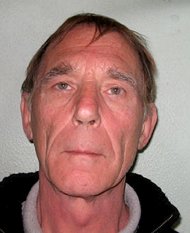 Do you believe it?
 ..Murderer escapes over prison wall
Press Association – 1 hour 4 minutes ago....
..
View Photo.Convicted murderer John Massey, 64, has escaped from HMP Pentonville in north Lo …
....A "potentially dangerous" murderer has gone on the run for the third time after escaping over the walls of Pentonville Prison using a makeshift rope.
John Massey, one of Britain's longest-serving prisoners, made off from the category B jail in Islington, north London, at around 6.30pm on Wednesday.
The 64-year-old used a makeshift rope to escape over a wall and was not spotted in time by prison officers, sources said.
..
skinny
- 28 Jun 2012 10:45
- 17380 of 81564
"Done...for you big boy"- how emails nailed Barclays
(Reuters) - "Done ... for you big boy," read a message sent by a Barclays (BARC.L) banker to one of the lender's traders, who had asked him to fix a key lending rate artificially low.
"Dude, I owe you big time! Come over one day after work and I'm opening a bottle of Bollinger," a trader from another firm emailed a banker at Barclays, showing his thanks for the rate set artificially low.
(Reuters) - "Done ... for you big boy," read a message sent by a Barclays (BARC.L) banker to one of the lender's traders, who had asked him to fix a key lending rate artificially low.
"Dude, I owe you big time! Come over one day after work and I'm opening a bottle of Bollinger," a trader from another firm emailed a banker at Barclays, showing his thanks for the rate set artificially low.
| About MoneyAM | Ts and Cs | Privacy Policy | Investment Warning | Content Standards | Corporate Solutions | Advertise With Us | Site Map | © 2026 MoneyAM |
Register now for FREE
Share Prices,
Stock Quotes,
Charts, Bulletin Boards, Indices, Watchlists, Portfolio, Market News, Research
or see our Premium Services including Level 2, Terminal and much more.
 Follow us on Twitter