

| Home | Log In | Register | Our Services | My Account | Contact | Help |
You are NOT currently logged in
Register now or login to post to this thread.
THE TALK TO YOURSELF THREAD. (NOWT)
goldfinger

 - 09 Jun 2005 12:25


Thought Id start this one going because its rather dead on this board at the moment and I suppose all my usual muckers are either at the Stella tennis event watching Dim Tim (lose again) or at Henly Regatta eating cucumber sandwiches (they wish,...NOT).
Anyway please feel free to just talk to yourself blast away and let it go on any company or subject you wish. Just wish Id thought of this one before.
cheers GF.
Anyway please feel free to just talk to yourself blast away and let it go on any company or subject you wish. Just wish Id thought of this one before.
cheers GF.
doodlebug4 - 26 Oct 2014 17:21 - 48543 of 81564
The SNP will do whatever they think is best for Scotland, so you are right Haystack.
Chris Carson
- 26 Oct 2014 17:24
- 48544 of 81564
By Andrew Gilligan
7:05AM GMT 26 Oct 2014
CommentsComments
The unlikeliest member of France’s super-rich trundled his wheelbarrow full of potatoes from his smallholding to his attractive, but modest, wood‑and-brick house. Down the road, one of René Allier’s equally fat‑cat neighbours set off in his ancient boat to catch some fish. If he managed to sell them on his market stall, he might make enough to pay his wealth tax.
Mr Allier and his wife, Jacqueline, are not the kind of plutocrats against whom students go on demos. Their van is old and small. Their income is a pension of €600 (£450) a month. Their hands are coarsened by decades of manual work. “We’ve never had a holiday, ever,” he said.
But to their horror, the Alliers, along with 500 other peasant farmers, fishermen and smallholders on the Île de Ré, off France’s Atlantic coast, have in recent years found themselves classed as “wealthy” – and liable for vast bills under the country’s version of the mansion tax. Their fate is a sobering reminder of the perils that may lie ahead if Labour leader Ed Miliband ever tried something similar in Britain.
The problem on the Île de Ré, favourite holiday island for France’s monied class, is a new bridge to the mainland. Opened in 1988, it dramatically improved access for the designer-jeans crowd and exponentially boosted the value of local land.
Plots like the Alliers’, worth perhaps £10 a square metre when they started farming it, are now valued at 40 times as much – making the couple, on paper, euro millionaires. They must, therefore, pay France’s wealth tax, the ISF, charged at up to 1.5 per cent a year on those with assets totalling over €1.3 million (£1.1 million). That includes your main home, land, jewellery, money and even furniture.
Related Articles
The Pride of Britain Awards 2014 - London...James Cracknell and wife Beverley Turner arriving for The Pride of Britain Awards 2014, at Grosvenor House, Park Lane, London. PRESS ASSOCIATION Photo. Picture date: Monday October 6, 2014. See PA story PRESS Awards. Photo credit should read: Ian West/PA Wire
People diary: Has James Cracknell finally found a seat in Sussex?
26 Oct 2014
France is a nation in decline - and Britain could be next
19 Oct 2014
'We are giving the Afghans a chance at a better life'
26 Oct 2014
How did France get it so wrong?
12 Oct 2014
Mark Radcliffe recalls childhood summer
Sponsored by Esso
The Alliers, pensioners on fixed incomes, don’t have any jewellery, or any money. “Our wheelbarrows, they don’t serve to carry wads of cash,” says Mr Allier. These days, they don’t have much land, either. Over the past decade, they’ve sold nearly all of it to pay the wealth taxes that regularly exceeded their entire income. They only have one field left, though if prices keep rising, they may have to get rid of that, too, to hold on to their house.
Valérie Constancin, president of the Association for the Defence of the Inhabitants of the Île de Ré, says that many of the hardest cases on the island arose when people suddenly came to the authorities’ attention – perhaps because a family member had died, or they needed permission for some change to their land. Then they were hit with gigantic bills for years of back taxes, often with penalties for non‑disclosure of “wealth” that they never realised they had.
“They don’t know they have to pay so they don’t do the things they need to minimise it,” she said. “One elderly childminder was suddenly presented with a bill for €55,000 (£45,000) when her husband died. Those were her life savings. She had to pay and she is wondering how she will pay next year now. Our children will have to sell up and leave. We’ll end up as a bird sanctuary.”
In French, ISF means “solidarity tax on fortunes”. But there is very little solidarity, and the number of actual fortunes caught by it is small. As you would expect, anyone with real money finds ways round the tax. Its burden falls instead on those of middling income who cannot afford to pay clever advisers.
The wealth tax, first introduced by the Mitterrand government in 1981 and in its present form in 1988, tends to yo-yo, with Right-wing governments reducing it and Left-wing governments putting it up. In 2012, President François Hollande’s socialists sharply increased the rates and bands, dragging in more people. In 2001, only 281,000 paid it. Eleven years later, that had more than doubled, to 600,000.
In 2012, Gilles Carrez, chairman of the National Assembly finance committee, estimated that “several hundred, perhaps as many as a thousand” of those people – peasants on the Île de Ré and a few other fashionable holiday spots, pensioners with expensive flats in central Paris – would be forced to pay more than 100 per cent of their income in taxes. A few would have to pay up to 400 per cent, he said. (A “plafonnement”, or cap, has since been introduced, theoretically limiting total taxes to three quarters of income.)
But even for the more typical ISF payer – a middle manager, say, with a five-bedroom house in one of the capital’s better suburbs – the tax is a curse.
“I have already paid taxes on the income I used to buy my place, and again on the savings I built up towards it,” says Pierre Perrin, from Bougival, a bourgeois part of Paris. “Each year we have to declare everything we have to the state, including my wife’s jewellery, our cars and the contents of our wine cellar. It is a major invasion of privacy, as much as anything.”
French newspapers and tabloid websites lap up the annual league tables, published by the tax authorities, of how many people in each individual neighbourhood are liable for ISF and what their assets are.
The wheezes used to avoid paying the tax are, of course, manifold. If you’ve ever wondered why French people have so many antiques and works of art in their homes, the reason is not just Gallic good taste. Assets over 100 years old, or created by hand, do not count towards the ISF. Other taxpayers make temporary “gifts” of their assets to relatives, without actually having to give them away for ever – though this procedure involves entering another potential fiscal whirlpool, France’s “gift tax”.
Then there are the more advanced forms of avoidance – like those practised by, well, one François Hollande. He may have declared his support for wealth taxes because, in his words, he “hates the rich”. But the then future president and his then partner, Ségolène Royal, also a leading French politician, were monstered by the press in 2007 after it emerged that they had dramatically undervalued their own personal property empire in order to minimise their ISF.
The couple valued what they described as a “modest villa” at Mougins, on the Riviera near Cannes – complete with swimming pool, garden and nice view of the Med – at just €270,000 (then £192,000), a figure greeted with a mixture of disbelief and laughter by locals. A panel of estate agents convened by the investigative newspaper, Le Canard enchaîné, said it was worth three times as much.
Their flat in the expensive Paris suburb of Boulogne-Billancourt was declared to the tax authorities at £535,000, when it was actually worth £850,000. Then there was a third property they used in northern France. Mr Hollande and Ms Royal escaped ISF on this altogether by transferring it to a special property company – owned by themselves and Mr Hollande’s parents. In total, it was estimated, French politics’ premier power couple should have paid £4,300 in ISF that year. They actually paid £616.
Ms Royal’s defence, incidentally, was that the Mougins villa was a “family house, bought more than 20 years ago”. That is, of course, the precise frustration expressed by thousands of other middle-class people across France – but then, they do not support the wealth tax.
After Mr Hollande acceded to the presidency, one of his ministers was found to have taken an even more direct approach to avoiding his dues. In April last year, after flatly denying it for months, Jérôme Cahuzac admitted that he had, for two decades, used a secret bank account at UBS in Geneva to avoid paying French tax. His role in Mr Hollande’s government? He was the minister responsible for tackling tax avoidance.
Often called the “Incitement de Sortir de la France”, or incentive to leave the country, the ISF may well have played its part in France’s current economic stagnation. Tens of thousands of French entrepreneurs, driven out to London, the Far East or the US by the policy, are creating wealth for other countries, not their own.
The deterrent to foreign investors is also substantial; some campaigners estimate that it has cost France 0.3 per cent of annual growth. When your total growth this year is forecast to be only 0.4 per cent (Britain’s is predicted to be 3.2 per cent), that may not be something the French economy can afford.
Yet just as important, the ISF is morally as well as economically counterproductive. It makes victims of the poor, and hypocrites of the rich. Mr Miliband should take note.
Haystack
- 26 Oct 2014 17:35
- 48545 of 81564
France has always had a destructive tax system. On your income tax form there is a section called Visible Signs of Wealth. You have to list any goods such as jewellery, cars, boats, extra homes etc over a certain value. This came in a long time ago and was responsiblefor the death of the French luxury car business almost overnight. Names like Delage, Delahaye, Hotchkiss, Talbot, Farman, Panhard, Salmson, Bugatti, Hispanic Suiza, Voisin and many other have gone.
Renault, Peugeot and Citroen also made luxury cars but stopped.France was second in the world after the US for numbers built. For luxury brand cars they were number one.
Renault, Peugeot and Citroen also made luxury cars but stopped.France was second in the world after the US for numbers built. For luxury brand cars they were number one.
doodlebug4 - 26 Oct 2014 17:43 - 48546 of 81564
I often wondered why the French drive round in bashed up old cars! Visible signs of wealth, does that include Rolex watches or an expensive kit of golf clubs?:-)
Haystack
- 26 Oct 2014 17:59
- 48547 of 81564
Here are a few French car makers that you may not have heard of:-
A
Able (1920–1927)
Ader (1900–1907)
AER (1930)
AEM(1920–1924)
Aérocaréne (1947)
Ageron (1910–1914)
Ailloud (1898–1904)
Ajams (1920)
Ajax (1913–1919)
AL (1907–1909)
Alamagny (1947–1948)
Alba (1913–1928)
Albatros (1912)
Alcyon (1906–1929)
Alda (1912–1922)
Allard-Latour (1899–1902)
Alliance (1905–1908)
Alphi (1929–1931)
Alma (1926–1927)
Alva (1913–1923)
AM (1906–1915)
Amédée Bollée (1885–1921)
Amilcar (1921–1939)
Ampère (1906–1909)
Anderson Electric (1912)
Andre Py (1899)
Antoinette (1906–1907)
Arbel (1951–1959) also known as Loubiére, Loubiéres, Symetric, Symetric-Arbel, or Symetric-Paris
Ardent (1900–1901)
Ardex (1934-c.1937; 1952–1955)
Ariane (1907)
Ariès (1903–1938)
Arista (1912–1915)
Arista (1952–1967)
Arola (1976–1983)
Arzac (1926–1927)
AS (1924–1928)
ASS (1919–1920)
Astatic (1920–1922)
Aster (1900–1910)
Astra (1922)
Astresse (1898)
Ateliers d’Automobiles et d’Aviation (AAA) (1919-1920)
Atla (1957–1959)
Atlas (1951)
Audibert & Lavirotte (1894–1901)
Auge (1898-c.1901)
Austral (1907)
Autobleu (1953–1957)
Automoto (1901–1907)
Avions Voisin (1905-1946)
Avolette (1955–1959)
B
Ballot (1921–1932)
Barré (1899–1930)
Beck (1920–1922)
Bédélia (1910–1925)
Bellanger (1912–1925)
Bel Motors (1976-1980)
Benjamin (1921–1931)
Berliet (1895–1939)
Bernardet (1946–1950)
Bignan (1918–1930)
Blériot (1921–1922)
BNC (1923–1931)
Boitel (1946–1949)
Bolide (1899–1907)
Bonnet (1961–1964)
Bouquet, Garcin & Schivre/BGS (1899–1906)
Brasier (1905–1926)
Brouhot (1898–1911)
Bucciali (1922–1933)
Buchet (1910–1930)
Bugatti (1909–1963)
Butterosi (1919–1924)
C
Cambier (1897-c.1905)
Castoldi (1900)
Cedre (1975-1987)
CD (1962–1965)
CG (Chappe et Gessalin) (1966–1974)
CGV (Charron, Girardot et Voigt) (1901–1906)
Chaigneau-Brasier (1926–1930)
Chainless (1900–1903)
Charlon (1905–1906)
Charron (1907–1930)
Chenard-Walcker (1900–1946)
CHS (1945–1946)
Clément-Bayard (1903–1922)
Coadou et Fleury (1921-c.1935)
Cochotte (1899)
Cognet de Seynes (1912–1926)
Cohendet (1898–1914)
Colda (1921–1922)
Constantinesco (1926–1928)
Corre (1901–1907)
Cottereau (1898–1910)
Cottin & Desgouttes (1905–1931)
Cournil (1960–1984)
Couteret (1907)
Couverchel (1905–1907)
Créanche (1899–1906)
Crespelle (1906–1923)
Croissant (1920–1922)
Culmen (c.1909)
D
Dalifol (1896)
Dalifol & Thomas (1896–1898)
Damaizin & Pujos (1910)
Dangel (1968–1971)
Danvignes (1937–1939)
Darl'mat (1936–1950)
Darmont (1921–1939)
Darracq (1896–1920)
David & Bourgeois (1898)
DB (1938–1961)
De Bazelaire (1908–1928)
De Cezac (1922–1927)
De Dietrich (1897–1905)
De Dion-Bouton (1883–1932)
De Marcay (1920–1922)
De Riancey (1898-c.1901)
De Sanzy (1924)
Decauville (1898–1910)
Deguingand (1927–1930)
Deho (1946–1948)
Delage (1905–1953)
Delahaye (1895–1954)
Delamare-Deboutteville (1883–1887)
Delaugère (1898–1926)
Delaunay-Belleville (1904–1948)
Delfosse (1922–1926)
Demeester (1906–1914)
Denis de Boisse (1901–1904)
Derby (1921–1936)
Desmoulins (1920–1923)
Dewald (1902–1926)
Dinin Alfred 1904
DFP (1906–1926)
Diederichs (1912–1914)
Dolo (1947–1948)
Donnet (1928–1936)
Donnet-Zedel (1924–1928)
Dumas (1902–1903)
Dumont (1912–1913)
Duport (1977–1994)
D’Yrsan (1923–1930)
E
EHP (1921–1929)
Electricar (1919–1924)
Elfe (1920–1925)
Elgé (1868–1942)
Elysée (1921–1925)
Enders (1911–1923)
Esculape (1899)
Eudelin (c.1905-1908)
Eureka (1906–1909)
F
Facel Vega (1954–1964)
FAL (1907)
Farman (1919–1931)
Favier (c.1925-1930)
FL (1909–1914)
Fonlupt (1920–1922)
Fouillaron (1900–1914)
Fournier (1913–1924)
G
Galy (1954–1957)
Galba (1929-1930)
Gardner-Serpollet (1900–1907)
Gautier–Wehrlé (1894–1900)
Georges Irat (1921–1953)
Georges Richard (1897–1902)
Georges Roy (1906–1929)
Gillet-Forest (1900–1907)
Gladiator (1896–1920)
Gobron-Brillié (1898–1930)
Gordini (1951–1957)
Goujon (1896–1901)
GRAC (1964–1974)
Gregoire (1904–1924)
Grillet (Company name. Cars sold under the name "Ryjan") (1920-1926)
Grivel (1897)
Guerraz (1901)
Guerry et Bourguignon (1907)
Guyot Spéciale (1925–1931)
H
Hautier (1899–1905)
Hédéa (1912–24)
Heinis (1925–1930)
Helbé (1905–1907)
Henou (1923)
Henry Bauchet (1903)
Henry-Dubray (1901)
Hérald (1901–1906)
Hinstin (1921–1926)
Hispano-Suiza (1911–1938)
Hommell (1994–2003)
Hotchkiss (1903–1955)
Hrubon (1980–1988)
Hurtu (1896–1930)
I
Inaltera (1976-1978)
Induco (1921–1924)
Inter (1953–1956)
J
J-P Wimille (1948–1949)
Jack Sport (1925–1930)
Janémian (1920–1923)
Janoir (1921–1922)
Janvier (1903–1904)
Jean-Bart (1907)
Jean Gras (1924–1927)
Jeantaud (1893–1906)
JG Sport (1922–1923)
Jidé (1969–1974; 1977–1981)
Jouffret (1920–1926)
Jousset (1924–1928)
Jouvie (1913–1914)
Juzan (1897)
K
Kevah (1920–1924)
Koch (1898–1901)
Korn et Latil (1901–1902)
Kriéger (1897–1908)
KVS (1976-c.1984)
L
La Buire (1904–1930)
La Confortable (c.1920)
Lacoste & Battmann (1897–1910)
Lafitte (1923–1924)
Lahaussois (1907)
Landulet (2014)
La Licorne (1907–1950)
L'Alkolumine (1899)
La Lorraine (1899–1902)
Lambert (1926–1953)
La Nef (c.1901-1914)
La Perle (1913–1927)
La Ponette (1909–1925)
La Radieuse (1907)
L'Ardennais (1901-c.1903)
La Roulette (1912–1914)
La Va Bon Train (1904–1914)
Lavie (c.1904)
Le Blon (1898)
Le Cabri (1924–1925)
Le Favori (1921–1924)
Léon Bollée (1896–1931)
Le Piaf (1951–1952)
Le Pratic (1908)
Le Roitelet (1921–1924)
Leyat (1919–1927)
Le Zèbre (1909–1931)
Linon (1900–1914)
Lion-Peugeot (1905–1915)
Lombard (1927–1929)
Lorraine-Dietrich (1905–1934)
Louis Chenard (1920–1932)
Luc Court (1899–1936)
Lufbery (1898-c.1902)
Lurquin-Coudert (1907–1914)
Lutier (1907)
Luxior (1912–1914)
M
Madoz (1921)
Maillard (1900-c.1903)
Maison Parisienne (1897-c.1898)
Majola (1911–1928)
Major (1920–1923; 1932)
Malicet et Blin/M&B (1897-c.1903)
Malliary (1901)
Marathon (1953–1955)
Marbais and Lasnier (1906-1906)
Marcadier (1963–1983)
Marden (1975–1992)
Margaria (1910–1912)
Marguerite (1922–1928)
Marie de Bagneux (1907)
Marot-Gardon (1899–1904)
Marsonetto (1957–1959; 1965–1972)
Matford (1934–1940)
Mathis (1919–1935; 1945–1950)
Matra (1965–1984)
Messier (1924–1931)
Michel Irat (1929–1930)
Mildé (1898–1909)
Millot (1901–1902)
MLB (1894–1902)
Mochet (1924–1958)
Mom (1906–1907)
Monet (1920–1939)
Monica (1971–1975)
Monnard (1899)
Monocar (1936–1939)
Monotrace (1924–1930)
Montier (1920–1934)
Montier & Gillet (1895–1898)
Morisse (1899–1914)
Mors (1895–1925; 1941–1943)
Motobloc (1901–1930)
Mototri Contal (1907–1908)
N
Nanceene (1900-c.1903)
Napoleon (1903)
Naptholette (1899)
Nardini (1914)
O
Obus (1907–1908)
Octo (1921-1928)
Oméga-Six (1922–1930)
Otto (1900–1914)
Ours (1906–1909)
P
Panhard/Panhard & Levassor (1890–1967)
Patin (1899–1900)
Pilain (1896–1920)
Plasson (1910)
Poinard
Ponts-Moteurs (1912–1913)
Populaire (1899)
Poron (1898)
Porthos (1906–1914)
Prod'homme (1907–1908)
Prosper-Lambert (1901–1906)
Q
Quo Vadis (1921–1923)
R
Radior (1920–1922)
Rally (1921–1933)
Raouval (1899–1902)
Ratier (1926–1930)
Ravailler (1907)
Ravel (1900–1902)
Ravel (1923–1929)
Rebour (1905–1908)
Reyonnah (1950–1954)
Reyrol (1900–1930)
Renault
Richard-Brasier (1902–1905)
Robert Serf (1925–1935)
Rochet-Schneider (1894–1932)
Roger (1888–1896)
Rolland-Pilain (1907–1931)
Rolux (1938–1952)
Rosengart (1928–1955)
Roussel (1908–1914)
Roussey (1949–1951)
Rouxel (1899–1900)
Rovin (1946–1951)
Ruby (1910-c.1922)
Ryjan (1920-1926)
S
Salmson (1921–1957)
Sandford (1923–1939)
Santax (1920–1927)
SARA (1923–1930)
Sautter-Harlé (1907–1912)
SCAP (1912–1929)
SCAR (1906–1915)
Scora (1974–present)
Secqueville-Hoyau (1919-1924)
Sénéchal (1921–1927)
Sensaud de Lavaud (1926–1928)
SERA (1959–1961)
Sidéa (1912–1924)
Sigma (1913–1928)
Silva-Coroner (1927)
SIMA-Violet (1924–1929)
Simca (1935–1980)
Simplicia (1910)
Sinpar (1907–1914)
Siscart (1908–1909)
Sixcyl (1907–1908)
Sizaire-Berwick (1913–1927)
Sizaire Frères (1923–1929)
Sizaire-Naudin (1905–1921)
Soncin (1900–1902)
Solanet (1921)
Soriano-Pedroso (1919–1924)
SOVAM (1965–1969)
SPAG (1927–1928)
Stabilia (1907–1930)
Stimula (1907–1914)
Stimula (1978–1982)
Suère (1909-1931)
Suncar (1980-c.1986)
T
Talbot (1919–1932; 1979–1986)
Talbot-Lago (1932–1959)
Th. Schneider (1910–1931)
Thomson (1913–1928)
Tourey (1898)
Tracford (1933–1935)
Tracta (1926–1934)
Triouleyre (1896–1898)
Tuar (1913-1925)
Turcat-Méry (1899–1928)
Turgan-Foy (1899–1906)
U
Unic (1904–1939)
Underberg, of Nantes (?-?)s:Popular Science Monthly/Volume 57/October 1900/Gasoline Automobiles
Urric (1905–1906)
Utilis (1921–1924)
V
Vaillant (1922–1924)
Vallée (1895–1902)
VELAM
Vermorel (1908-1930 as an automobile producer)
Vernandi (1928-1929)
Villard (1925-1935)
Vinot-Deguingand (1901-1927)
Voisin
volvo
Z
Zédel (1905-1920)
Zeiller & Fournier (1920-1924)
Zénia (1913-1924)
A
Able (1920–1927)
Ader (1900–1907)
AER (1930)
AEM(1920–1924)
Aérocaréne (1947)
Ageron (1910–1914)
Ailloud (1898–1904)
Ajams (1920)
Ajax (1913–1919)
AL (1907–1909)
Alamagny (1947–1948)
Alba (1913–1928)
Albatros (1912)
Alcyon (1906–1929)
Alda (1912–1922)
Allard-Latour (1899–1902)
Alliance (1905–1908)
Alphi (1929–1931)
Alma (1926–1927)
Alva (1913–1923)
AM (1906–1915)
Amédée Bollée (1885–1921)
Amilcar (1921–1939)
Ampère (1906–1909)
Anderson Electric (1912)
Andre Py (1899)
Antoinette (1906–1907)
Arbel (1951–1959) also known as Loubiére, Loubiéres, Symetric, Symetric-Arbel, or Symetric-Paris
Ardent (1900–1901)
Ardex (1934-c.1937; 1952–1955)
Ariane (1907)
Ariès (1903–1938)
Arista (1912–1915)
Arista (1952–1967)
Arola (1976–1983)
Arzac (1926–1927)
AS (1924–1928)
ASS (1919–1920)
Astatic (1920–1922)
Aster (1900–1910)
Astra (1922)
Astresse (1898)
Ateliers d’Automobiles et d’Aviation (AAA) (1919-1920)
Atla (1957–1959)
Atlas (1951)
Audibert & Lavirotte (1894–1901)
Auge (1898-c.1901)
Austral (1907)
Autobleu (1953–1957)
Automoto (1901–1907)
Avions Voisin (1905-1946)
Avolette (1955–1959)
B
Ballot (1921–1932)
Barré (1899–1930)
Beck (1920–1922)
Bédélia (1910–1925)
Bellanger (1912–1925)
Bel Motors (1976-1980)
Benjamin (1921–1931)
Berliet (1895–1939)
Bernardet (1946–1950)
Bignan (1918–1930)
Blériot (1921–1922)
BNC (1923–1931)
Boitel (1946–1949)
Bolide (1899–1907)
Bonnet (1961–1964)
Bouquet, Garcin & Schivre/BGS (1899–1906)
Brasier (1905–1926)
Brouhot (1898–1911)
Bucciali (1922–1933)
Buchet (1910–1930)
Bugatti (1909–1963)
Butterosi (1919–1924)
C
Cambier (1897-c.1905)
Castoldi (1900)
Cedre (1975-1987)
CD (1962–1965)
CG (Chappe et Gessalin) (1966–1974)
CGV (Charron, Girardot et Voigt) (1901–1906)
Chaigneau-Brasier (1926–1930)
Chainless (1900–1903)
Charlon (1905–1906)
Charron (1907–1930)
Chenard-Walcker (1900–1946)
CHS (1945–1946)
Clément-Bayard (1903–1922)
Coadou et Fleury (1921-c.1935)
Cochotte (1899)
Cognet de Seynes (1912–1926)
Cohendet (1898–1914)
Colda (1921–1922)
Constantinesco (1926–1928)
Corre (1901–1907)
Cottereau (1898–1910)
Cottin & Desgouttes (1905–1931)
Cournil (1960–1984)
Couteret (1907)
Couverchel (1905–1907)
Créanche (1899–1906)
Crespelle (1906–1923)
Croissant (1920–1922)
Culmen (c.1909)
D
Dalifol (1896)
Dalifol & Thomas (1896–1898)
Damaizin & Pujos (1910)
Dangel (1968–1971)
Danvignes (1937–1939)
Darl'mat (1936–1950)
Darmont (1921–1939)
Darracq (1896–1920)
David & Bourgeois (1898)
DB (1938–1961)
De Bazelaire (1908–1928)
De Cezac (1922–1927)
De Dietrich (1897–1905)
De Dion-Bouton (1883–1932)
De Marcay (1920–1922)
De Riancey (1898-c.1901)
De Sanzy (1924)
Decauville (1898–1910)
Deguingand (1927–1930)
Deho (1946–1948)
Delage (1905–1953)
Delahaye (1895–1954)
Delamare-Deboutteville (1883–1887)
Delaugère (1898–1926)
Delaunay-Belleville (1904–1948)
Delfosse (1922–1926)
Demeester (1906–1914)
Denis de Boisse (1901–1904)
Derby (1921–1936)
Desmoulins (1920–1923)
Dewald (1902–1926)
Dinin Alfred 1904
DFP (1906–1926)
Diederichs (1912–1914)
Dolo (1947–1948)
Donnet (1928–1936)
Donnet-Zedel (1924–1928)
Dumas (1902–1903)
Dumont (1912–1913)
Duport (1977–1994)
D’Yrsan (1923–1930)
E
EHP (1921–1929)
Electricar (1919–1924)
Elfe (1920–1925)
Elgé (1868–1942)
Elysée (1921–1925)
Enders (1911–1923)
Esculape (1899)
Eudelin (c.1905-1908)
Eureka (1906–1909)
F
Facel Vega (1954–1964)
FAL (1907)
Farman (1919–1931)
Favier (c.1925-1930)
FL (1909–1914)
Fonlupt (1920–1922)
Fouillaron (1900–1914)
Fournier (1913–1924)
G
Galy (1954–1957)
Galba (1929-1930)
Gardner-Serpollet (1900–1907)
Gautier–Wehrlé (1894–1900)
Georges Irat (1921–1953)
Georges Richard (1897–1902)
Georges Roy (1906–1929)
Gillet-Forest (1900–1907)
Gladiator (1896–1920)
Gobron-Brillié (1898–1930)
Gordini (1951–1957)
Goujon (1896–1901)
GRAC (1964–1974)
Gregoire (1904–1924)
Grillet (Company name. Cars sold under the name "Ryjan") (1920-1926)
Grivel (1897)
Guerraz (1901)
Guerry et Bourguignon (1907)
Guyot Spéciale (1925–1931)
H
Hautier (1899–1905)
Hédéa (1912–24)
Heinis (1925–1930)
Helbé (1905–1907)
Henou (1923)
Henry Bauchet (1903)
Henry-Dubray (1901)
Hérald (1901–1906)
Hinstin (1921–1926)
Hispano-Suiza (1911–1938)
Hommell (1994–2003)
Hotchkiss (1903–1955)
Hrubon (1980–1988)
Hurtu (1896–1930)
I
Inaltera (1976-1978)
Induco (1921–1924)
Inter (1953–1956)
J
J-P Wimille (1948–1949)
Jack Sport (1925–1930)
Janémian (1920–1923)
Janoir (1921–1922)
Janvier (1903–1904)
Jean-Bart (1907)
Jean Gras (1924–1927)
Jeantaud (1893–1906)
JG Sport (1922–1923)
Jidé (1969–1974; 1977–1981)
Jouffret (1920–1926)
Jousset (1924–1928)
Jouvie (1913–1914)
Juzan (1897)
K
Kevah (1920–1924)
Koch (1898–1901)
Korn et Latil (1901–1902)
Kriéger (1897–1908)
KVS (1976-c.1984)
L
La Buire (1904–1930)
La Confortable (c.1920)
Lacoste & Battmann (1897–1910)
Lafitte (1923–1924)
Lahaussois (1907)
Landulet (2014)
La Licorne (1907–1950)
L'Alkolumine (1899)
La Lorraine (1899–1902)
Lambert (1926–1953)
La Nef (c.1901-1914)
La Perle (1913–1927)
La Ponette (1909–1925)
La Radieuse (1907)
L'Ardennais (1901-c.1903)
La Roulette (1912–1914)
La Va Bon Train (1904–1914)
Lavie (c.1904)
Le Blon (1898)
Le Cabri (1924–1925)
Le Favori (1921–1924)
Léon Bollée (1896–1931)
Le Piaf (1951–1952)
Le Pratic (1908)
Le Roitelet (1921–1924)
Leyat (1919–1927)
Le Zèbre (1909–1931)
Linon (1900–1914)
Lion-Peugeot (1905–1915)
Lombard (1927–1929)
Lorraine-Dietrich (1905–1934)
Louis Chenard (1920–1932)
Luc Court (1899–1936)
Lufbery (1898-c.1902)
Lurquin-Coudert (1907–1914)
Lutier (1907)
Luxior (1912–1914)
M
Madoz (1921)
Maillard (1900-c.1903)
Maison Parisienne (1897-c.1898)
Majola (1911–1928)
Major (1920–1923; 1932)
Malicet et Blin/M&B (1897-c.1903)
Malliary (1901)
Marathon (1953–1955)
Marbais and Lasnier (1906-1906)
Marcadier (1963–1983)
Marden (1975–1992)
Margaria (1910–1912)
Marguerite (1922–1928)
Marie de Bagneux (1907)
Marot-Gardon (1899–1904)
Marsonetto (1957–1959; 1965–1972)
Matford (1934–1940)
Mathis (1919–1935; 1945–1950)
Matra (1965–1984)
Messier (1924–1931)
Michel Irat (1929–1930)
Mildé (1898–1909)
Millot (1901–1902)
MLB (1894–1902)
Mochet (1924–1958)
Mom (1906–1907)
Monet (1920–1939)
Monica (1971–1975)
Monnard (1899)
Monocar (1936–1939)
Monotrace (1924–1930)
Montier (1920–1934)
Montier & Gillet (1895–1898)
Morisse (1899–1914)
Mors (1895–1925; 1941–1943)
Motobloc (1901–1930)
Mototri Contal (1907–1908)
N
Nanceene (1900-c.1903)
Napoleon (1903)
Naptholette (1899)
Nardini (1914)
O
Obus (1907–1908)
Octo (1921-1928)
Oméga-Six (1922–1930)
Otto (1900–1914)
Ours (1906–1909)
P
Panhard/Panhard & Levassor (1890–1967)
Patin (1899–1900)
Pilain (1896–1920)
Plasson (1910)
Poinard
Ponts-Moteurs (1912–1913)
Populaire (1899)
Poron (1898)
Porthos (1906–1914)
Prod'homme (1907–1908)
Prosper-Lambert (1901–1906)
Q
Quo Vadis (1921–1923)
R
Radior (1920–1922)
Rally (1921–1933)
Raouval (1899–1902)
Ratier (1926–1930)
Ravailler (1907)
Ravel (1900–1902)
Ravel (1923–1929)
Rebour (1905–1908)
Reyonnah (1950–1954)
Reyrol (1900–1930)
Renault
Richard-Brasier (1902–1905)
Robert Serf (1925–1935)
Rochet-Schneider (1894–1932)
Roger (1888–1896)
Rolland-Pilain (1907–1931)
Rolux (1938–1952)
Rosengart (1928–1955)
Roussel (1908–1914)
Roussey (1949–1951)
Rouxel (1899–1900)
Rovin (1946–1951)
Ruby (1910-c.1922)
Ryjan (1920-1926)
S
Salmson (1921–1957)
Sandford (1923–1939)
Santax (1920–1927)
SARA (1923–1930)
Sautter-Harlé (1907–1912)
SCAP (1912–1929)
SCAR (1906–1915)
Scora (1974–present)
Secqueville-Hoyau (1919-1924)
Sénéchal (1921–1927)
Sensaud de Lavaud (1926–1928)
SERA (1959–1961)
Sidéa (1912–1924)
Sigma (1913–1928)
Silva-Coroner (1927)
SIMA-Violet (1924–1929)
Simca (1935–1980)
Simplicia (1910)
Sinpar (1907–1914)
Siscart (1908–1909)
Sixcyl (1907–1908)
Sizaire-Berwick (1913–1927)
Sizaire Frères (1923–1929)
Sizaire-Naudin (1905–1921)
Soncin (1900–1902)
Solanet (1921)
Soriano-Pedroso (1919–1924)
SOVAM (1965–1969)
SPAG (1927–1928)
Stabilia (1907–1930)
Stimula (1907–1914)
Stimula (1978–1982)
Suère (1909-1931)
Suncar (1980-c.1986)
T
Talbot (1919–1932; 1979–1986)
Talbot-Lago (1932–1959)
Th. Schneider (1910–1931)
Thomson (1913–1928)
Tourey (1898)
Tracford (1933–1935)
Tracta (1926–1934)
Triouleyre (1896–1898)
Tuar (1913-1925)
Turcat-Méry (1899–1928)
Turgan-Foy (1899–1906)
U
Unic (1904–1939)
Underberg, of Nantes (?-?)s:Popular Science Monthly/Volume 57/October 1900/Gasoline Automobiles
Urric (1905–1906)
Utilis (1921–1924)
V
Vaillant (1922–1924)
Vallée (1895–1902)
VELAM
Vermorel (1908-1930 as an automobile producer)
Vernandi (1928-1929)
Villard (1925-1935)
Vinot-Deguingand (1901-1927)
Voisin
volvo
Z
Zédel (1905-1920)
Zeiller & Fournier (1920-1924)
Zénia (1913-1924)
doodlebug4 - 26 Oct 2014 18:03 - 48548 of 81564
I thought Volvo were/are Swedish?
MaxK - 26 Oct 2014 18:04 - 48549 of 81564
They are!
doodlebug4 - 26 Oct 2014 18:09 - 48550 of 81564
Perhaps Haystack was just checking to see if we actually read his posts!
MaxK - 26 Oct 2014 18:10 - 48551 of 81564
lol
Haystack
- 26 Oct 2014 18:10
- 48552 of 81564
I think there was an early French car maker called Volvo. It is a natural name as it is Latin for I roll
Haystack
- 26 Oct 2014 18:16
- 48553 of 81564
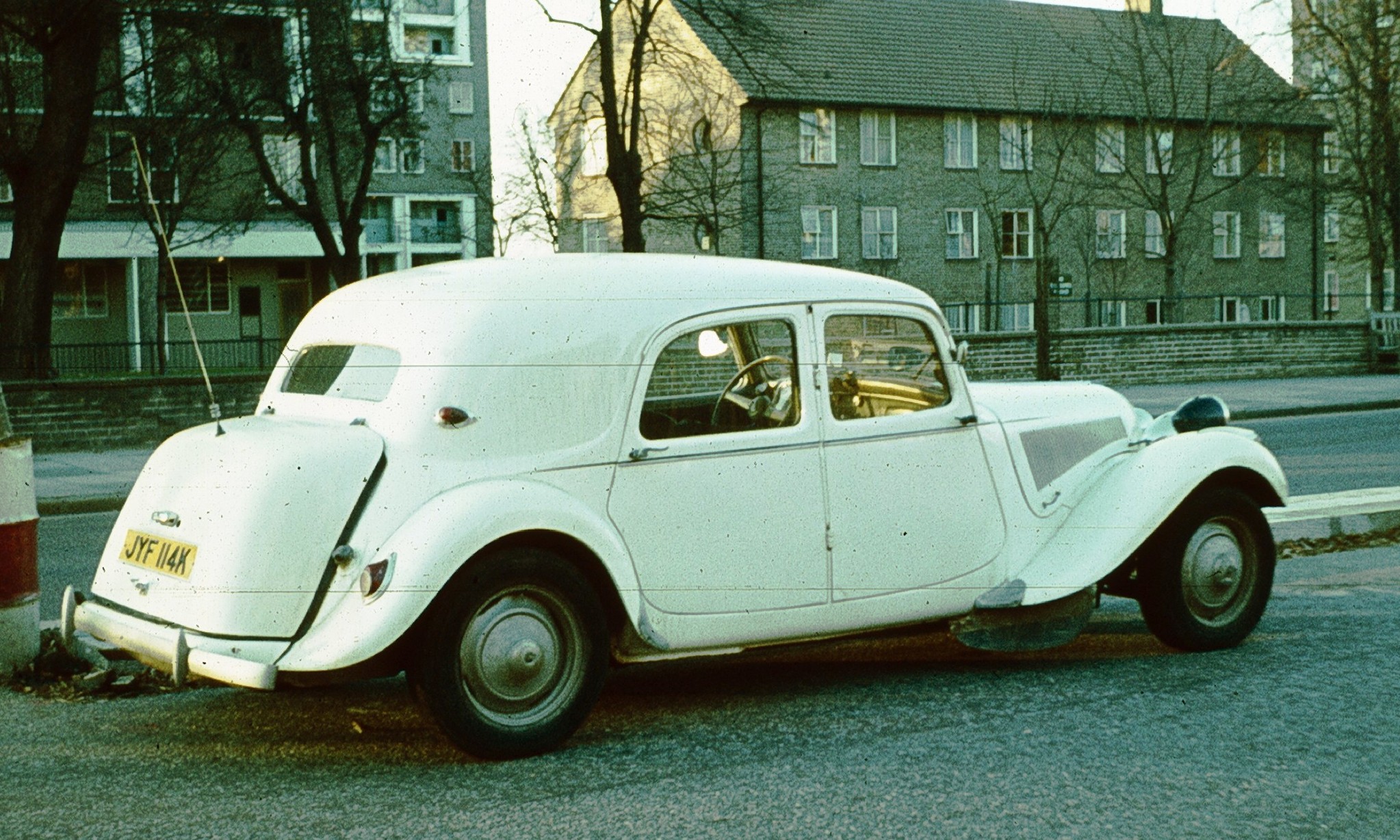
I used to own one of these. Mine was white also, although they never made them in white.
Haystack
- 26 Oct 2014 18:19
- 48554 of 81564
It is the same model and is a dead ringer for mine. It was an 11b Normale. The English name was a Big 15. The difference is that 11 horsepower in France is 15 horsepower in England.
required field - 26 Oct 2014 18:43 - 48555 of 81564
I think that Volvo are Chinese owned (not sure).....Murray has just won...fantastic games between him and Robredo.....Murray coming right back in form now...
doodlebug4 - 26 Oct 2014 18:55 - 48556 of 81564
Murray is starting to play better required field, but I think he may have lost a few English fans following his ill-timed remarks about the referendum! His mother can't dance, Andy needs to show her some decent footwork.
2517GEORGE
- 26 Oct 2014 18:58
- 48557 of 81564
Yes your right db4, I remember him saying he'll support anyone except England so I wish Murray all he wishes us.
2517
2517
doodlebug4 - 26 Oct 2014 19:11 - 48558 of 81564
Just when he seemed to have repaired the damage of that comment he had to shoot his mouth off again - as a fellow Scot I can only apologise on his behalf!
MaxK - 26 Oct 2014 19:27 - 48559 of 81564
Why apologise db?
Theres no shortage of tossers wherever you go.
Theres no shortage of tossers wherever you go.
Fred1new
- 26 Oct 2014 19:43
- 48560 of 81564
I am out cheat and grind you down again!
goldfinger
- 26 Oct 2014 20:30
- 48561 of 81564
'CHART ATTACK GATE' LATEST ODDS
Who will get kicked off the board first
Goldfinger 1/8
Doodlethug4 4/1
Chris Carson 4/1
cynic 8/1
Aldwick 8/1*
Dil 50/1
Note money will be only taken in dollars.
* Depends on his £50 pound GP outcome.
Who will get kicked off the board first
Goldfinger 1/8
Doodlethug4 4/1
Chris Carson 4/1
cynic 8/1
Aldwick 8/1*
Dil 50/1
Note money will be only taken in dollars.
* Depends on his £50 pound GP outcome.
Fred1new
- 26 Oct 2014 21:18
- 48562 of 81564
GF,
Just consider them to obstacles to be ignored, side stepped, or circumcised!
(Sorry I meant circumnavigated.)
Or did I?
8-)
Just consider them to obstacles to be ignored, side stepped, or circumcised!
(Sorry I meant circumnavigated.)
Or did I?
8-)
| About MoneyAM | Ts and Cs | Privacy Policy | Investment Warning | Content Standards | Corporate Solutions | Advertise With Us | Site Map | © 2026 MoneyAM |
Register now for FREE
Share Prices,
Stock Quotes,
Charts, Bulletin Boards, Indices, Watchlists, Portfolio, Market News, Research
or see our Premium Services including Level 2, Terminal and much more.
 Follow us on Twitter